India's CPI inflation stood at 4.38% in June 2026, but this may not reflect the actual rise in individual cost of living. According to Mint reports, Protima Dhawan, Director & Unit Head at Anand Rathi Wealth, explained that headline CPI captures price movements across 12 different spending categories with different weights, but represents the average consumer, not every consumer. She noted that every household has its own inflation rate because spending patterns differ significantly.
As reported by Mint, food and beverages inflation rose 5.05% year on year in June, while inflation in the 'Personal care and effects' category stood at 16.72%. This means that if you had spent ₹500 on personal care products in June 2025, you would have spent around ₹584 in June 2026 to buy a similar basket of personal care products. The report highlights that personal care and miscellaneous goods and services category showed the highest inflation at 16.72%.
According to Mint reports, the simplest way to calculate personal inflation involves treating monthly budget like a mini CPI basket. The method requires listing down where every rupee goes in a typical month across categories, assigning each category a weight based on its share of total monthly spending, and applying latest inflation for each category. Dhawan explained that Personal Inflation Rate = (Individual Category Weight × Category Inflation Rate) added across all spending categories. In a sample calculation, an individual spending ₹1 lakh monthly with 20% on food and beverages, 20% on housing, and 20% on personal care would have a personal inflation rate of 6.17%, higher than India's headline CPI inflation of 4.38%.
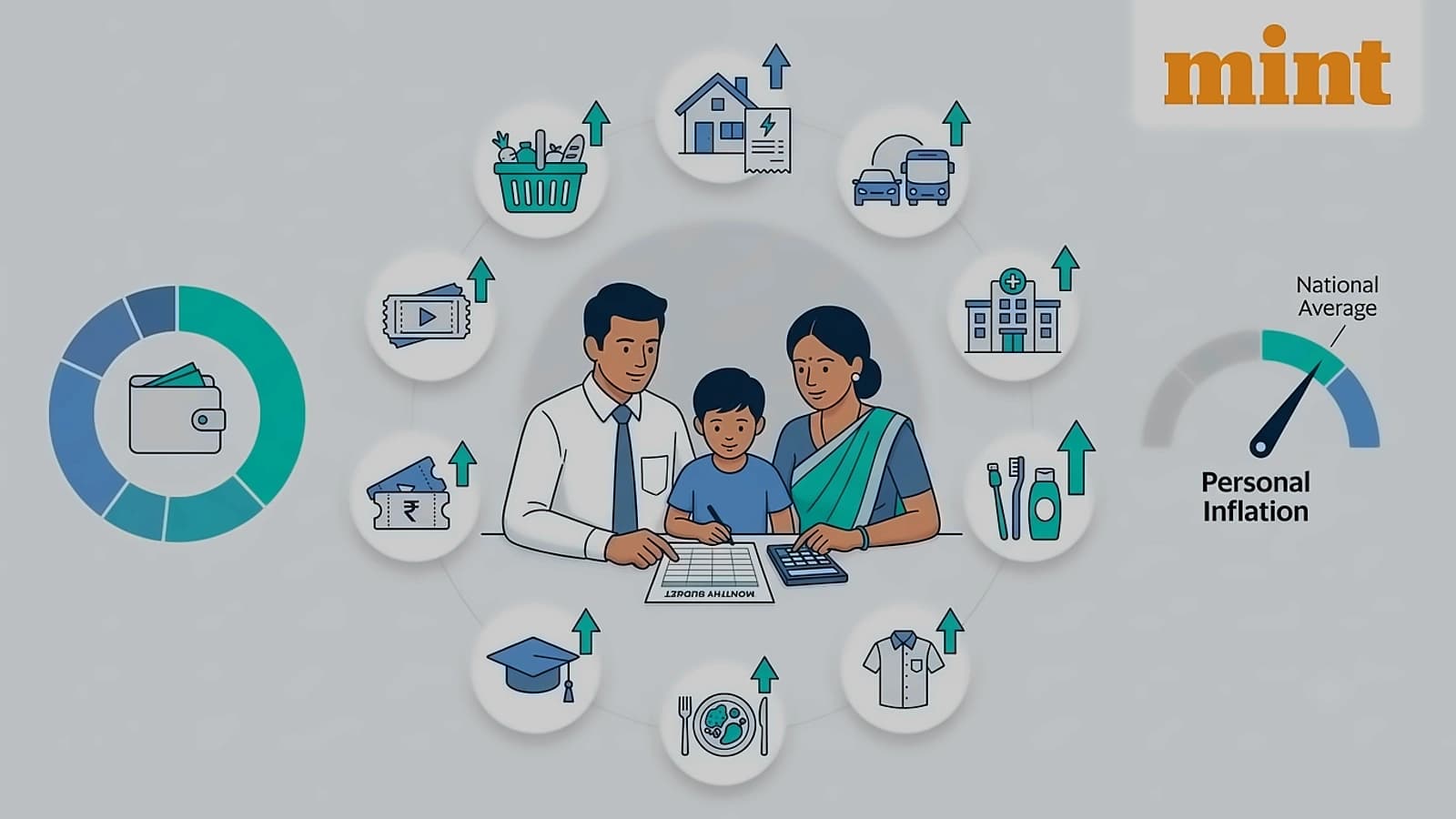
As reported by Mint, no two individuals or households experience the same inflation due to varying spending patterns. Dhawan noted that a HNI who spends more on healthcare, travel, education, personal care and lifestyle services may experience inflation that is much higher than the headline number, while a retiree with limited discretionary spending may feel much lower inflation. The report emphasizes that a higher personal inflation rate means future expenses are likely to grow faster, requiring you to build a larger investment corpus.
According to Mint reports, personal inflation should not determine how much of your income you invest, but it should influence how much wealth you need to create. Dhawan recommends that individuals should aim to save and invest at least 30% of their income, irrespective of whether their personal inflation is 4% or 8%. She added that while higher personal inflation highlights rising living costs, it should not determine investment allocation, but should influence the need for larger investment corpus to meet future expenses.