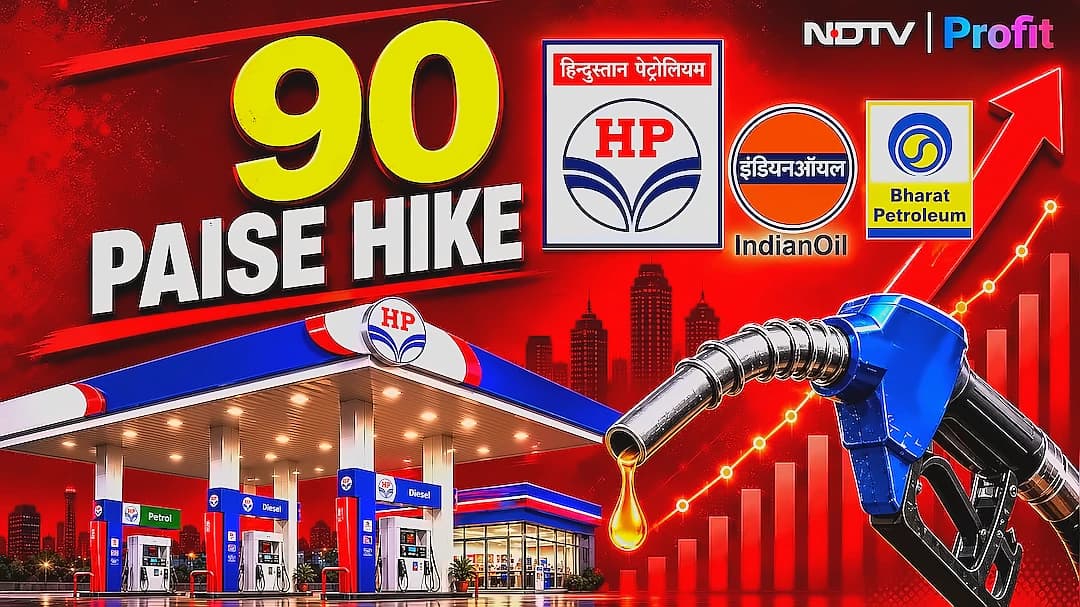
Petrol and diesel prices were increased by up to 91 paise per litre on Saturday, marking the third increase in less than 10 days. In Delhi, petrol increased by 87 paise from ₹98.64 to ₹99.51 per litre, while diesel went up by 91 paise from ₹91.58 to ₹92.49. This follows previous increases of ₹3 per litre on May 15 and a 90 paise increase on May 19, bringing total increases to almost ₹5 per litre since the first hike. The latest price revision comes amid rising fuel demand across several states ahead of the wheat harvesting and paddy sowing seasons, with similar hikes observed on Tuesday when both fuels were increased by the same amounts. According to a report from Reuters, citing fuel dealers in Delhi, the price spike persists as global crude rates remain high due to Middle East tensions and fears of supply shortages following Iran's closure of the Strait of Hormuz in response to US-Israeli airstrikes. As per Indian Oil, the new fuel prices effective from May 23, 2026, 6:00 AM show XP95 Petrol at ₹106.63 per litre.
The price increases are driven by substantial losses being incurred by oil marketing companies (OMCs) due to elevated crude oil prices. As reported by Mint, Madan Sabnavis, Chief Economist at Bank of Baroda, stated that given the losses being incurred by OMCs, rise in petrol and diesel prices was inevitable. Financial services firm Emkay Global estimates that OMCs are losing ₹17-18 on every litre of fuel sold, even after the Centre cut excise duty on fuel imports by ₹10 per litre on March 27, 2026. The report indicates that OMCs are expected to post losses of ₹570-580 billion (₹57,000-58,000 crore) this quarter. According to Petroleum Ministry Joint Secretary Sujata Sharma, these companies were suffering losses of around ₹30,000 crore every month from the sale of petrol, diesel, and LPG before the government's recent interventions. Before these recent changes, state-run oil marketing companies were facing losses of nearly ₹1,000 crore every month, as reported by the Indian government. Union Petroleum Minister Hardeep Singh Puri had recently stated that prolonged high crude prices could significantly increase losses for oil marketing companies if retail prices are not revised periodically, with reports suggesting public sector oil firms are already facing heavy under-recoveries due to the gap between international crude prices and domestic retail fuel rates.
The primary driver behind the price increases is the sharp rise in global energy prices following the outbreak of conflict in West Asia. As reported by PTI, crude oil prices have surged from around $70 per barrel before the West Asia conflict began to over $100 per barrel currently. State-owned oil firms had kept fuel prices unchanged for 11 weeks despite a surge in input costs, but passed on part of the increase once operations became financially unsustainable. Fuel prices in India are decided on the basis of international crude oil prices and the value of the rupee against the dollar, with government oil companies updating rates every day at 6 AM under the "daily price revision" system. The latest increase comes as global crude oil prices continue to rise due to ongoing conflict in the Middle East. Brent crude futures increased by $1.66, or 1.6%, to $104.24 a barrel, while U.S. West Texas Intermediate (WTI) crude rose by $1.11, or 1.2%, to $97.46 a barrel. However, over the week, Brent crude was down 4.6% and WTI fell 7.6%, with prices changing sharply as hopes for a peace agreement continued to shift. India imports nearly 85% of its crude oil, which means fuel prices in the country are heavily affected by changes in international oil markets. During the past two years, India has relied heavily on discounted Russian crude oil to reduce import costs, but that advantage is now weakening as global crude prices move closer to $111 per barrel.
The price increases come as Prime Minister Narendra Modi recently urged citizens to reduce fuel consumption by using public transport more frequently and opting for work-from-home arrangements to help curb India's oil import bill and ease pressure on foreign exchange reserves. The Centre has maintained that there is no shortage of fuel in the country and that India currently has adequate reserves to manage the ongoing global crisis. The latest hike represents the third increase in rates since May 15, when state-owned oil companies started passing on the elevated energy prices arising from the West Asia conflict in a calibrated manner. Analysts warn of further price increases ahead as current hikes may not fully compensate OMCs for their losses, with fuel prices potentially increasing further if crude oil prices remain elevated for an extended period. Experts warn that repeated increases in petrol and diesel prices could trigger a rise in transportation and logistics costs, eventually affecting the prices of essential commodities and food items, with public transport fares also witnessing upward revision if fuel prices continue to climb.
To provide relief to consumers, the government had earlier reduced the special excise duty on petrol and diesel by ₹10 per litre each to keep fuel prices stable. The duty on petrol was cut from ₹13 per litre to ₹3, while the duty on diesel was reduced from ₹10 to zero. The central government earlier collected a total excise duty of ₹21.90 per litre on petrol, which came down to ₹11.90 per litre after the reduction in the special additional excise duty. Similarly, the total central excise duty on one litre of diesel fell from ₹17.80 to ₹7.80 per litre. Technically, fuel prices in India are deregulated, and companies can change rates daily based on the 15-day average price of international crude oil, though political sensitivity had previously prevented regular price revisions.