Indian oil marketing companies have announced yet another fuel price hike of around ₹0.87 per litre for petrol and ₹0.91 per litre for diesel in Delhi, marking the third increase in just eight days. According to reports from The Economic Times, this comes as global crude oil prices surge due to Middle East conflict and the expiry of a US sanctions waiver on Russian oil. The cumulative price hike across petrol and diesel now stands at ₹4.8 per litre following previous increases of ₹3 per litre on May 15 and 90 paise per litre on May 19. Following the latest revision, diesel in Delhi now costs ₹92.49 per litre, while petrol is priced at ₹99.51 per litre. The hike has been implemented across major cities, with Kolkata witnessing petrol prices rise to ₹110.64 per litre, an increase of 94 paise, Mumbai petrol at ₹108.49 per litre, up by 90 paisa, and Chennai petrol at ₹105.31 per litre, which is 82 paise higher.
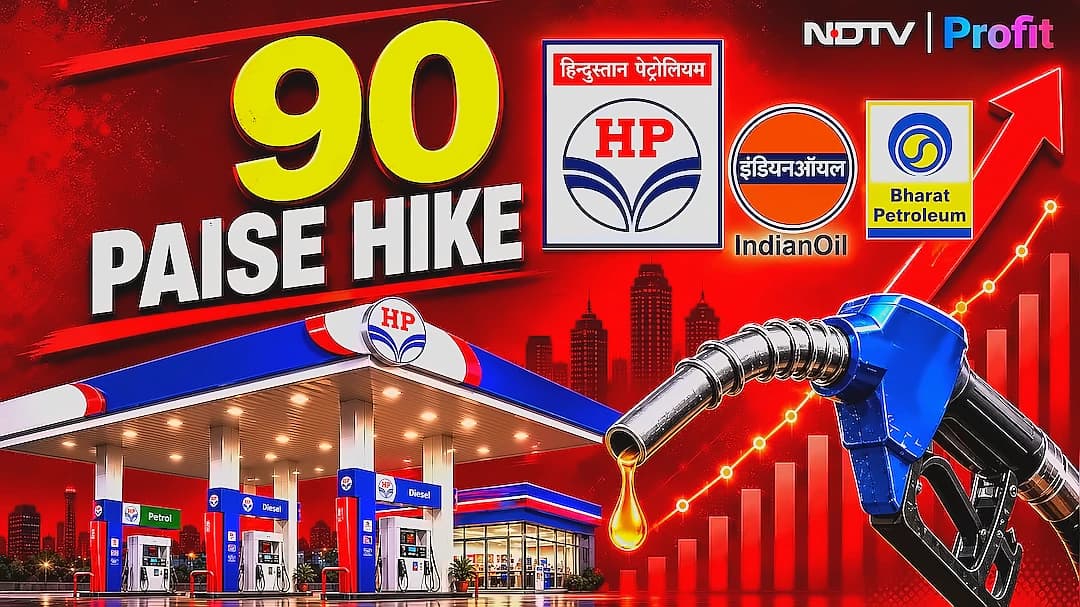
The three successive price hikes come as Indian OMCs grapple with losses of around ₹1-1.2 lakh crore in Q1FY27, as reported by NDTV Profit. At the start of the hike cycle, the three state-run refiners were absorbing a cumulative daily loss of around ₹1,000 crore - a figure that was always going to be unsustainable over the long run. The first hike of ₹3 per litre on May 15 helped OMCs cut their daily losses by 25%, bringing them down to roughly ₹750 crore per day. The second hike of 90 paise on May 19 trimmed another 5% off the daily burn, taking losses to around ₹710 crore per day. However, state-run oil marketer BPCL on Tuesday revealed it is currently selling diesel at a loss of ₹25-30 per litre and petrol at a loss of ₹10-14 per litre, highlighting the ongoing challenges despite price increases.
According to various analysts reported by NDTV Profit, every 50 paise per litre increase in fuel marketing margins is estimated to lift EBITDA by 7% for IOCL, 8% for BPCL and 11% for HPCL. With India's total petrol and diesel consumption standing at 463 million litres per day (comprising 308 million litres of diesel and 155 million litres of petrol), OMCs commanding a 90% market share means around 417 million litres per day of fuel is sold through pumps operated by HPCL, BPCL and IOC. Meanwhile, IGL has also hiked CNG prices by ₹1 per kg - the third hike in 10 days, with CNG prices in Delhi now at ₹81.09 per kg.
With Tuesday's third hike of 90 paise, OMCs are expected to recoup an additional ₹38 crore per day, taking the cumulative recovery from the three hikes to nearly 35% of the original daily losses, as reported by NDTV Profit. However, the recovery remains incomplete as BPCL continues to report significant losses. The ongoing West Asia conflict continues to impact oil marketing companies, with the losses stemming directly from the ongoing geopolitical tensions in the region. Meanwhile, The Economic Times reports that global crude prices have topped USD 100 per barrel, with Brent crude futures rising $1.66 to $104.24 per barrel and WTI futures up $1.11 to $97.46, making domestic fuel price revisions necessary after months of keeping prices largely unchanged.
Amid rising fuel prices, the Ministry of Petroleum and Natural Gas has assured consumers of adequate supply availability. As reported by The Economic Times, the ministry posted on X late Friday stating, "Responsible consumption and public cooperation will help ensure smooth fuel availability for everyone during the ongoing high-demand period." This comes as India has relied heavily on discounted Russian crude over the past two years to keep import costs under control, but with global crude prices topping USD 100 per barrel, state-run oil companies have started revising domestic fuel prices after keeping them largely unchanged for months.
The fuel price increases have triggered widespread protests by commercial vehicle operators and taxi unions across Delhi-NCR, with demonstrations entering their third day on Saturday. The 72-hour strike was announced by several transport organisations, including the All India Motor Transport Congress (AIMTC) and Chalak Shakti Union, representing truck operators, private bus owners, cab drivers, and maxi-cab drivers in the region. On the second day of the strike on Friday, the daily commute at the New Delhi Railway Station saw little disruption in most areas of the capital, with auto-rickshaws and cabs running as usual. Drivers have pointed out that cab fares in Delhi-NCR have not been revised in almost 10 years, while costs for fuel and vehicle upkeep have climbed significantly. They are calling for the CNG and fuel surcharge to be withdrawn and for taxi fares to be adjusted upward, warning that ongoing financial strain could severely impact the earnings and livelihoods of thousands of drivers across Delhi.