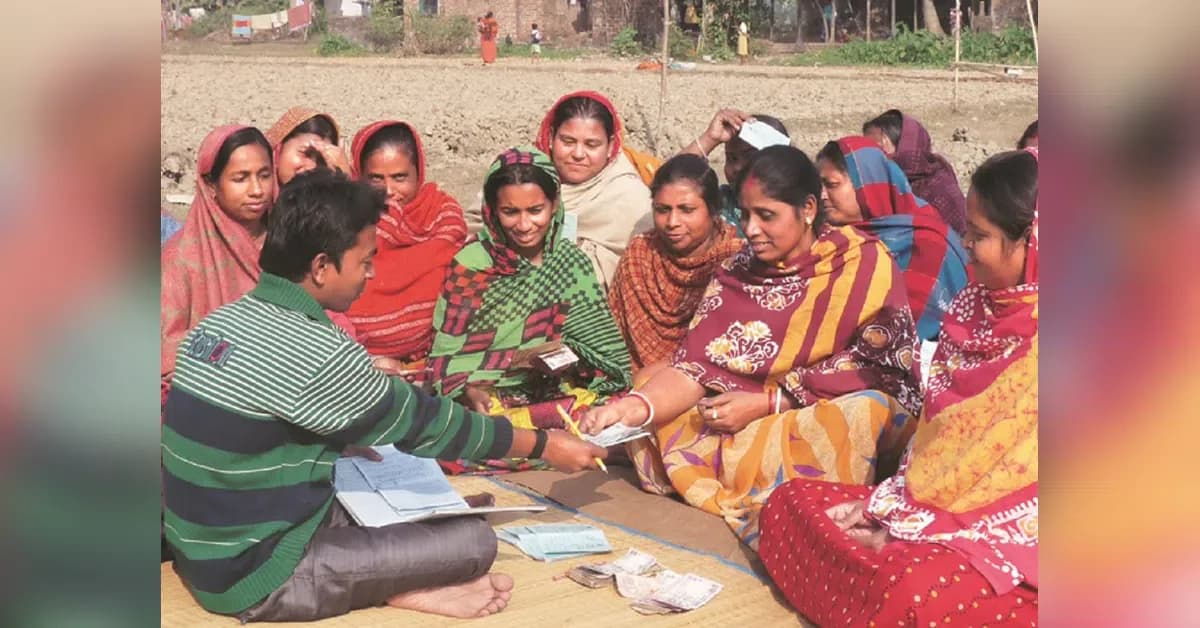
Despite 35 years of economic liberalisation since 1991, India's workforce remains predominantly informal with 73% of non-agricultural workers engaged in proprietary and partnership enterprises as of 2025, according to the latest PLFS annual report. This figure represents only a slight improvement from the 80.3% informal employment rate estimated in 1993-94, when 100.5 million of 124.6 million non-agricultural workers were classified as informal. The 1991 reforms, while dismantling industrial licensing and opening the economy to foreign investment, failed to deliver the large-scale shift from informal to formal employment seen in many emerging economies. As per Business Standard, the reforms remained concentrated in urban, capital-intensive sectors, limiting their impact on employment generation.
District-level estimates reveal striking geographic concentration in India's informal economy. According to the Business Standard report, just 130 districts account for half the establishments, 121 districts for half the workers, and only 95 districts for half of Gross Value Added (GVA). This indicates that economic value is more geographically concentrated than either enterprises or employment. The largest establishment clusters include North 24 Parganas with 1.6 million establishments, South 24 Parganas with 1.03 million, and Kolkata with 0.88 million - all in West Bengal. In Maharashtra, the top eight districts account for more than half the establishments, while Pune alone has approximately 600,000 establishments and 1.27 million workers.
Despite similar establishment counts, significant variations exist in economic productivity across regions. As reported by Business Standard, Rangareddy in Telangana records ₹6.64 lakh per market establishment and ₹2.72 lakh per worker, while Pune records ₹4.79 lakh per establishment and ₹2.28 lakh per worker. The report emphasizes that GVA per worker should not be treated as a pure productivity measure due to differences in industry mix, capital intensity, and local economic conditions. Similarly, annual emolument per hired worker varies significantly from ₹4.64 lakh in Dehradun to around ₹80,000 in select districts in Bihar and Jharkhand. These differences demonstrate that enterprise concentration does not necessarily correlate with highest economic contribution per worker.
The informal economy shows considerable variation in gender participation across districts. According to the Business Standard report, women constitute at least one-third of the workforce in 237 districts, with strongest concentrations in northeastern and southern states. Manipur stands out with women accounting for nearly 70% of workers in Imphal East. In Telangana, Nirmal records 78.41% female participation and Nizamabad 69.6%. Female ownership is particularly high in these regions, reaching 80% in Nirmal and 72% in Imphal East. This data indicates that India does not have a single unincorporated economy but many local economies differing in scale, employment intensity, female participation, remuneration, and value creation.
The nature of informal employment has evolved significantly with increasing contractualisation and outsourcing. According to Business Standard, contract workers' share in factories more than doubled from 16.5% in 1997-98 to 42% by 2023-24. Large companies are increasingly outsourcing recruitment, with most recruitments now conducted through contractors. The shift towards gig workers and contractual employment is particularly pronounced in sectors like logistics and transport, where several large companies also outsource hiring. This trend extends to public-sector employment, where restrictions on direct recruitment have encouraged outsourcing of functions such as housekeeping and security. The employment challenge has also affected youth, with nearly one in six people aged 15-29 unemployed in April-June 2026, with higher rates among young women at 19.6%.