India's wholesale price inflation rose to 9.87% in June from 9.7% in May, marking the fastest growth since September 2022 and surpassing economists' expectations of 9.15%, according to government data released on Tuesday. The Wholesale Price Index (WPI) for all commodities stood at 110.2 in June, compared with 109.9 in May. As per the Ministry of Commerce and Industry, the WPI inflation was 9.87% year-on-year in June 2026, compared with 9.7% in the previous month. The base year for calculating WPI is 2022-23. The government also released India's goods-output Producer Price Index (PPI), which showed inflation accelerating to 9.6% in June from 9.4% in May, broadly tracking wholesale inflation. The June uptick was led by primary articles and food, even as fuel inflation cooled, with WPI-based fuel and power inflation easing to 27.4% from 30.33% in May.
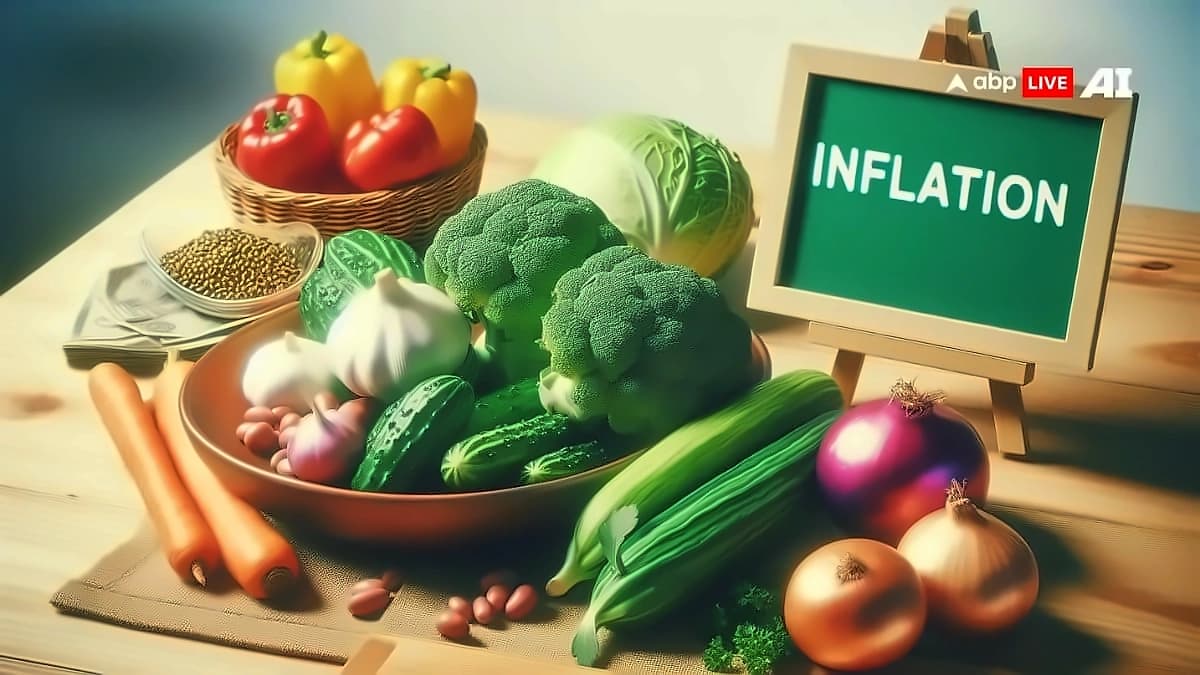
Food inflation under the Consumer Food Price Index (CFPI) accelerated to 6.14% in June from 4.49% in May, marking the fastest increase since February 2025, as reported by the Ministry of Commerce and Industry. The WPI Food Index, which includes food articles from the primary articles group and manufactured food products, recorded inflation of 6.14% in June, compared with 4.49% in May. The WPI food index — which combines food articles from primary articles with manufactured food products — rose to 6.14% in June from 4.49% in May, an 18-month high. It was last higher in December 2024, when it stood at 7.81%. Food articles inflation rose to 5.49% in June from 3.60% in May, while non-food articles inflation increased to 11.07% from 9.49%. On a month-on-month basis, prices of food articles increased 3.75%, non-food articles rose 1.43%, while mineral prices gained 0.58%. However, crude petroleum and natural gas prices edged down 0.08% compared with May. The rise in wholesale inflation came a day after official data showed retail inflation, measured by the Consumer Price Index (CPI), increased to 4.38% in June from 3.93% in May, reaching a 17-month high. The National Statistical Office (NSO) data showed that inflation in the food index climbed to 5.3% in June from 4.8% in May, with a deficient monsoon also contributing to the rise and expected to exert additional pressure on food prices in coming months.
Primary articles inflation jumped to 7% in June from 4.99% in May — its highest level in 18 months. It was last higher in December 2024, at 7.46%. The index rose to 116.1 from 113.7. Within the segment, food articles inflation accelerated to 5.49% from 3.6%, non-food articles inflation rose to 11.07%, and minerals inflation climbed to 9.45% from 4.91%. The ministry said mineral oils, food articles, the manufacture of basic metals, and the manufacture of chemicals and chemical products were the major drivers of WPI inflation in June. Manufactured products inflation, which carries a weight of 63.1%, held steady at 7.5%. The group continued to record double-digit increases in base metals (12.31%), chemicals (12.78%), textiles (10.85%), and electrical equipment (11.03%). Among key manufacturing segments, annual inflation stood at 12.31% for basic metals, 12.78% for chemicals and chemical products, 11.03% for electrical equipment and 10.85% for textiles. The 'restaurants and accommodation services' category recorded further acceleration in inflation, reaching 6.9% during June, with the category witnessing a sharp rise in recent months due to higher commercial cooking gas prices, reflecting the increase in food costs across restaurants and eateries.

Fuel and power inflation remained elevated at 27.4% in June, with fuel prices surging 27.4% driven by a sharp rise in mineral oil prices (46.5%) and crude petroleum and natural gas prices (34.7%), according to the Ministry of Commerce and Industry. Within the fuel and power group, mineral oils inflation stood at 46.5% in June, compared with 49.8% in May. However, within the fuel and power segment, inflation in crude petroleum and natural gas fell sharply to 34.7% in June from 61.5% in May, with the index dropping to 120.2 from 136.8 in the previous month. Electricity inflation remained negative at -0.76%, compared with -1.85% in the previous month. Despite the monthly easing, petroleum-related products continued to post steep annual gains, with crude petroleum and natural gas prices being 34.7% higher than a year ago. The effective blockade of the Strait of Hormuz has contributed to these elevated energy costs through disrupted crude oil imports. Recent flare-ups in West Asia have resulted in volatility in Brent crude, while on the domestic front, risks stem from below normal rainfall due to a strengthening El Nino, as noted by CareEdge Ratings chief economist Rajani Sinha.
The Reserve Bank of India (RBI), which mainly factors in CPI when arriving at its monetary policy, has been mandated by the government to ensure that headline inflation remains at 4%, with a 2% margin on either side. Last month, the RBI raised its inflation projection for the current fiscal year to 5.1% from 4.6%, largely due to mounting input costs, driven by the pass-through of higher global energy prices to retail petrol and diesel prices. The RBI's monetary policy decisions will be influenced by both WPI and CPI inflation trends, with the current wholesale inflation data adding to concerns about persistent price pressures. June marked the first occasion on which retail inflation exceeded 4% under the revised CPI series with 2024 as the base year, introduced in February. The earlier and revised CPI series are not directly comparable because the updated series incorporates new data sources and revised methodologies. Madan Sabnavis described the June reading as significant because price pressures had become more generalised and broad-based, describing it as part of a rising trend that had been building since November, when the index was still in mild deflation. He said "The days of low inflation are over."