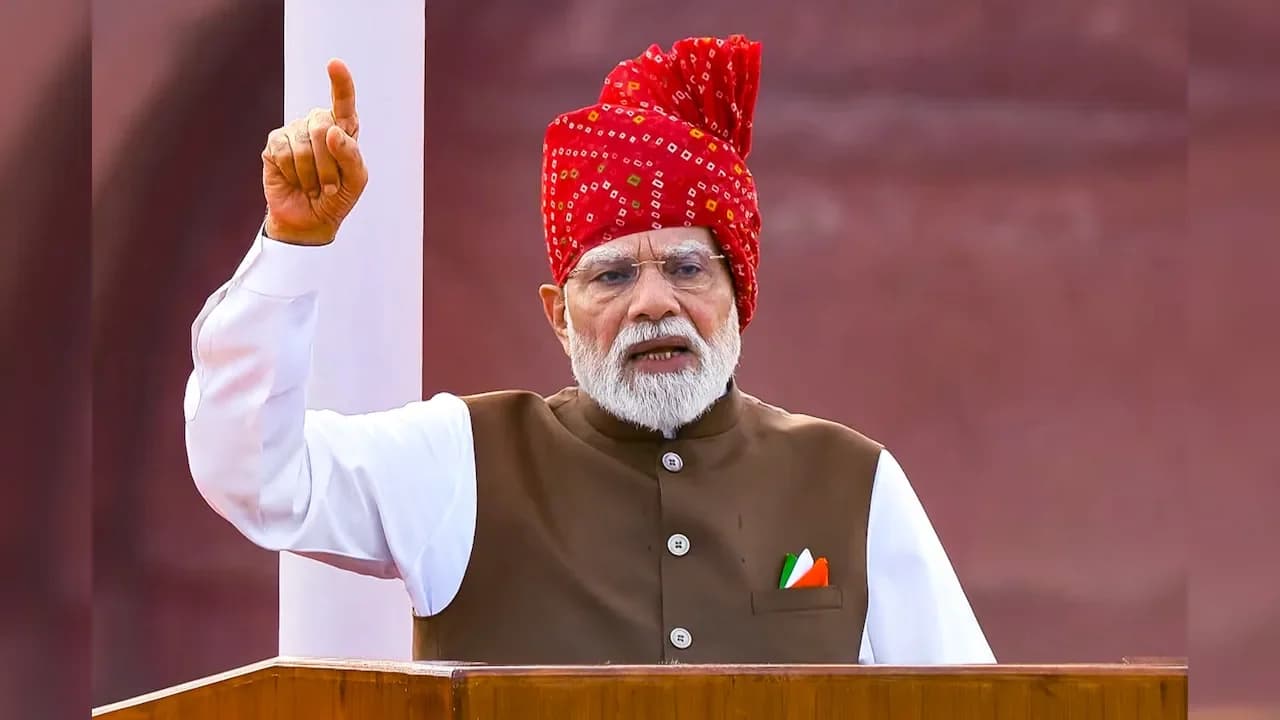
Prime Minister Narendra Modi has achieved a historic milestone by delivering 1,177 minutes of cumulative speech duration from the Red Fort over his tenure, making him the longest-serving Prime Minister in terms of total speaking time. According to data visualised on the 80th Independence Day, PM Modi's speeches from Lal Qila far exceed those of his predecessors - Indira Gandhi at 504 minutes, Manmohan Singh at 417 minutes and Jawaharlal Nehru at 400 minutes. Despite delivering fewer addresses than some of his predecessors, PM Modi's consistent, detailed and lengthy speeches over more than a decade have given him the highest aggregate speaking time. As reported by IANS, this reflects a sustained tradition of using the historic platform to share a clear vision, outline national ambitions and present a roadmap for Viksit Bharat. The sheer length of his addresses has allowed greater detail on policy direction and citizen participation, with the data underscoring how the Independence Day speech has evolved from a primarily reflective exercise into a detailed annual progress report and future blueprint.
On August 15, 2022, Prime Minister Narendra Modi announced India's ambitious goal to become a developed nation by 2047, declaring that India should 'settle for nothing less.' According to reports from Business Standard, this vision builds upon the foundation laid by former Prime Minister Manmohan Singh's 1991 economic reforms, which transformed India's economic model from one constrained by forex reserves sufficient for only two weeks of imports to a more competitive and open economy. The current government has integrated 'Viksit Bharat' into numerous schemes and official documents, with PM Modi's Red Fort addresses centred on concrete goals for a developed India by 2047. The speeches have frequently presented measurable targets, scheme-level updates and a forward-looking narrative of national aspiration to attain this common goal.
The analysis highlights the challenge of converting aspirations into measurable achievements, citing Modi's 2019 goal of making India a $5 trillion economy by 2024 as an example of unmet targets. As reported by Business Standard, this demonstrates the importance of establishing clear, time-bound objectives with accountability mechanisms. The piece emphasizes that 'Viksit Bharat' now adorns numerous schemes, speeches and official documents, but India still lacks a publicly accountable roadmap with measurable milestones. However, PM Modi's speeches frequently present measurable targets, scheme-level updates and a forward-looking narrative that have evolved the Independence Day speech into a detailed annual progress report and future blueprint. The test of 'Viksit Bharat' will not simply be the size of India's GDP in 2047, but also whether an ordinary young Indian can believe that ability, effort and enterprise will determine his or her future.
PM Modi's Red Fort speeches have covered Atmanirbhar Bharat, digital transformation, infrastructure expansion, women's empowerment, youth opportunities, cultural confidence and the push for green growth. According to IANS, where earlier leaders often framed challenges in broad ideological terms, PM Modi's speeches frequently present measurable targets, scheme-level updates and a forward-looking narrative of national aspiration. The speeches also give an account of achievements and promises the government has delivered under his stewardship, providing concrete examples of progress toward the Viksit Bharat goal. The sheer length of his addresses has allowed greater detail on policy direction and citizen participation, with the data underscoring how the Independence Day speech has evolved into a detailed annual progress report and future blueprint. PM Modi's record cumulative duration positions his addresses as the most extensive body of Red Fort oratory among modern Prime Ministers, reinforcing the platform's role in shaping public discourse on India's development path.
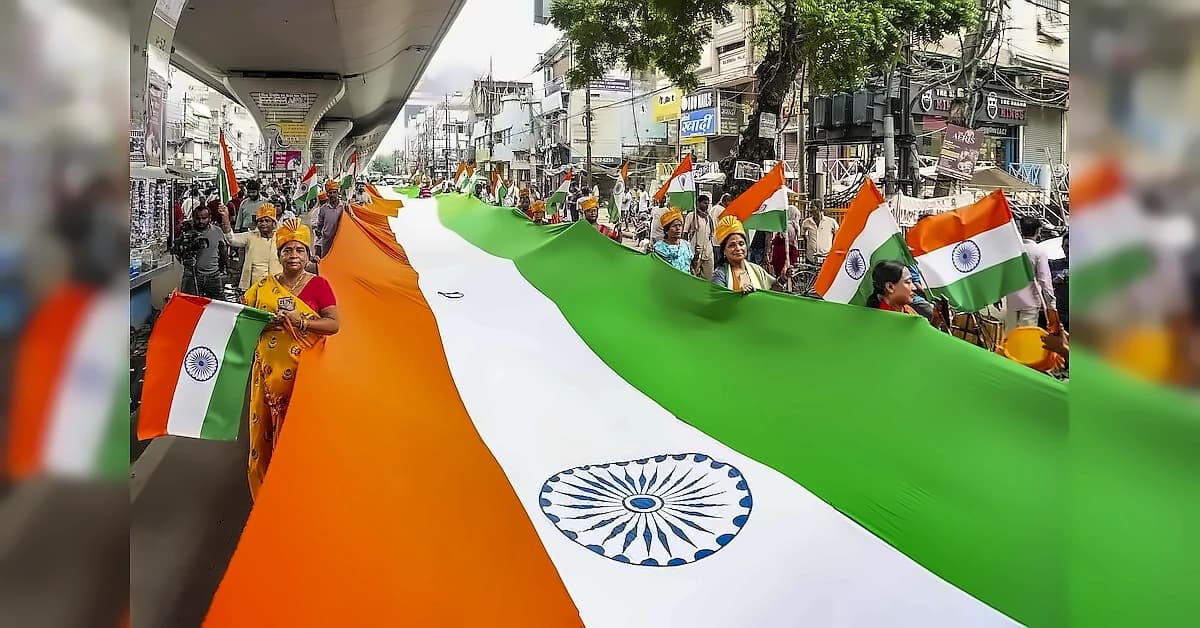
According to the analysis, a developed India should offer productive employment, quality education, functioning institutions and equality of opportunity. As reported by Business Standard, this requires faster growth and institutions that convert growth into opportunity for ordinary citizens. The piece concludes that the test of 'Viksit Bharat' will not simply be the size of India's GDP in 2047, but also whether an ordinary young Indian can believe that ability, effort and enterprise will determine his or her future. PM Modi's record cumulative duration positions his addresses as the most extensive body of Red Fort oratory among modern Prime Ministers, reinforcing the platform's role in shaping public discourse on India's development path.