


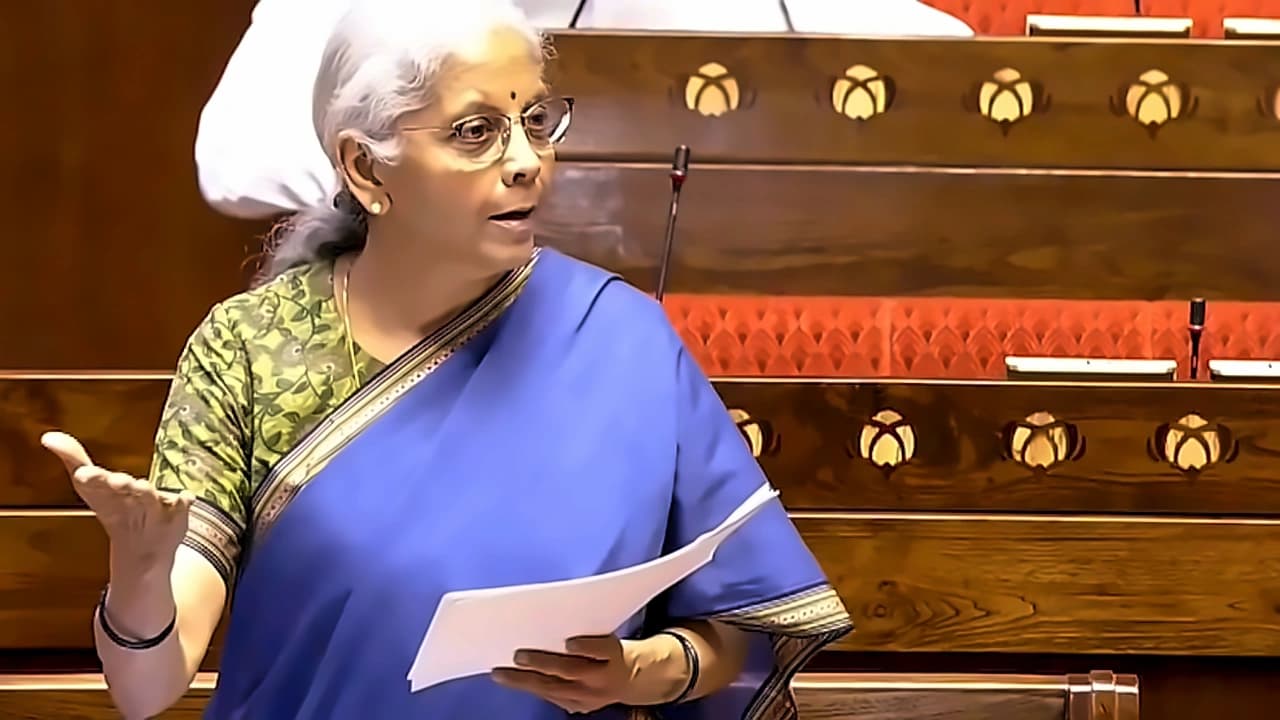
According to analysis by Business Standard, India's Budget speeches since Independence reveal a remarkable transformation in economic confidence. Finance Minister John Mathai's first Budget in 1950 described the preceding year as one of "great difficulty and of great anxiety," while Finance Minister Nirmala Sitharaman's 2026 Budget promised "confident steps towards Viksit Bharat, balancing ambition with inclusion." This shift captures India's evolution from an economy short of food, savings, foreign exchange and productive capacity to a large economy seeking technological capability and global scale.
The analysis covers 99 speeches from 1947-48 through to the 2026-27 Budget, producing 77 comparable Budget year observations from 1950 onwards. Net tone compares positive language associated with growth, stability, opportunity, achievement and resilience with adverse language associated with crisis, burden, shortfall, scarcity, inflation and unemployment. The broad movement is towards greater confidence, with net tone reaching 0.65 since 2014, while uncertainty falls to its lowest historical level.
The analysis identifies three critical periods in India's economic evolution. 1991-96 saw net tone averages of only 0.23, below previous periods, as liberalisation entered Budget language as emergency repair against balance of payments crisis and depleted reserves. Between 1996 and 2004, net tone rises sharply to 0.45, with market-reform language reaching highest period average and strategic national vision becoming prominent. Since 2014, the official voice has become still more confident with the highest net tone and lowest uncertainty rates.
According to the analysis, Finance Minister Nirmala Sitharaman records the highest net tone and strategic vision intensity, together with the greatest explicit emphasis on export promotion. Arun Jaitley's language emphasises formalisation, infrastructure and the digital state, while P Chidambaram's higher tone reflects confidence of the pre-crisis expansion. The post-2014 archive combines the highest net tone (0.65), lowest uncertainty rate (1.34), and highest strategic national vision rate (3.49).
Modern Budgets have become longer and more professionally produced, with average annual text increasing from about 10,900 cleaned words in 1950-64 to more than 17,600 after 2014. The analysis suggests that India's central economic question has changed from whether India could mobilise enough resources to build a modern economy to whether a more capable country can execute at scale and convert ambition into performance. This evolution reflects the state's changing role from resource mobilisation to platform development and long-term strategic vision, supported by improved Ease of Doing Business reforms that have enhanced investor confidence.