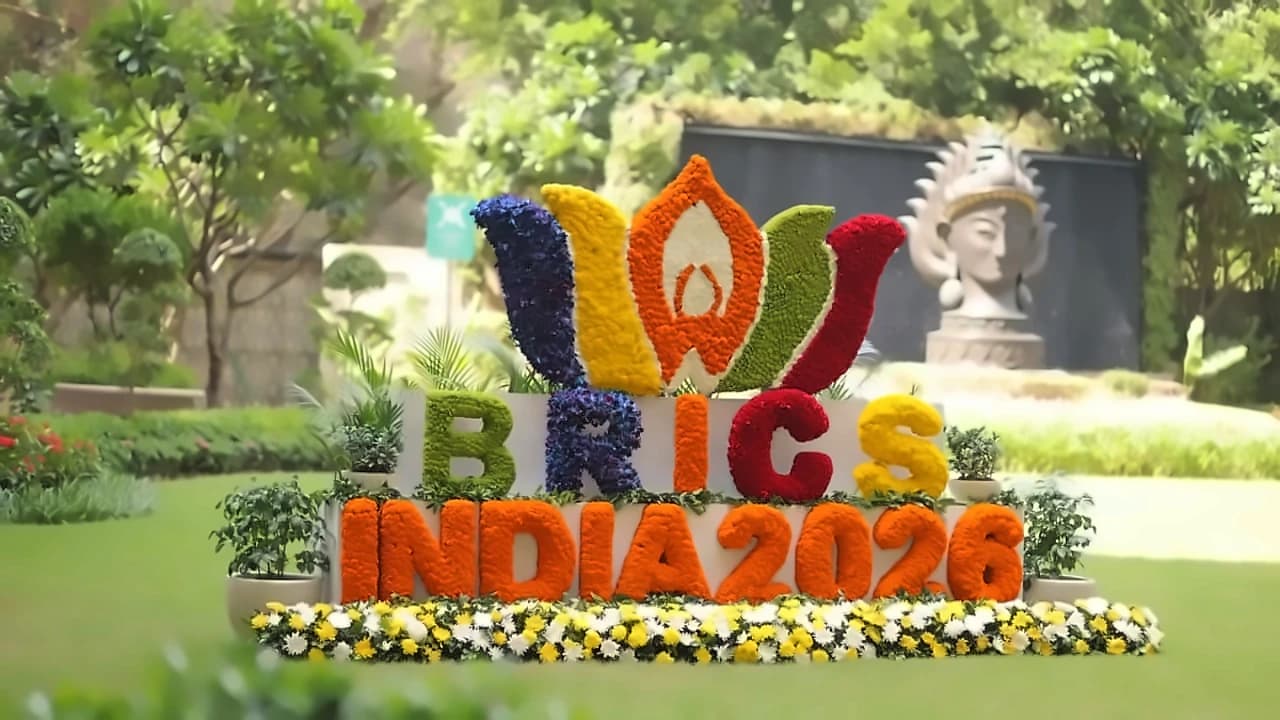
India's upcoming BRICS summit on September 12-13 will feature comprehensive preparatory meetings ahead of the main event. The business forum will meet on September 11, followed by finance ministers and central bank governors over two days on September 9 and 10. As reported by Business Standard, this represents the second meeting under India's chairship, with the first meeting held on August 12 in Jaipan co-chaired by Finance Minister Nirmala Sitharaman and RBI Governor Sanjay Malhotra. The summit will focus on intra-Brics financial mechanisms, including exploring ways to increase intra-Brics trade using national currencies, with the inaugural iBRICS Summit 2026 featuring sovereign wealth funds, pension funds and family offices managing a combined USD 1 trillion in assets.
India's focus on micro, small and medium enterprises (MSMEs) stems from their employment-generation potential, with the summit expected to establish significant cooperation mechanisms. Key outcomes from ministerial and working group meetings include setting up a Brics startup innovation fund, an incubator network, and a cooperation portal for financing MSMEs. Additional decisions include a photovoltaic knowledge-sharing portal, joint study on opening markets and economic diversification, and agreeing on principles for safe and secure digitally delivered services across borders. The grouping has also suggested establishing a mechanism for knowledge exchange in skilling and labour market intelligence, promoting cooperation in climate-resilient agriculture, and setting up an expert group on early warning systems for mass infectious diseases. India's emphasis on MSMEs reflects the need for more balanced trade among Brics member countries, as the country faces significant adverse balance of trade with both China and Russia.
India's upcoming BRICS summit will test the country's ability to navigate the changing currency landscape while maintaining diplomatic balance. India is wary of any effort by Brics that the United States might perceive as a move towards "de-dollarisation", with government sources indicating India would be wary of White House sanctions and unwilling to take part in any "de-dollarisation" initiative. As reported by Business Standard, New Delhi has said any explicit step to move away from the US dollar is not part of its Brics agenda, and the country is uncomfortable with any common intra-Brics payment networks, favouring bilateral mechanisms and targeted use of local currencies in trade settlements. US President Donald Trump has threatened to levy 100 per cent tariffs on BRICS countries if they are party to any initiative to create a BRICS currency or bypass the dollar financial ecosystem, creating a significant challenge for India's diplomatic balancing act. The summit's theme of "building for resilience, innovation, cooperation and sustainability" reflects this delicate approach to financial cooperation.
India has made two proposals for cross-border payments at the upcoming BRICS summit, with the Reserve Bank of India governor stating on August 10 that "Cross-border payments is an area of interest for all of us, including the BRICS, because we feel there is a lot of scope for reducing costs. Various options are on the table, including CBDCs and linkage to fast payment systems." As reported by Business Standard, India is a founding member of NEXUS, a multilateral initiative that connects domestic instant payments systems globally to enable fast, secure and near-instant cross-border retail payments. NEXUS currently has Singapore, Malaysia, the Philippines and Thailand as other members, with the European Central Bank considering a proposal to link its own Europe-wide Target Instant Payment System (TIPS) with NEXUS. The analysis suggests that the RBI is recommending a NEXUS-like network for BRICS as a parallel system, since NEXUS incorporates Western compliance and regulatory provisions, making it unlikely to be of interest to China and Russia.
China has made significant inroads into global financial infrastructure through multiple parallel initiatives. The mBridge project, a network of central banks of China, Hong Kong Monetary Authority, Malaysia, Thailand, UAE, and Saudi Arabia, has linked their central bank digital currencies (CBDC) on a blockchain ledger system to allow virtually instant cross-border financial transactions, with the pilot phase now over and commercial launch imminent. Additionally, China's Cross-Border Interbank Payment System (CIPS) provides both an inter-bank messaging system like SWIFT and a clearing and settlement system, avoiding sanctions risk since it is not subject to US or Western regulation. The Hong Kong-based South China Morning Post reported that in early April, when Trump threatened to bomb Iran, CIPS set a record for transactions in a single day, totalling $180.3 billion, with yuan-denominated settlement accounting for 41 per cent of West Asia crude oil trade with China in March.