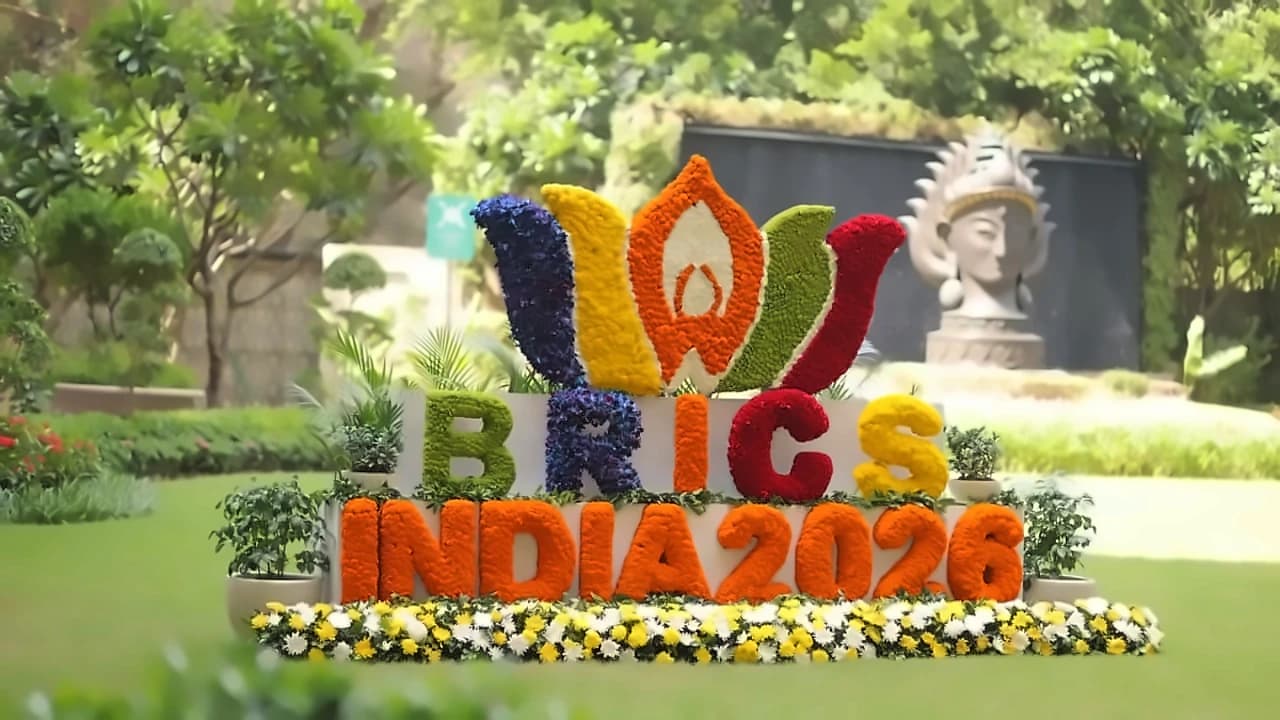
The BRICS Payment Task Force is examining practical solutions for cross-border payments, including interoperability between payment and messaging systems, with the aim to make transactions faster, lower-cost, more accessible, efficient, transparent and secure. According to the latest joint statement issued after their final meeting in Mumbai, the task force has studied cross-border interoperability of payment and messaging channels and discussed trade settlements and investments using local currencies. The group emphasized that BRICS countries can strengthen trade in local currencies and facilitate cross-border investments by deepening financial markets, strengthening banking linkages and putting in place robust risk-management mechanisms. The push comes as the expanded grouping seeks to reduce friction in cross-border transactions and strengthen financial cooperation among emerging markets, with the issue gaining momentum ahead of the BRICS leaders' summit in New Delhi on September 12-13. India is separately pushing for greater interoperability between central bank digital currencies, although technical and political hurdles remain. Under India's 2026 BRICS chairship, members said they had continued work on the bloc's cross-border payments initiative, holding 19 meetings and four in-person events and producing 13 reports and technical papers.
Brics leaders have called for a new investment platform to mobilize private capital for intra-Brics infrastructure projects, as revealed by speeches at the Business Forum on Friday. The 2025 Brics Summit joint statement noted the discussions on setting up a New Investment Platform, marking a significant step toward deeper financial integration. Russian President Vladimir Putin spoke of the NDB's role in funding projects and a new platform for private sector funding of projects, hoping other Brics members would support it. Iran's President Masoud Pezeshkian supported a Brics joint reinsurance company with an initial capital of $10 billion to cover the risks of major infrastructure and energy projects, aimed at increasing private sector confidence in investing in these ventures. The group encouraged the bank to mobilise resources, expand local currency financing, strengthen project-preparation facilities, diversify funding sources, foster innovation, and support high-impact projects that contribute to inclusive and sustainable growth in member countries.
The BRICS Finance Ministers and Central Bank Governors (FMCBG) issued a joint statement dated September 10 in Mumbai, asserting that BRICS economies have demonstrated resilience and continue to make a significant contribution to a stable, strong, sustainable, inclusive and balanced global growth, despite significant global headwinds. The statement emphasized that members would strengthen collective efforts to enhance global economic resilience, sustain investment and growth, and preserve an open and inclusive global economic environment. The group noted that ensuring this requires mobilising development finance, reaffirming the role of multilateralism, strengthening international financial cooperation, supporting infrastructure and productive investment, and harnessing trade, innovation and technology, with particular attention to the needs of emerging markets and developing economies (EMDEs).
The BRICS Finance Ministers and Central Bank Governors (FMCBG) reiterated the urgent need to reform the Bretton Woods Institutions (BWI) to make them more agile, effective, credible, inclusive, fit for purpose, unbiased, accountable, and representative, to enhance their legitimacy. They emphasized that with the growing share of emerging markets and developing economies (EMDEs) in global output and growth, reform of global economic governance remains a consistent BRICS priority. The group called for improved management procedures, including through a merit-based, inclusive and transparent selection process that would increase regional diversity and representation of EMDEs in the leadership of the IMF and the World Bank. They reaffirmed the BRICS Rio de Janeiro Vision for IMF Quota and Governance Reform and the need for a strong, quota-based and adequately resourced IMF at the centre of the global financial safety net. The bloc called for a greater voice and representation for emerging-market and developing economies in the IMF and World Bank, including through changes to quota and voting shares, with any new quota formula protecting the shares of the poorest members and ensuring that voluntary financial contributions should not influence quota allocation, governance representation or voting power.
At the same time, the BRICS finance ministers and central bank governors warned that the global economic outlook remains exposed to persistent geopolitical tensions, trade fragmentation, protectionism, policy uncertainty, inflationary pressures, fiscal risks, and rising debt. The group specifically criticised the unilateral use of tariffs and non-tariff measures, saying these distort trade and place a disproportionate burden on emerging and developing economies. They reiterated support for a rules-based global trading system with the World Trade Organisation at its core, highlighting the need for reforms to global financial institutions to give emerging and developing economies greater representation. These remarks are particularly significant as the USA's trade and tariff policies have disrupted global trade, with US President Donald Trump announcing a sweeping package of reciprocal global tariffs on April 2, 2025, including India, Brazil, Russia and China, though these tariffs were struck down by the US Supreme Court in February. The Trump administration has also imposed additional 10 per cent tariffs on a number of countries, including India, from July 24.