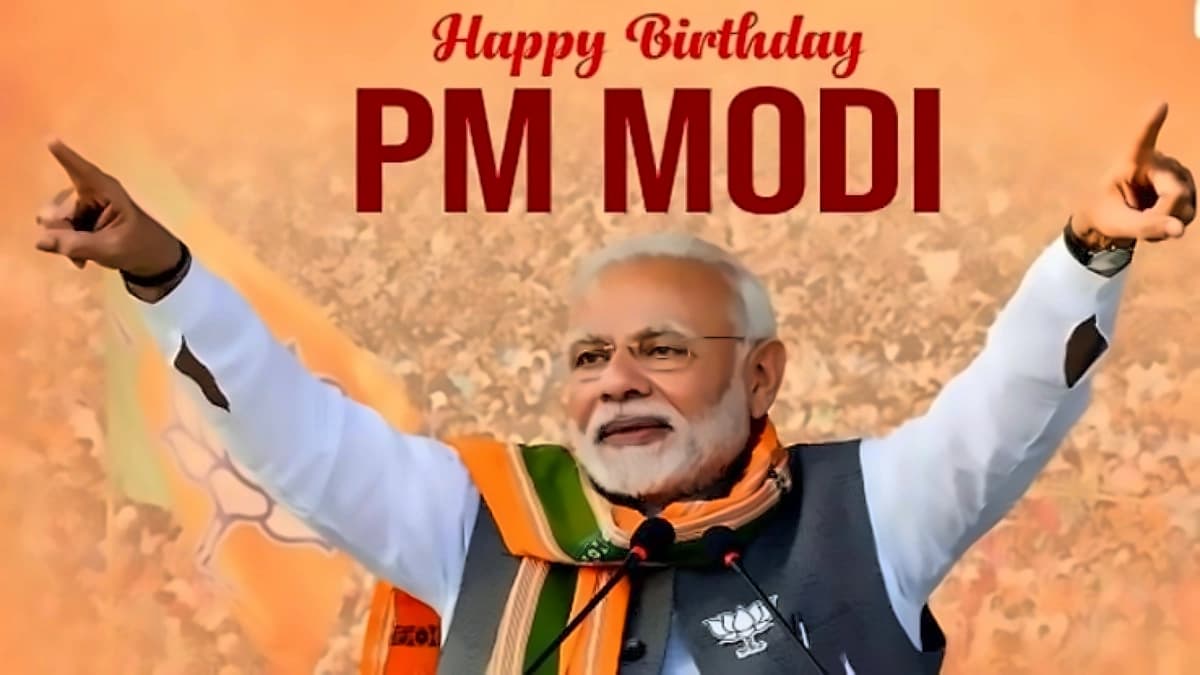
The Bharatiya Janata Party (BJP) has launched an appeal for people to light an 'Aashirwad Ka Diya' at their homes on September 17, Prime Minister Narendra Modi's birthday. BJP president Nitin Nabin, Union Minister Kiren Rijiju and other party leaders have made the appeal through social media, marking the beginning of the month-long 'Seva Sankalp Abhiyan' campaign. The lamp-lighting initiative is part of the nationwide programme, known as the 'Service and Resolve Campaign', which will run until October 17th and will bring together tens of millions of people across India through a variety of public events. According to The Irish Times, these include lighting earthen oil lamps, mass prayers, youth and women's rallies, cultural programmes, health and welfare camps, and cleanliness drives that deftly combine public service with political outreach as the BJP prepares for a series of critical state elections early next year. BJP-led governments in 21 of India's 28 states and federally administered Territories are competing to outdo one another in the scale and grandeur of their birthday tributes to Modi.
Launched in 2015, the Digital India programme has fundamentally transformed India's governance, banking, and citizen services through technology. According to government materials, over 50 crore bank accounts are now linked through Jan Dhan, Aadhaar, and mobile numbers, enabling seamless Direct Benefit Transfers by curbing leakages and cutting out middlemen. However, independent researchers have documented persistent exclusion problems, where biometric authentication failures, Aadhaar mismatches, and poor rural connectivity have denied genuine beneficiaries access to welfare entitlements. UPI has revolutionised retail transactions, driving a majority share of real-time digital payments globally by volume, with the system now expanding to markets including the UAE, Singapore, France, Mauritius, and Sri Lanka. Just last month, UPI completed 10 years since its implementation, with 23.66 billion transactions taking place in August alone, valued at approximately ₹29.88 lakh crore. Despite this growth, UPI-related fraud cases have risen sharply, with annual fraud value now running into thousands of crores, and transactions above ₹10,000 accounting for the overwhelming majority of that fraud value.
India's economic transformation under Prime Minister Narendra Modi has positioned the country as a major global player. According to reports from Goodreturns, India's real GDP expanded 7.8% in the April-June quarter of FY27, with real gross value added growing 8.2% and investment increasing 11.9%. The country's nominal economic size is now estimated at around ₹360 lakh crore ($4.15 trillion). India has achieved the status of the world's fourth-largest holder of foreign exchange reserves, with reserves reaching a record $785.7 billion in the week ended September 4, 2026, as reported by the Reserve Bank of India. The government points to over 42 lakh kilometres of optical fibre laid to villages and an accelerated 5G base station rollout across remote and border regions as evidence of closing India's connectivity gap.
The government's Startup India initiative has cultivated what officials describe as the world's third-largest startup ecosystem, surpassing 150,000 recognised startups. The government is also supporting several indigenous AI platforms like Sarvam AI and BharatGen with compute and other initiatives. Electronics and mobile phone manufacturing have grown substantially over the decade, framed as evidence of progress under the Aatmanirbhar Bharat and Make in India frameworks. However, economists tracking the sector have pointed out that a meaningful share of this growth has come from assembly-stage manufacturing rather than deep value-chain localisation, meaning the domestic value-add in components and design remains a separate, less resolved question. The government notes that mobile payments have regularly outpaced traditional ATM cash withdrawals, framing this as evidence that millions of previously unbanked citizens have been drawn into the formal economic mainstream.
The India Semiconductor Mission has made significant progress in 2026, with 12 approved semiconductor units backed by roughly $20 billion in committed investment, with three units already producing chips. Projects under the mission include Micron's assembly and test plant in Sanand, the Tata-PSMC wafer fab at Dholera, and OSAT facilities from Kaynes Technology and Tata Electronics, spread across six states with a combined approved investment of over ₹1.6 lakh crore as of mid-2026. This chip push is closely tied to India's parallel data centre boom, driven by rising AI compute demand. Google has committed close to $15 billion to build a 1-gigawatt hyperscale data centre campus across three sites in Visakhapatnam, its largest such investment outside the United States, backed by new subsea cable landing stations. Reliance Industries has separately proposed an even larger 1.5-gigawatt, ₹1.6 lakh crore AI-focused data centre cluster nearby, while Meta and Tillman Global Holdings have signed on for additional facilities worth billions more in the same coastal belt.
The government's focus on financial inclusion has been substantial, with the Pradhan Mantri Jan Dhan Yojana launched in 2014 bringing millions of previously unbanked people into the formal financial system. Centralised platforms such as DigiLocker, UMANG, CoWIN, and the Government e-Marketplace are positioned as having made public entitlements transparent, paperless, and accessible on demand. The government cites expanded telemedicine access through eSanjeevani, streamlined hospital operations via e-Hospital, and wider educational reach through PM eVidya and the PMGDISHA digital literacy programme as key outcomes of the digital push. Under PM SVANidhi scheme, street vendors were provided collective collateral-free loans worth approximately ₹80-85 thousand, which they used to expand their businesses, with average annual income of these beneficiaries increasing by 20%. However, independent assessments of digital literacy programmes in India have noted that reach and actual skill-building outcomes are not always the same thing, with significant portions of the population, particularly elderly and less-educated citizens, still reporting difficulty navigating digital services independently.
The massive birthday celebrations have drawn mixed reactions from political circles. Opposition Congress Party leader Motha Rohith from the southern Telangana state criticized the BJP for asking Indians to light lamps rather than providing jobs to young people. Bihar MP Pappu Yadav questioned the timing of the celebrations, stating the BJP should first help provide relief to the state's flood victims before launching its 30-day choreographed birthday venture. However, BJP national president Nitin Nabin emphasized that the programme would focus on commemorating Modi's 25 years in public life and highlighting his contribution to the country, portraying Modi's journey from an ordinary party worker to becoming the 'people's chief servant' through service and determination. The celebrations will culminate on October 17th with a Good Governance Dialogue in Mumbai, celebrating BJP initiatives and marking Modi's 25-year journey in public service as Chief Minister and Prime Minister, with the campaign also marking 25 years since Modi first became Gujarat Chief Minister in October 2001.