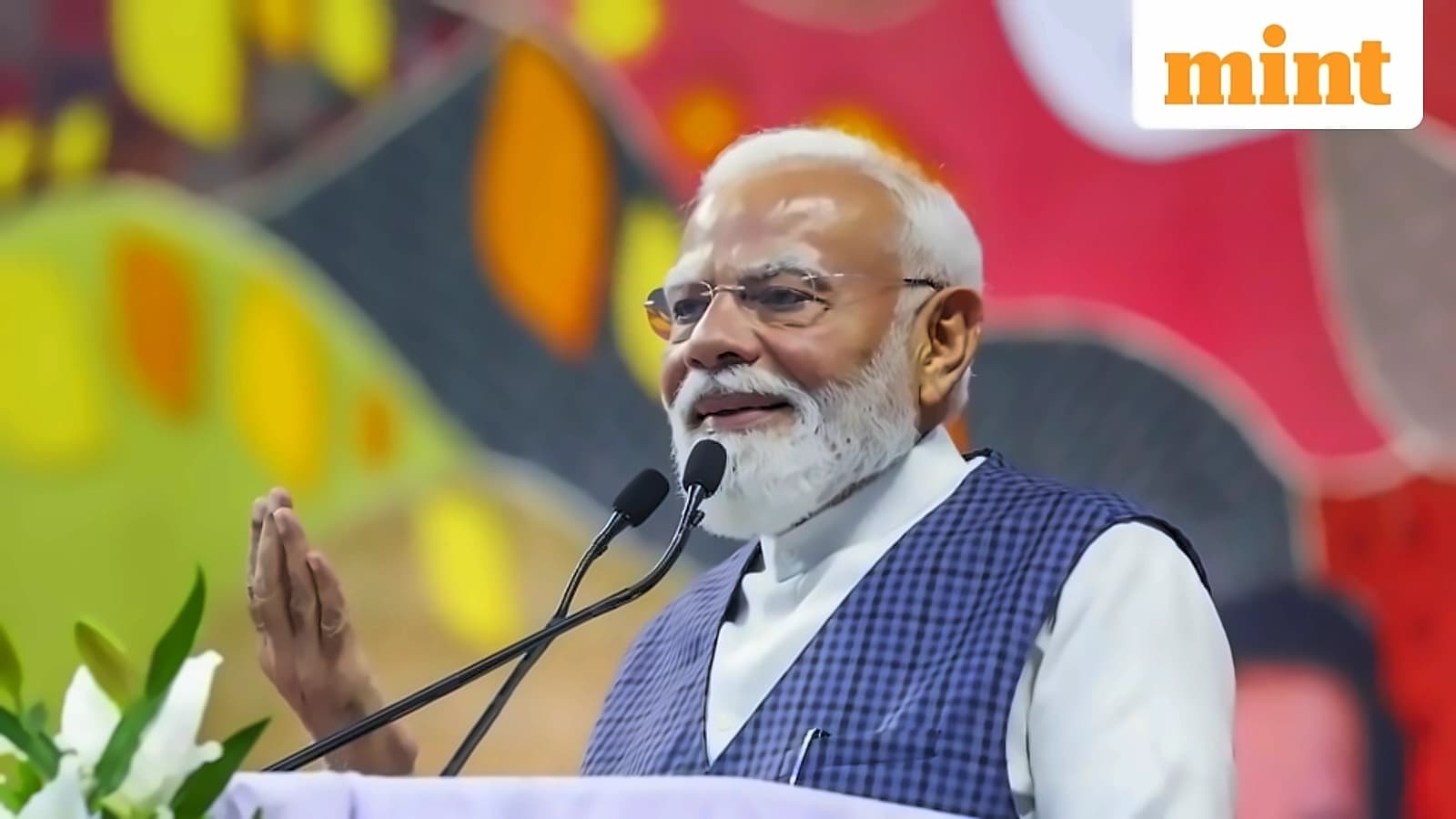
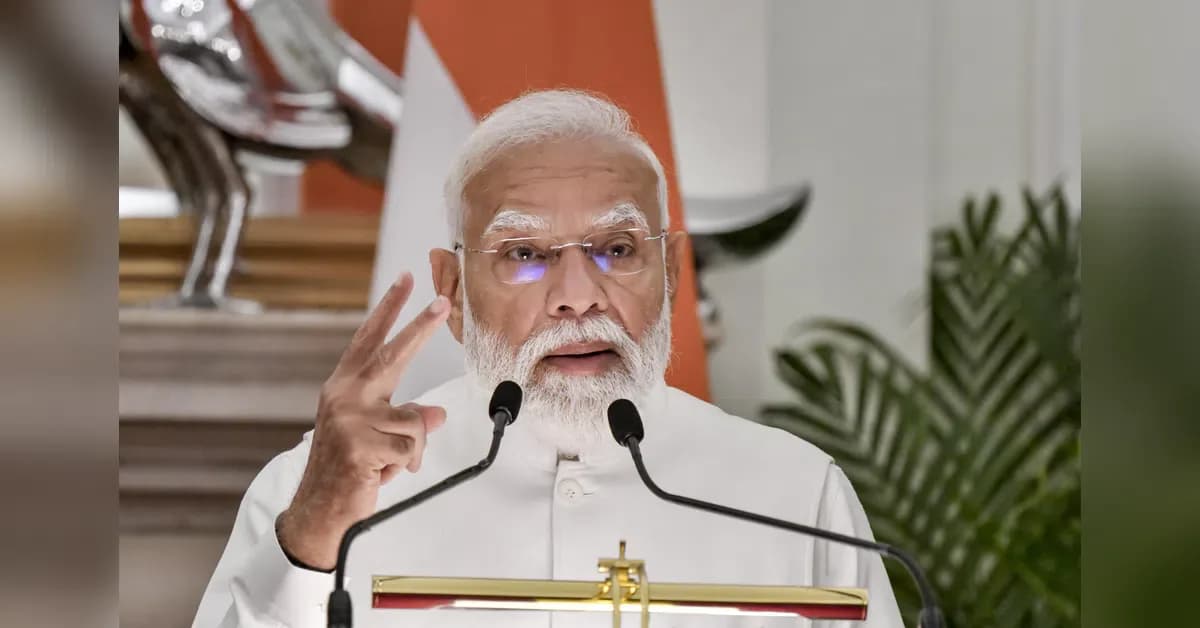
Prime Minister Narendra Modi on Wednesday became India's longest-serving elected prime minister, surpassing first Prime Minister Jawaharlal Nehru's record. The Union Cabinet passed a resolution to felicitate Modi for this historic achievement, with Cabinet members giving him a standing ovation and NDA leaders presenting congratulatory messages. According to reports from Business Standard, Modi received congratulatory messages from several heads of government including European Commission President Ursula von der Leyen, Italian Prime Minister Georgia Meloni, German Chancellor Friedrich Merz, and Canadian Prime Minister Mark Carney. Modi took oath as the prime minister of India for the first time on May 26, 2014, becoming the first ever prime minister to be born after India attained Independence. His second term began on May 30, 2019, and Modi was sworn-in as the prime minister for the third consecutive term on June 9, 2024, following another victory in the 2024 parliamentary elections. On June 10 this year, Modi also crossed the record of first prime minister Jawaharlal Nehru's 4,398 days in power as an elected prime minister following the 1952 general elections.
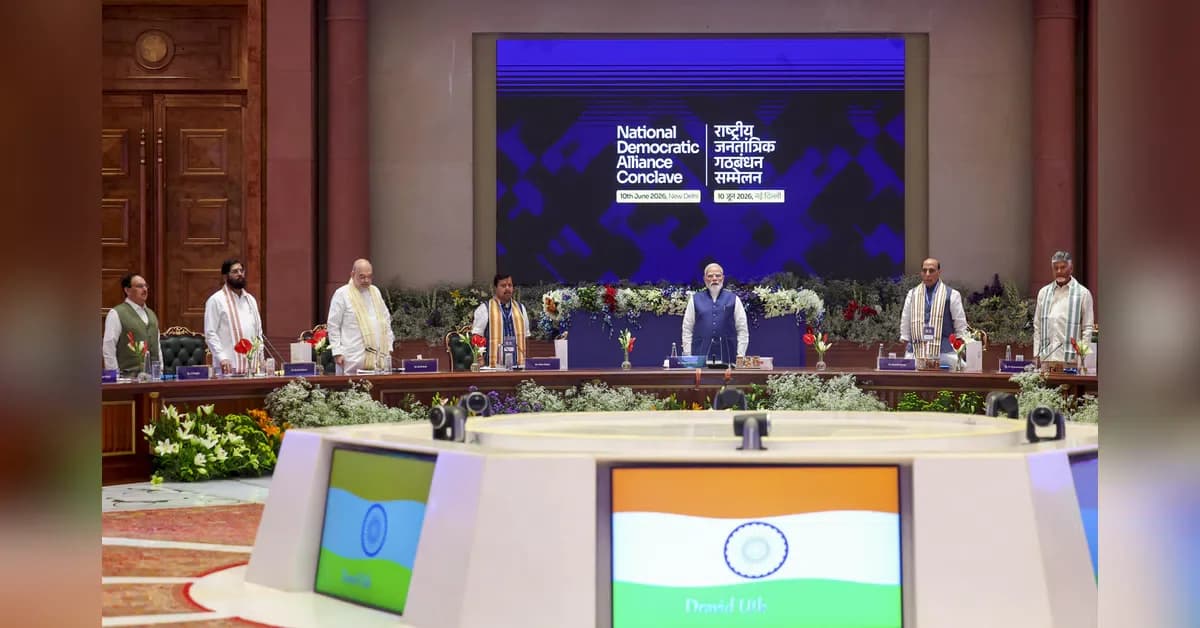
Addressing NDA leaders including chief ministers, Modi emphasized that youth-led development has been one of the defining features of the last 12 years, with India's youth making their mark across various sectors from science and technology to manufacturing, space, semiconductors and drones. As reported by Business Standard, Modi highlighted that the NDA government is strongly working towards youth-led development and noted that one of the defining features of the last 12 years has been the confidence with which India's youth have pursued their aspirations. The PM pointed out that through initiatives such as Startup India, Digital India, Skill India and Atal Innovation Mission, an ecosystem has emerged that encourages innovation, entrepreneurship and enterprise. He stressed that today, India is among the world's leading start-up destinations, and many of these success stories are being scripted by our Yuva Shakti and that too from smaller towns and villages. Modi noted that it is heartening to see young Indians contributing to areas that will shape the future of the nation and the world.
Modi's tenure witnessed several transformative economic reforms that fundamentally altered India's economic landscape. The GST implementation on July 1, 2017, replaced the complicated web of central and state levies with a unified indirect tax system, creating a single national market and reducing cascading taxation. The most significant GST reform came on September 6, 2025, when the GST Council approved major rationalization, removing the 12% and 28% slabs for most products while retaining two principal rates of 5% and 18%. The Insolvency and Bankruptcy Code (IBC) enacted in 2016 has been a game-changer, with creditors realizing more than ₹4 lakh crore through resolution plans by March 2026, as per a PIB release. The banking system transformation saw gross non-performing assets fall from nearly 11.8% in 2017 to around 2.1% by September 2025.
Modi emphasized that "We must realise the aspirations of India's youth, its women, its middle class, and its farmers" while addressing NDA leaders. He noted that "A major success of the NDA's 12 years in power is that the country has broken free from the web of Congress's machinations" and highlighted that "Today, every citizen of the country is filled with the dream of a Viksit Bharat. The dream of a Viksit Bharat is no longer limited to any single individual, government, or political party; it has become the dream and the resolve of every single person in the country." The PM stressed that "Sabka Prayas" is the driving force behind Viksit Bharat. Modi pointed out that "There is another notable aspect of the NDA's achievements over these 12 years: we secured them amidst a period of global instability and turmoil. This era has repeatedly demonstrated the benefits of having a stable government." He highlighted India's resilience during the COVID-19 pandemic and noted that India achieved a growth rate of 7.7% in 2025-26, with the last quarter ending March 31st recording 7.8% growth.
India's digital transformation under Modi's leadership has been remarkable, with the Unified Payments Interface (UPI) processing ₹29.9 lakh crore worth of transactions in May 2026 alone. By 2025, India accounted for roughly half of global digital transaction volume through UPI. The PLI schemes attracted investments exceeding ₹2.16 lakh crore by December 2025, as per the PIB, forming part of a broader manufacturing push including Make in India and PM Gati Shakti infrastructure programme. India currently has 15 operational free trade agreements covering 27 countries, with nine more involving 42 countries awaiting implementation. The government has concluded negotiations with the European Union and New Zealand, while discussions continue with the United States and other key partners.