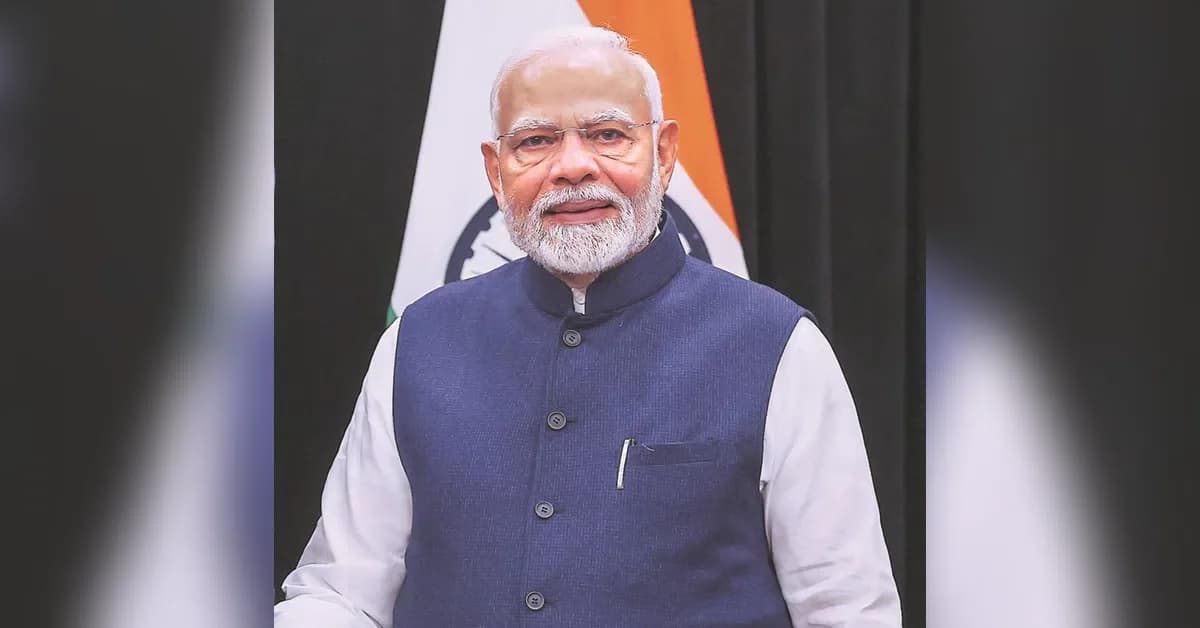
PM Narendra Modi is scheduled to visit Tarakeswar on June 20 to attend West Bengal Foundation Day celebrations, marking his first visit to the state after the BJP government was sworn in last month. The choice of Tarakeswar carries deep historical significance, as it was the site of a three-day meeting of the Bangiya Hindu Mahasabha from April 4-7, 1947, where Syama Prasad Mookerjee led the proposal for West Bengal to remain part of independent India. BJP leaders have credited Mookerjee for playing a decisive role in resisting efforts that could have resulted in the whole of Bengal joining Pakistan. The Foundation Day programmes will be organised not merely as political events, but as commemorations of Bengal's cultural and nationalist legacy, with the party planning to pay respect to all freedom fighters from the state and highlight sacrifices that helped ensure West Bengal remained part of India.
The Bharatiya Janata Party has stepped up election preparations in Goa, Punjab, Uttarakhand, and Uttar Pradesh amid growing speculation that assembly elections could be held ahead of schedule to avoid overlapping with the 2027 Census. Party leaders across key states have reportedly been advised to accelerate organisational efforts as discussions gain momentum over the possibility of advancing the polls by a few weeks or even months. Goa, Punjab, Uttarakhand, and Manipur Assembly terms are due to end in March 2027, while Uttar Pradesh Assembly's term expires in May 2027. In Uttarakhand, some BJP leaders have suggested conducting elections as early as December 2026 to allow administrative personnel adequate time before Census duties begin. As per Hindustan Times, BJP's core committees in the election-bound states have been directed to fast-track their preparations amid growing speculation that the Assembly polls may be held ahead of schedule.

Under Article 172 of the Constitution, State Legislative Assemblies have a normal term of five years, but the phrase 'unless sooner dissolved' allows for early termination. According to The Indian Express, there are two constitutional routes for holding elections before the scheduled end of a House's five-year term. The first route involves elections within the six-month pre-expiry window under Section 15 of the Representation of the People Act, 1951, while the second route involves premature Assembly dissolution under Article 174 of the Constitution. The 2002 Gujarat Assembly dissolution due to communal riots established key legal precedents for advance elections, with the Supreme Court holding that Article 174's requirement of no more than six months between Assembly sessions does not apply to dissolved Houses.
Beyond logistical considerations, party leaders believe an early election could provide strategic advantages by capitalizing on the momentum generated by the BJP's recent success in West Bengal. A senior BJP leader told The Indian Express they want to cash in on the momentum gained from the party's electoral success in the West Bengal elections, which he attributed to Hindu consolidation and believes the same factor could significantly influence the party's prospects in UP and Uttarakhand. In Punjab, political activity has intensified with both the BJP and ruling Aam Aadmi Party appearing to prepare for an earlier-than-expected contest, while the BJP, contesting without its former alliance partner Shiromani Akali Dal, has already directed workers to strengthen grassroots outreach. In Goa, where the BJP emerged as the largest force in the 2022 assembly election, party leaders are preparing for a shorter campaign window amid concerns that opposition groups could gain traction on land use and environmental policy issues.
The primary concern over potential overlap between Census and Assembly elections stems from anticipated strain on government manpower. Both the Census and assembly elections require extensive deployment of teachers and government employees, creating concerns over staffing shortages if the two exercises occur simultaneously. Census 2027 is being conducted in two phases, with the first phase, a house listing exercise currently underway, while the second phase of the Census exercise, in which socio-economic, educational and fertility data will be collected for inclusion in the caste census, is scheduled to begin across the country in February 2027. As per Hindustan Times, "Enumerators and polling personnel are likely to be drawn from the same pool–mostly teachers and government employees– which will lead to manpower shortage." The anticipated strain on government manpower has prompted discussions about advancement of Assembly elections to avoid simultaneous deployment requirements.
Unlike the other states expected to head to the polls, Manipur's election schedule remains unclear due to ongoing security challenges. The northeastern state has witnessed recurring ethnic violence since 2023, with tensions involving multiple communities continuing to pose challenges for normal political activity. The BJP is keeping a close watch on Manipur, the fifth state that was scheduled to to the polls with the remaining states early next year. However, given that the state has been rocked by sporadic instances of violence---first by the Kuki-Meitei clashes in 2023 and now a flare-up in Kuki-Naga clashes in recent months---elections may be held at a later date. The Election Commission holds the final decision on potential schedule advancement, with the BJP believing an early election could allow them to capitalize on positive sentiment before political conditions change.