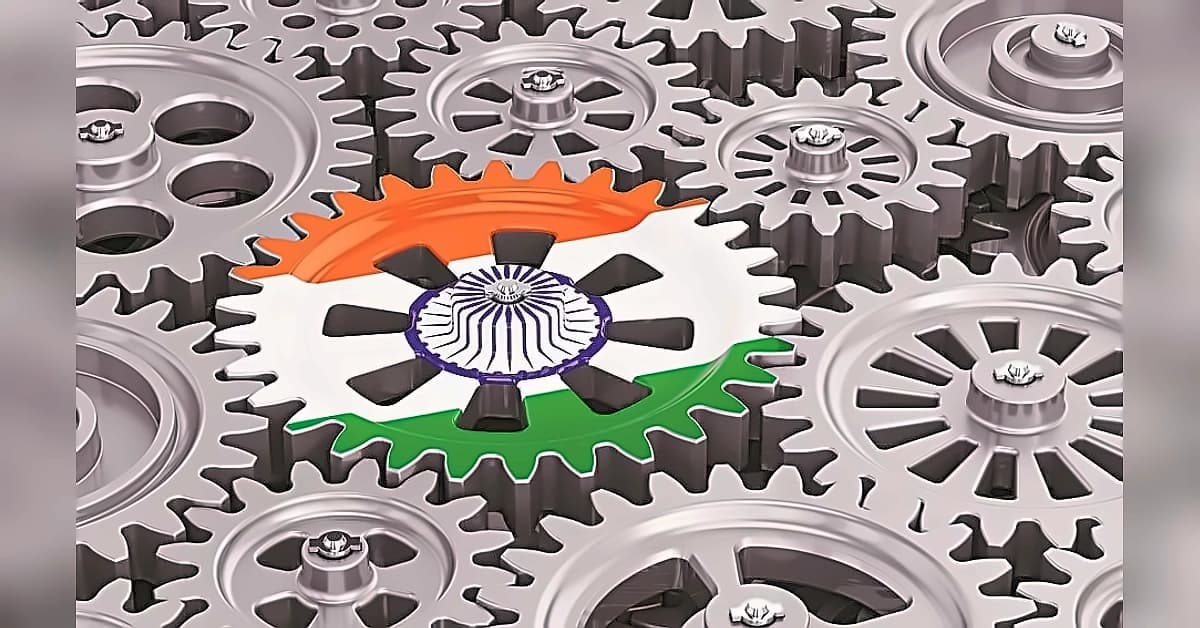
India's economic journey since Independence has been marked by a gradual transformation from government-controlled systems to market-oriented models. From 1947 to 1991, businesses operated under a complex system of licences, permits, quotas and government approvals, with companies requiring government permission to start factories, expand production, or enter certain industries. Imports were heavily restricted, creating a system designed to prevent concentration of economic power and protect domestic industry. However, this system eventually became associated with delays, excessive bureaucracy, weak competition and inefficiency, creating pressure for fundamental economic policy changes. The government, in its Industrial Policy Resolution of 1956, stated: "Parliament has accepted the socialist pattern of society as the objective of social and economic policy" and decentralized authority through a licensing system that became known as the "License Raj".
The biggest economic reform in modern Indian history came in 1991 under Prime Minister P V Narasimha Rao with Manmohan Singh as finance minister. India was facing a severe balance-of-payments crisis with foreign exchange reserves under intense pressure. The reforms are commonly described as liberalisation, privatisation and globalisation (LPG). Under these reforms, industrial licensing was substantially dismantled, restrictions on imports were reduced, foreign investment rules were liberalised and the private sector received a much larger role. The government also began reducing its direct involvement in several commercial activities, effectively shifting India from a heavily controlled economy towards a more market-oriented model. India's GDP growth rate rose from around 1 percent in 1991 to 7.1 percent in 1995, demonstrating the immediate impact of these structural changes.
India's economic transformation is evident in the dramatic scale of its growth since Independence. India's nominal GDP was estimated at $3.96 trillion in 2025 by the World Bank, with GDP per capita at about $2,702.5. The country achieved real GDP growth of 7.7% in FY2025-26, demonstrating sustained economic momentum. India's current nominal GDP is estimated to be approximately ₹345.47 lakh crore, representing a fundamental shift from the ₹2.7 lakh crore economy inherited in 1947 to the nearly $4 trillion economy of today. This represents a stark contrast to the ₹2.7 lakh crore economy inherited in 1947 and the 1% GDP growth during colonial rule, with the World Bank estimating that India would need sustained growth of around 7.8% annually for two decades to reach high-income status by 2047.
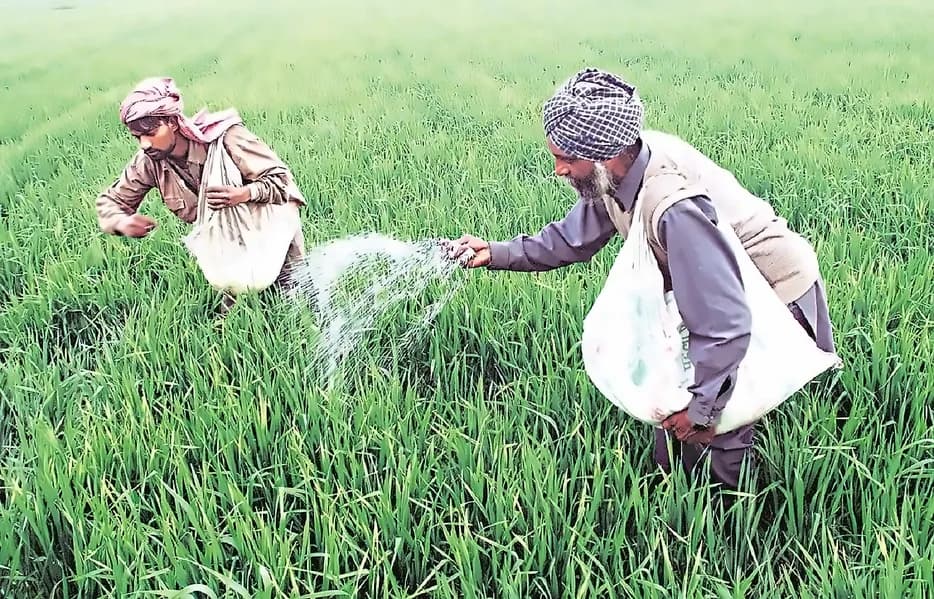
The agricultural sector underwent a remarkable transformation through the Green Revolution in the 1960s, which transformed India from an agrarian economy with agriculture contributing 54% of GDP in 1950-51 to a more diversified economy. Food grain production increased from 51 million tonnes in 1950-51 to an estimated 376.563 million tonnes in 2026, according to the Third Advance Estimates. The Green Revolution focused on wheat and rice production, introducing high-yielding varieties of seeds, increased use of chemical fertilizers, and government support through minimum support prices. India is now the world's second-largest steel producer with production reaching 141 million tons in 2023, following the Soviet-style industrialization model under Prime Minister Jawaharlal Nehru from 1951. Major public sector enterprises were established between 1956 and 1980, such as Hindustan Steel Limited, the Oil and Natural Gas Commission (ONGC) in 1956, Bharat Heavy Electricals Limited (BHEL), Indian Oil Corporation (IOC), and Hindustan Aeronautics Limited (HAL). Despite criticism for restricting private investment through licensing, this approach gave a major push to the country's GDP growth, with GDP growth between 1950-64 averaging about 4% in contrast to roughly 1% per year under colonial rule.
The services sector's dominance became evident only in recent years, with services not clearing the halfway mark until 2012-13. The secondary sector—manufacturing, utilities and construction—barely moved, drifting around the mid-to-high 20s and peaking near 30% in the mid-2000s before easing back. Manufacturing's share in overall GVA hovered between 16 and 20% for the entire period, edging above agriculture only briefly, before both were left far behind by the services surge. By 2025-26, manufacturing's share had actually drifted down to about 14%. However, manufacturing is once again a policy priority with production-linked incentive schemes aiming to boost domestic manufacturing, attract investment and integrate India into global supply chains. Unlike earlier protectionist approaches, the current strategy focuses on competitiveness, scale and export orientation. According to the Economic Survey 2025-26, manufacturing accounted for 12.1% of employment in 2025, while construction contributed another 12.0%, with the broader secondary sector accounting for roughly 25% of total employment.
Digital transformation has become a cornerstone of India's economic infrastructure, with UPI processing 24,161.69 crore transactions worth ₹314.23 lakh crore in FY2025-26, up from 4,595.61 crore transactions in FY2021-22. UPI now has 55.49 crore users by June 2026, demonstrating exponential growth in digital payments adoption. India had 1,092.79 million internet subscribers at the end of March 2026, including 1,065.88 million broadband subscriptions, reflecting near-universal digital access. Electricity generating capacity has risen from 1,362 MW at Independence to nearly 557 GW by March 2025, with per-capita electricity consumption increasing from 16.3 units in 1947 to about 1,400 units in FY2024-25**. The digital economy grew 2.4 times faster than the overall economy, with its share in 2022-2023 GDP around 11-12%. Aadhaar-based e-KYC reduced the cost of consumer onboarding for banks, simplifying financial service access, while the number of GST taxpayers increased from 66.5 lakh in 2017 to 1.65 crore in May 2026, supported by the GSTN digital platform.