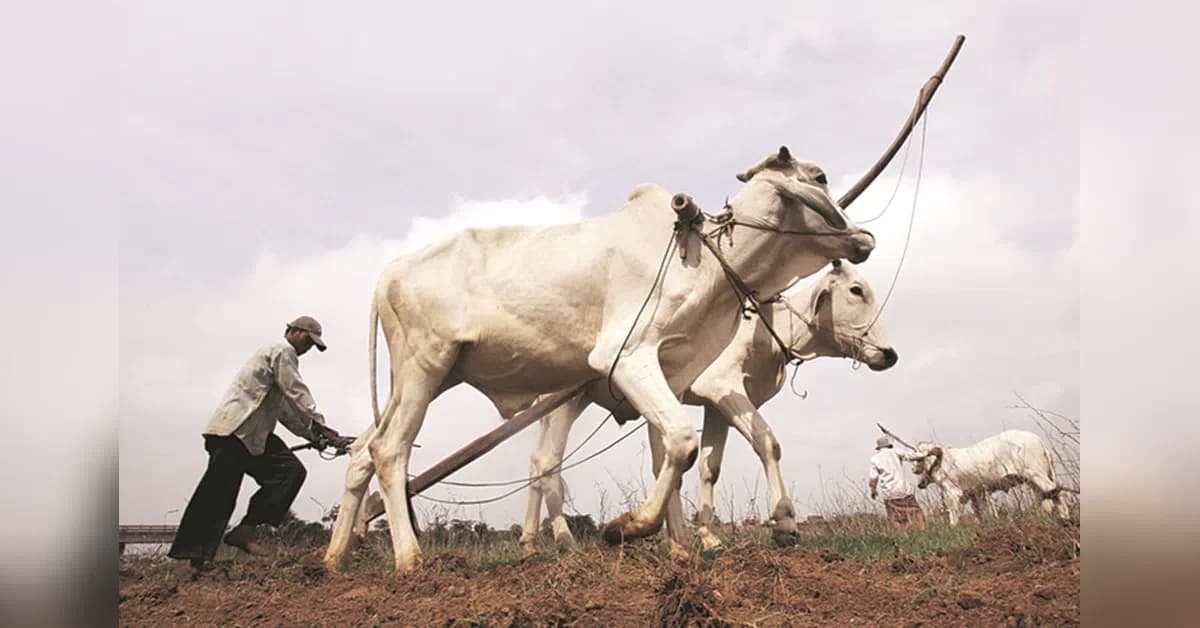
The World Meteorological Organization (WMO) has forecast a stronger-than-usual El Niño cycle, prompting the Food and Agriculture Organization (FAO) to conduct comprehensive risk analysis using 41 years of historical satellite imagery. According to FAO's Agricultural Stress Index System (ASIS), the risks are sharpest in the Sahel, across Southern Africa, in South and Southeast Asia, and in Central America's Dry Corridor and the Caribbean, where agricultural and pastureland areas face more than a 50 percent chance of drought over the coming months. Many of these same regions were severely impacted during the El Niño events of 2015–16 and 2023–24, with 2015–16 alone affecting more than 60 million people and prompting $5 billion in humanitarian appeals across 23 countries. As noted by Jorge Alvar-Beltrán, FAO Natural Resources Officer, "This isn't like previous El Niños. The planet is much warmer today, and with conflict and food insecurity widespread, this new phase will hit hardest in places that are already vulnerable and have limited coping capacity."
The Super El Niño 2026 is shaping up as the most intense episode ever recorded, with arrival expected between June and August and a 90% probability of persistence until November, according to the World Meteorological Organization. However, as noted by David Rees, Head of Global Economics at Schroders, "the threat of a powerful El Niño adds to other factors that already suggest that food prices are set to rise in the coming months." By the end of May, over 50% of the United States was hit by drought, with about 250 million acres of crops affected, while Europe was experiencing an unprecedented heatwave in May. Michael Snyder labels it a "Godzilla El Niño," with the episode expected to persist through at least year-end. Historically, a very strong El Niño would imply a doubling of global food prices compared to current levels over the course of a year, with food inflation in the G7 likely hitting double digits in 2027, adding over one percentage point to overall inflation if the FAO index rose by 50% by the end of the year. According to S&P Global, a typical El Niño can lift real commodity-price inflation by roughly 3% over a six-to-twelve-month period, with food commodities carrying most of the impact.
The convergence of El Niño 2026 with pre-existing structural shocks creates unprecedented agricultural risks. Geopolitical instability in the Persian Gulf has turned the Strait of Hormuz into an agricultural risk multiplier, with a third of global fertilizer trade passing through this route. Urea prices have doubled since the start of the conflict, with production plants in India and Bangladesh already halted due to natural gas shortages and China limiting export quotas to protect domestic production. The United States imports 90% of their potassium, making the country particularly vulnerable to supply disruptions. Analysts estimate that three to four million tons of fertilizer supply have been cut since the closure, with the six-to-twelve-month lag in El Niño's production impact aligning with the observed fertilizer disruption. Benoît Harger, Portfolio Manager of the JSS Commodity Transition Enhanced Fund, warns that "a third of global fertilizer trade passes through this route, making the Strait of Hormuz an agricultural risk multiplier."
While El Niño 2026 presents significant challenges, the impact varies regionally with some positive effects emerging. In Central America, the Caribbean, and Colombia, severe dryness threatens maize and rice crops, while some analysts expect the current El Niño to usher in drought conditions for growers in Indonesia, India, and parts of Australia. However, if the El Niño shifts the Pacific jet stream south and east, it will likely bring wetter conditions to the southern US and parts of the US Plains, which could be beneficial for drought-ridden growing regions. Brazil tends to benefit from El Niño rainfall on its soy crops, and Southern Africa is projected to have above-average cereal output for 2026. According to the analysis reported by Business Standard, equity market outcomes varied sharply across El Niño episodes, with no sector consistently underperforming or outperforming in every episode, and rural demand indicators exhibited greater sensitivity to deficient monsoons than broad equity indices. The euro area is less exposed, with Banco de España finding that El Niño has historically reduced euro-area inflation by around 0.3 percentage points after twelve months, largely because of composition effects and the Common Agricultural Policy.
Rice, wheat, sugar, and cocoa are identified as the crops most at risk of convergence between climatic effects and fertilizer shortages. For wheat, it is predicted that the cultivated area in Australia will suffer a sharp drop, with production potentially decreasing by about 9 million tons in 2026/27. For sugar, previous episodes of El Niño have seen production in India and Thailand plummet by 20-30%. The impact on sugar appears particularly acute because a growing share of stocks is diverted towards ethanol production, amplified by the oil shock in the Middle East. Cocoa already jumped from ₹2,500 to ₹12,000 per ton in 2024 after two consecutive years of El Niño, providing a difficult precedent to ignore. In the livestock sector, feed costs often represent over 60% of production costs, with a surge in corn or soy quickly transmitted to meat and derivatives, as seen in the 2007-2008 crisis when sharp corn increases forced US farmers to liquidate herds. Cashin, Mohaddes and Raissi estimate an increase of about 5% in global non-energy commodity prices, lasting between six and sixteen months, with food commodities carrying most of the impact.
The convergence of El Niño 2026, fertilizer shortages, and biofuel demand creates a perfect storm for global food prices that markets are not pricing in. Financial markets are currently discounting a rapid return to normality in the agricultural sector, overlooking the persistent structural constraints. As noted by Elise Beaufils from Lombard Odier, "resilience is quickly moving from a defensive element to a central factor of competitiveness and value creation," with three capabilities becoming priorities: strengthening the resilience of physical assets, ensuring the value chains linked to water and agriculture, and developing predictive tools to anticipate risks. LOIM predicts that this dynamic will represent one of the most relevant investment priorities of the next decade, with a structural reallocation of capital towards adaptation solutions. For investors, a selective exposure to agricultural commodities can represent an element of uncorrelated diversification in a multi-asset portfolio, as the current window to position on agricultural commodities as an uncorrelated diversification element is narrowing. In equities, the typical winners are fertilizer producers, agricultural input suppliers, and commodity exporters, while food processors, beverage companies, and other downstream consumers of agricultural inputs face margin pressure, with broader equity performance potentially weighed down by agricultural disruptions and supply-chain stress.