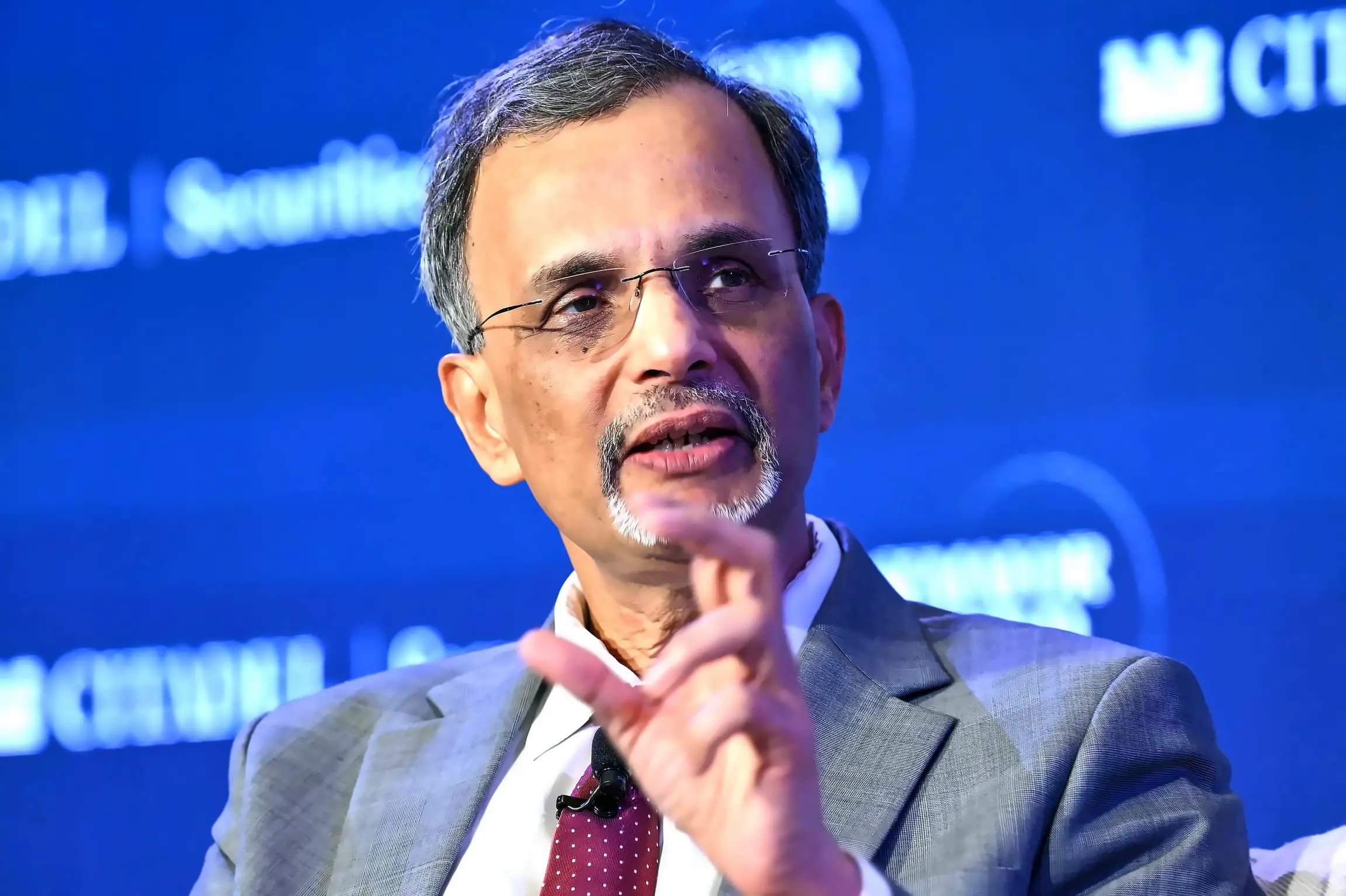
Economist Thomas Piketty argues that developed nations must fundamentally alter their economic trajectory to enable developing countries like India to achieve developed-world living standards. According to reports from Business Standard, Piketty, a professor at the Paris School of Economics, emphasized that the global North must stop growing to accommodate India's aspiration for prosperity convergence. He noted that this aspiration will persist regardless of Northern countries' preferences, stating that 'this aspiration is not going to go away even though people in the North can imagine a world where it will go away'. The economist's vision is detailed in the new 'Global Justice Report' published by the World Inequality Lab, which he co-founded, representing a comprehensive push from the modern eco-socialist left in the global battle for ideas.
Piketty outlined an ambitious plan for global income convergence that could see India's per capita income reach €60,000 in purchasing power parity terms by 2100. As reported by Business Standard, this would translate to approximately €5,000 per month at current exchange rates. The economist explained that 'our plan is to get India and the global South to the level of rich countries today, or even a bit higher to 5,000 euros as compared to 4,500 euros in North America today'. According to the Global Justice Report, this convergence is achievable while maintaining manageable global warming limits through major changes in production and consumption patterns. The report emphasizes that 'by the end of the century, the overwhelming majority of people on the planet could, work less and earn more' while keeping temperatures down and avoiding current destruction of nature.

According to Piketty's analysis, achieving this convergence will necessitate fundamental changes in global economic systems. As reported by Business Standard, he stated that 'We can reach 5,000 euro per month for all countries by 2100, including India. But, this requires different production systems than the one of the US today. So, it will be much less fossil fuels'. The Global Justice Report goes further than any previous study in addressing the flaw that has choked public support for climate action - the 'classless ecology' illusion of green growth that assumes everything can be solved by producing more without worrying about distribution or sufficiency. The report emphasizes that 'sufficiency does not mean degrowth' but rather 'less working hours, a different composition of consumption, and more health and education'. It challenges the far-right techno-extractivist vision championed by US President Donald Trump and Silicon Valley supporters who are putting artificial intelligence ahead of renewable technology, arguing that their dream of covering the entire planet with datacentres will only increase material footprint and worsen global warming.
The Global Justice Report acknowledges that achieving its vision will require a fundamental cultural shift in how people perceive prosperity. As reported by The Guardian, Cornelia Mohren, the environmental coordinator of the World Inequality Lab, says 'We try to capture the reality that happiness is not just determined by economic metrics. Preserving a habitable earth does not just have a monetary benefit. You can make life better if you have more time to spend with family or in nature'. The report welcomes debate and will be open for suggestions and revisions, with authors emphasizing they 'don't want to force people to change their lifestyle' but rather encourage cultural shifts. Piketty argues that 'there will be crises. People need to get accustomed to the fact that big change will happen in any case' and that beginning these debates now is crucial so that alternative ideas become more palatable in the future. The report addresses the fundamental question of how to reduce the material impact of economic activity - a topic long ignored by the traditional left - while incorporating important concepts of 'planetary habitability' and 'sufficiency'.