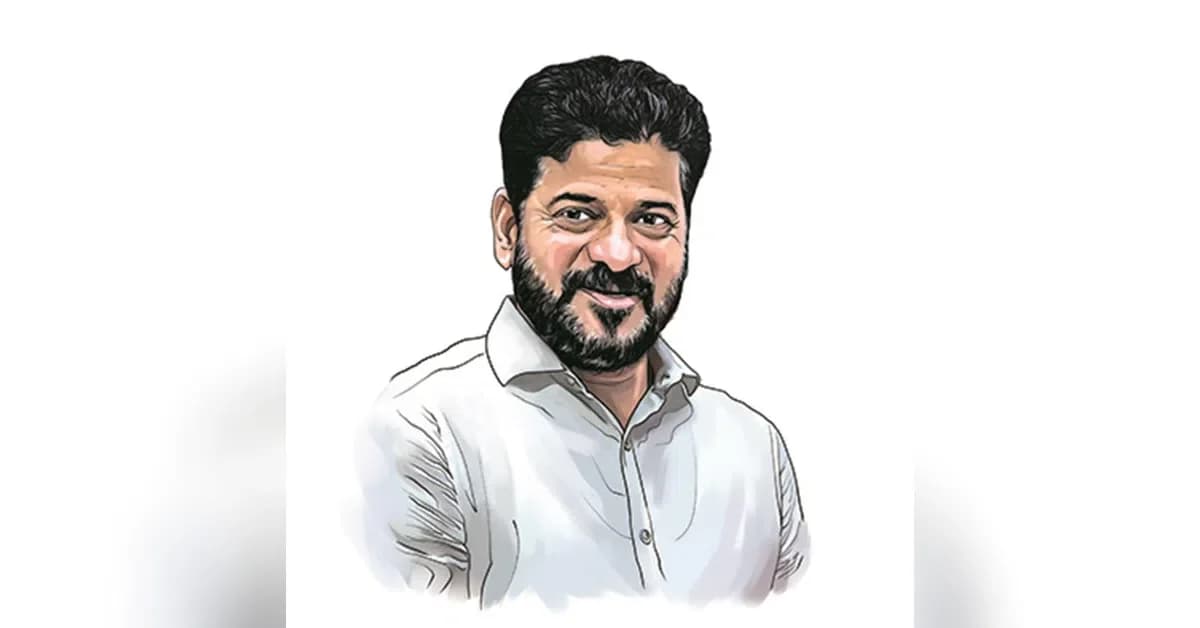
Telangana Chief Minister A Revanth Reddy has outlined ambitious plans to transform the state into a $3 trillion economy by 2047 and a $1 trillion economy by 2034, as reported by Business Standard. The CM emphasized that the state's vision extends beyond Hyderabad, with the government implementing the CURE-PURE-RARE framework to develop a multi-city economic model. According to the CM, Hyderabad generates nearly 60% of the state's total revenue but the government's strategy focuses on planned outward development through major infrastructure investments including new expressways and proposed airports at Warangal, Adilabad, Ramagundam, and Kothagudem. The CM reiterated that Telangana's long-term objective is to contribute 10 percent of India's Gross Domestic Product. Speaking at the inauguration of Premier Energies' solar module manufacturing facility at Shabad, the CM said, "I want to contribute 10% to the country's GDP by 2047," asking investors to leverage the state's proactive "Future City" policies to drive their own growth. He also referenced the Prime Minister's "Viksit Bharat 2047" goal, which targets a USD 30 trillion economy for India, stating "Want to contribute 10% to the economy, want to provide employment to our youth."
The government has decided to develop Telangana into three distinct layers — service, manufacturing and agricultural zones as part of efforts to check increasing pollution and make Hyderabad the most liveable city, as reported by The Times of India. The planning is prompted by the steep decline in living conditions in metropolitan cities like Delhi, Bengaluru and Mumbai where people had to remain indoors for days together. The Core Urban Region Economy (CURE) will focus on service sector development, the Peri-Urban Region Economy (PURE) will promote manufacturing and employment generation, while the Rural and Agricultural Region Economy (RARE) will focus on rural and agricultural economy. The CM emphasized that "We need to learn lessons from them by controlling spread of pollution," while taking steps for employment generation through the three-layered development strategy.
The Telangana Rising Global Summit in December attracted investment commitments worth ₹5.75 trillion across renewable energy, life sciences, data centres, artificial intelligence infrastructure, and entertainment sectors, as reported by Business Standard. More than 50 memoranda of understanding (MoUs) were signed with companies including Brookfield, GMR, and Aurobindo. The CM highlighted that the state is moving ahead with Phase-II of the Hyderabad Metro and developing a proposed bullet train hub near Shamshabad to connect Hyderabad with Mumbai, Pune, Bengaluru, and Chennai. Major projects include the Bharat Future City with potential to generate nearly 1.3 million jobs and the International Integrated Fruit Market at Koheda worth ₹2,284 crore. The launch of Premier Energies' solar module facility at Shabad represents a living example of the government's "Future City" policy, with the CM inviting investors to visit and see the ripple effect of such investments. The facility was inaugurated on July 9, 2026 in Shabad, Rangareddy district, forming part of the state's "Telangana Rising 2047" initiative which focuses on developing peri-urban industrial zones to stimulate regional economic growth.
According to Business Standard, the state is estimated to spend ₹50,713 crore on the six guarantees in 2026-27, compared with ₹56,084 crore the previous year. The CM explained that since December 2023, the government has raised ₹3.47 trillion in loans, of which nearly ₹3.3 trillion has gone towards repaying principal and servicing legacy debt inherited from the previous government. Telangana's public debt remains at around 29% of gross state domestic product, within Fiscal Responsibility and Budget Management Act limits. The CM emphasized that the government is committed to responsible fiscal management while investing in productive capex that creates assets and enables economic growth.
Speaking after inaugurating India's next generation solar module manufacturing unit established by Premier Energies at Shabad in Rangareddy district, the CM said Telangana has one of the country's best industrial policies. He described Hyderabad as one of the world's best cities to live in but acknowledged that pollution has emerged as a growing challenge. The CM announced that the State government has decided to clean the Musi River and will introduce a dedicated policy for the development of the city's core urban areas. The CM explained that Hyderabad is being redeveloped under the "CURE, PURE and RARE" model as part of the Telangana Rising vision, balancing urban growth, manufacturing, and agricultural progress. The government is also promoting an agriculture based economy beyond the Regional Ring Road to ensure balanced regional development. Calling Telangana a "symbol of religious harmony," Reddy said the government would continue supporting all communities, including financial assistance for Haj pilgrims and development of places of worship across faiths.
Highlighting the importance of workforce development, Revanth Reddy said the government is enhancing skill training for blue collar workers. He added that a Skill University is being established to equip youth with industry relevant skills and improve employment opportunities. The CM expressed concerns about Telangana's contribution to India's economic growth, stating that the state receives only 45 paise for every ₹1 it contributes in taxes. The government has urged the Finance Commission to increase the states' share in central taxes from 41% to 50% and pointed out that growing share of cesses and surcharges has reduced tax devolution to states. On welfare measures, the CM announced major employee welfare initiatives including salary credit on the first day of every month and a ₹1 crore insurance scheme. The CM described housing as a matter of dignity for the poor, stating "Owning a home is a lifetime dream for the poor as it is the very essence of their self-respect." The government has allocated ₹22,500 crore for the flagship Indiramma Housing Scheme, sanctioning 4.50 lakh houses with 1 lakh homes already completed in 13 months and the remaining 2 lakh to be finished by September 17. The CM also emphasized expanded food security measures, reporting 15,12,000 new ration cards issued and 30,038,000 people now able to enjoy meals cooked with fine rice.