Japanese government bond yields fell to more than one-month lows on Thursday as investors sought safe-haven assets following a global equity selloff. According to The Economic Times, the benchmark 10-year JGB yield fell 6.5 basis points to 2.93%, its lowest level since September 10. The selloff was triggered by hotter-than-expected US inflation data and renewed concerns over interest rates and AI-related investments. Technology stocks were among the biggest losers in the global equity rout as concerns about the sustainability of AI-related investments resurfaced, with US cloud-computing provider CoreWeave plunging more than 15% after media reports indicated its bonds had fallen to distressed debt levels.
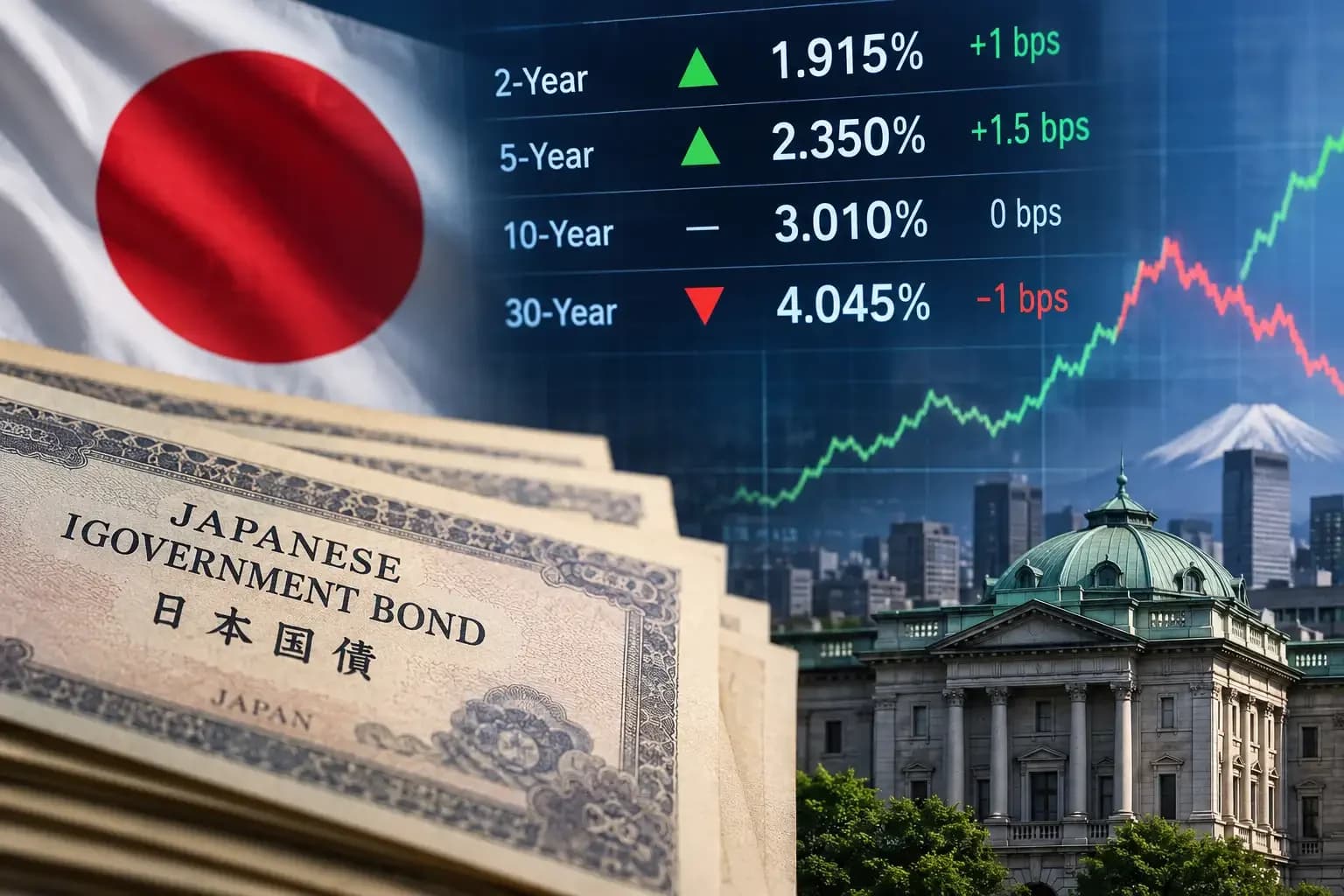
Japanese bond yields declined across all maturities as investors sought refuge from global market volatility. As reported by The Economic Times, the 30-year JGB yield dropped 4.5 basis points to 3.995%, slipping below the psychologically significant 4% threshold for the first time since September 10. The two-year JGB yield fell 1.5 basis points to 1.905%, while the five-year yield dropped 4.5 basis points to 2.325%, its lowest since September 18. The 20-year yield slid 6.5 basis points to 3.80%, also marking its lowest level since September 18. The decline in JGB yields suggested that demand for safer assets had strengthened amid uncertainty over the US interest-rate outlook and concerns about further losses in risk-sensitive markets.
The move followed the release of US consumer price inflation data that exceeded economists' expectations, prompting concerns that the Federal Reserve could raise interest rates more aggressively. According to The Economic Times, US Treasury yields initially rose in response to the inflation figures as investors reassessed the monetary policy outlook, but subsequently reversed course sharply with the benchmark 10-year US Treasury yield falling nearly 9 basis points to 5.1% on Thursday. The contrasting movements in global bond markets highlighted the uncertainty about monetary policy direction and its impact on risk assets.
Despite the global market volatility, investors largely shrugged off remarks by Bank of Japan board member Junko Koeda, who said the central bank should avoid becoming overly cautious about raising interest rates given the considerable upside risks to inflation. As reported by The Economic Times, her comments underscored the policy challenge facing the Bank of Japan as it balances persistent inflation risks against global financial market volatility. Market participants continue to expect the BOJ's terminal interest rate to be between 1.75% and 2%, with that level potentially reached by June next year. The latest quarterly Tankan business survey has reinforced expectations that upside risks to inflation expectations remain limited.
The decline in JGB yields on Thursday suggested that demand for safer assets had strengthened amid uncertainty over the US interest-rate outlook and concerns about further losses in risk-sensitive markets. According to The Economic Times, the relatively sharp fall in long-term and super-long yields largely represented a rebound from earlier market moves, with the sustainability of the decline remaining uncertain. Global bond markets offered limited direction, with US Treasury markets closed on Monday for the Columbus Day holiday, while Eurozone bond yields edged lower amid mixed energy prices and contained geopolitical risks. Investors are continuing to assess the outlook for Japanese monetary policy alongside developments in global bond markets, with changing expectations for interest rates and fiscal risks continuing to influence demand for government debt.