Indian government bonds experienced a positive turn on Tuesday as oil prices fell sharply, with Brent crude tumbling nearly 5% to $89.70 per barrel, reducing inflation worries among investors. As reported by The Economic Times, the benchmark 6.94% 2036 bond yield settled 2 basis points lower at 6.8488%, reversing Monday's rise. Despite new U.S. sanctions on Iran, traders remained vigilant regarding potential supply issues, with only two tankers crossing the Strait of Hormuz on Monday, the lowest daily count since early May. The successful state debt auction further bolstered market confidence, with Indian States raising ₹201 billion through bond sales earlier in the day, with some issuers securing their tightest spreads over central government debt in months. Strong liquidity levels throughout the day contributed to resilience in the debt market.
The Reserve Bank of India maintained the repo rate at 5.25% with a neutral stance, as reported by ETMarkets. According to Devang Shah, Head of Fixed Income at Axis AMC, the MPC's decision was broadly in line with expectations, with the RBI appearing comfortable with India's macroeconomic environment supported by resilient growth, contained core inflation, healthy liquidity conditions and improved external sector stability. Shah expects the rate hiking cycle to be shallow, with no more than 75 basis points of additional rate hikes over the cycle. As per Moneycontrol, the policy was expected to maintain status quo given that growth vs inflation dynamics have remained structurally unaltered between the June and August meetings, with even crude prices remaining closer to $90 per barrel over the next 3 months unlikely to breach the central bank's tolerance band. However, the surprise came from the minutes of the 3–5 August MPC, which revealed a growing tightening bias despite the unanimous fourth straight hold at 5.25% with a neutral stance. The early closure of its overseas deposit facility, a cheaper funding source for banks, also pushed three-month CD rates up, indicating potential future rate movements. Amit Somani from Tata Asset Management confirms that the RBI appears to be entering a prolonged pause in the interest rate cycle, with rates unlikely to move meaningfully either higher or lower in the near term. The RBI's August policy Minutes reinforced concerns that policymakers could raise rates if inflation risks broaden, prompting investors to consider barbell strategies or maintain a low-duration bias to limit interest-rate risk while retaining reinvestment flexibility.

Shah believes the fixed-income opportunity remains attractive, but the strategy now needs to shift from aggressive duration bets to quality and carry opportunities. As reported by ETMarkets, he favours the 3-5 year segment, particularly high-quality corporate bonds and select state development loans (SDLs), while maintaining a neutral stance on long-duration government securities. The focus is on earning attractive carry from carefully selected high-quality fixed-income assets rather than taking aggressive duration calls. According to Moneycontrol, 3-5 year Corporate Bonds for PSUs have fallen by ~40-45 bps since June policy and are now at ~30-35 bps above cost of offshore borrowing for similar tenor, with overall PSU supply expected to remain low over the next quarter given lucrative offshore borrowing costs. Recent market developments show cash index spreads held up better and only widened by 1bp, a sign that the market is proving resilient to government bond tensions, with the Xover widening by 6bp after hitting a low of 246bp in the previous week. Somani confirms that yields continue to remain attractive at around 7.00% to 7.25%, which is almost 175 to 200 basis points above the overnight rates, with most short-term instruments including one-year to three-year bonds trading at this historically high level.
Invesco, one of the world's largest asset managers managing $2.45 trillion globally, is bullish on Indian government bonds despite a delay in their inclusion in a key Bloomberg index. According to CNBC TV18, Norbert Ling, head of fixed income portfolio management for Asia Pacific at Invesco, favours longer-dated debt citing India's stable fiscal outlook and steep yield curve as key attractions. "The yield curve remains reasonably steep, offering more attractive carry and roll-down opportunities versus the front end," Ling told Reuters via email. India's benchmark 10-year government bond yield is around 6.87%, compared with about 6.49% for the five-year bond, while bonds maturing in 30 years or more yield about 7.45%-7.55%. Foreign investors have bought nearly $7 billion of Indian debt since the start of June, mostly securities under the Fully Accessible Route (FAR), which has no foreign investment limits. Ling expects Indian government bonds to eventually secure inclusion in Bloomberg's global aggregate bond index, viewing the recent deferral as a temporary setback, with any future index-related inflows likely to be concentrated in liquid benchmark bonds and longer-duration segments.
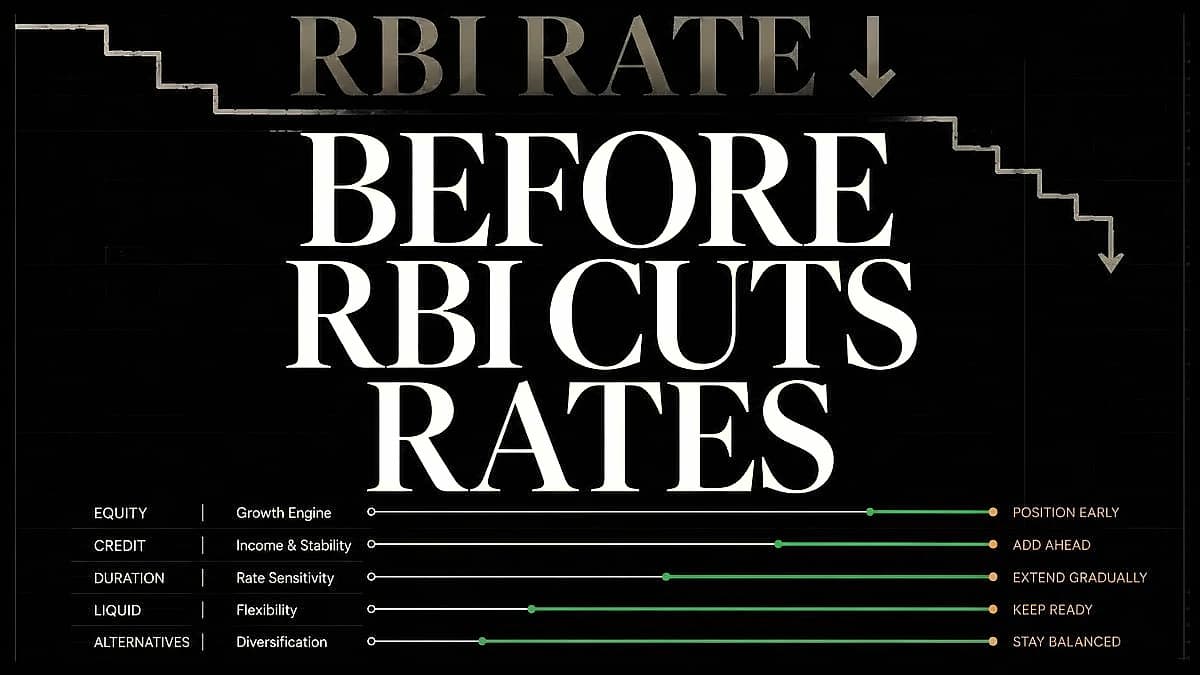
For investors with a ₹1 crore allocation and three-year horizon, Shah recommends favouring the 3-5 year segment of the curve, particularly high-quality corporate bonds and select SDLs. According to ETMarkets, the strategy emphasizes quality carry opportunities and selective positioning rather than aggressive duration bets. As per Moneycontrol, Ultra-Short and Low Duration categories remain attractive in the current market environment given spreads and overnight rates are significantly higher than historical averages in the background of favourable liquidity conditions. Somani suggests that a three-year time horizon is suitable for products taking exposure to longer-term bonds, such as Corporate Bond Fund or G-sec Fund, with a small portion (5-10%) invested in ultra category funds for unexpected requirements. The approach involves staying invested, staying selective, and focusing on quality opportunities, particularly in the 3-5 year segment of the curve. Bond funds offer significant advantages over direct bond ownership, providing ready liquidity at any point and flexibility to redeem investments for partial or full amounts when circumstances change, while high-quality bonds may have exit requirements that don't always match investment amounts.
Shah notes that crude oil remains the most important external risk for India, with higher oil prices potentially creating upward pressure on inflation and bond yields. As reported by ETMarkets, the base case expects oil sustaining above US$100 per barrel to be unlikely. The key risk that Middle East escalation has uncovered is lack of availability of crude and the resulting second order impact on supply chain and consequently on growth. As per Moneycontrol, rising US bond yields, rupee weakness and shifting liquidity are reshaping the fixed-income landscape, with the RBI's recent measures on the forex front expected to meaningfully improve liquidity going forward. Additional $70-80 billion in FCNR (B) is expected to improve banking liquidity, supporting the current fixed-income environment. Somani confirms that oil prices have settled around USD 80–90 per barrel after touching a peak of around USD 110 per barrel during the height of the West Asia conflict, with current monsoon progress having a greater bearing on domestic inflation than oil prices. Recent global developments show June CAD swung to a $6.2bn deficit and core-industry output rose 5.4% YoY, while New Delhi eased rupee-based export-settlement rules and allowed duty-free raw-sugar imports of up to 1 million tons until 31 October to cool prices.