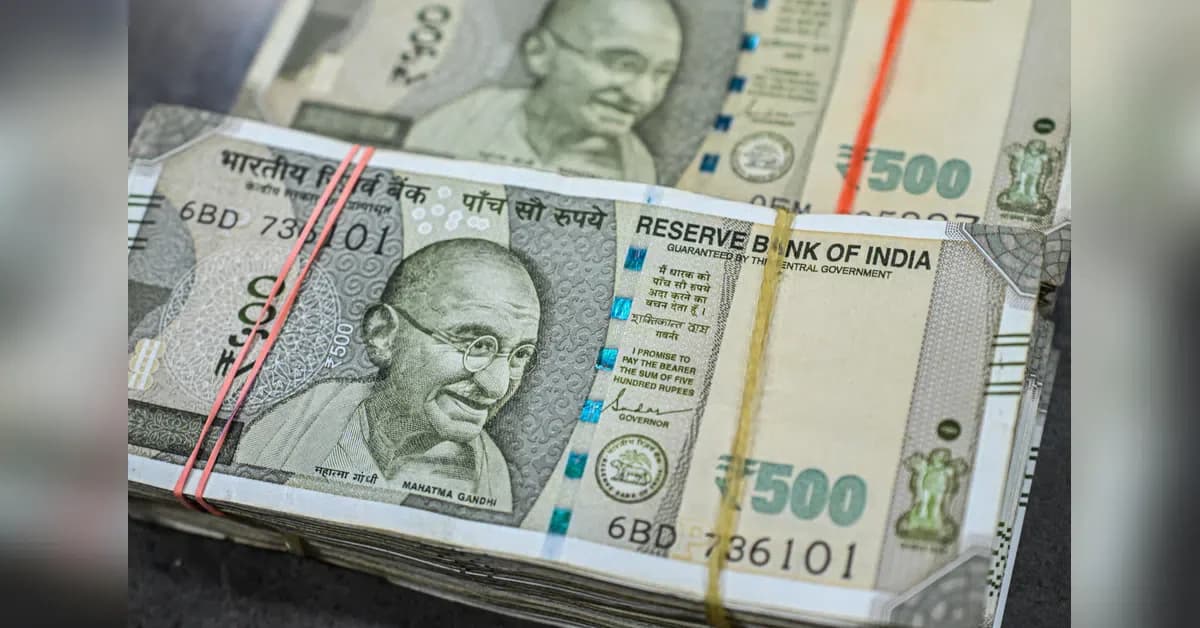
The Reserve Bank of India has confirmed that 98.5% of ₹2,000 notes have been returned since the withdrawal was announced on May 19th, 2023, leaving just ₹5,451 crore in circulation. The total value of these notes has declined dramatically from ₹3.56 lakh crore, or over $3.7 billion, to just ₹5,451 crore, or about $572 million as of April end this year. This represents barely 1.5% of the original stock still floating around with the public, with the number shrinking every quarter. The RBI reports that these notes remain legal tender and can still be exchanged indefinitely via 19 RBI offices or India Post, though practical channels have narrowed significantly.
According to the Reserve Bank of India's latest data, currency in circulation declined by 0.50% on a fortnightly basis to ₹42.94 lakh crore as of June 30, 2026. The central bank also reported that overall reserve money increased by 0.30% during the same period to ₹52.56 lakh crore. This weekly decline in currency circulation comes despite the positive growth trajectory observed in the current fiscal year. The RBI has issued a fresh reminder that if a ₹2,000 note is still sitting in your drawer, it hasn't turned into paper - it remains legal tender but is now a relic of a currency experiment that's almost over.
As reported by the RBI, currency in circulation rose 12.4% on a year-over-year basis compared to 7.3% growth recorded at the same time last year. This significant acceleration in yearly growth demonstrates the strengthening demand for physical currency despite the recent weekly decline. The substantial improvement in year-over-year growth rates indicates robust economic activity and increased cash circulation requirements. The RBI's 2023 move was calculated, low-drama currency management that did not have any midnight deadlines or queues outside ATMs, unlike the 2016 demonetisation of ₹500 and ₹1,000 notes.
According to the central bank's data, currency in circulation has gained 3.1% so far in the current fiscal year, while reserve money has added 2.9%. This growth pattern suggests a measured approach to monetary expansion, with currency circulation growing at a slightly faster pace than reserve money, indicating the central bank's focus on maintaining adequate liquidity in the banking system while supporting economic activity. The RBI isn't panicking about the residual ₹5,451 crore - it is simply mopping up the balance, with no legal risk or expiry clock ticking for anyone still holding these notes.
According to the latest data from CEIC, India Money Supply M1 was reported at ₹821.886 crore ($821.886 billion) in May 2026, representing an increase from the previous number of ₹815.004 crore ($815.004 billion) for April 2026. This data series shows that Money Supply M1 has an average of ₹37.721 crore ($37.721 billion) from January 1957 to May 2026, with 833 observations. The data reached an all-time high of ₹857.135 crore ($857.135 billion) in March 2026 and a record low of ₹4.709 crore ($4.709 billion) in August 1957. This context provides additional perspective on the current circulation levels and the RBI's monetary policy framework.