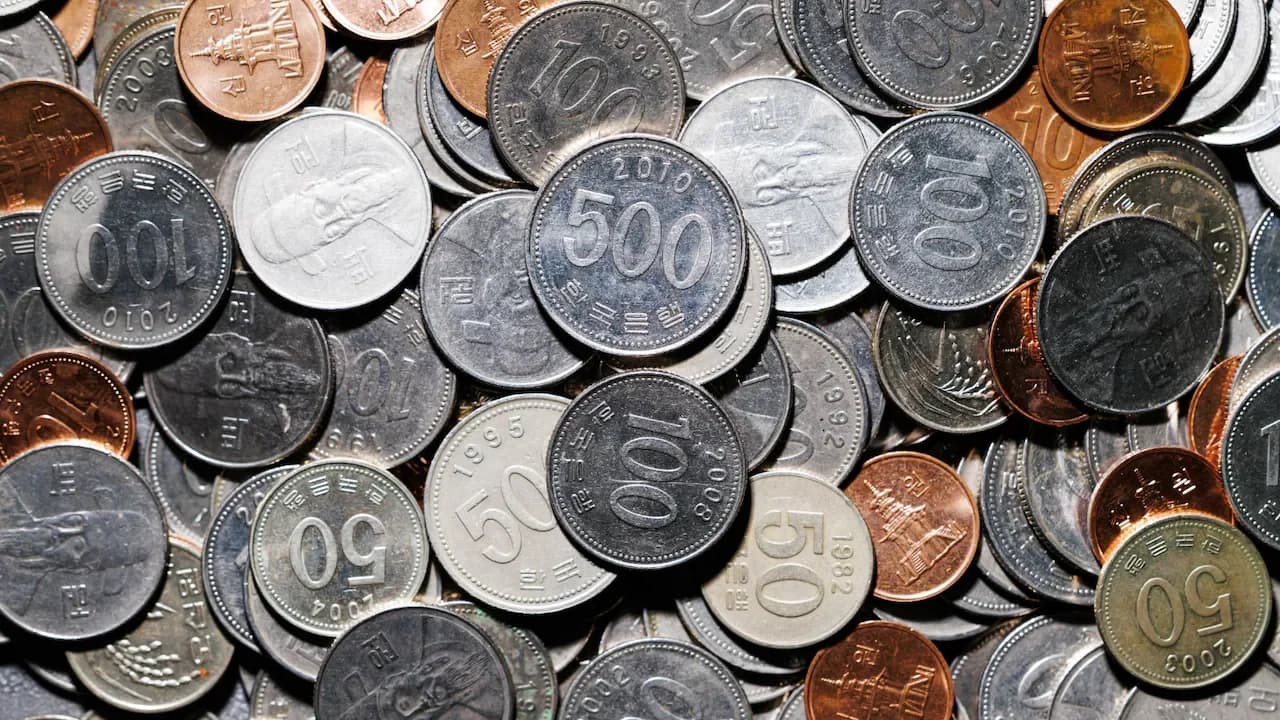
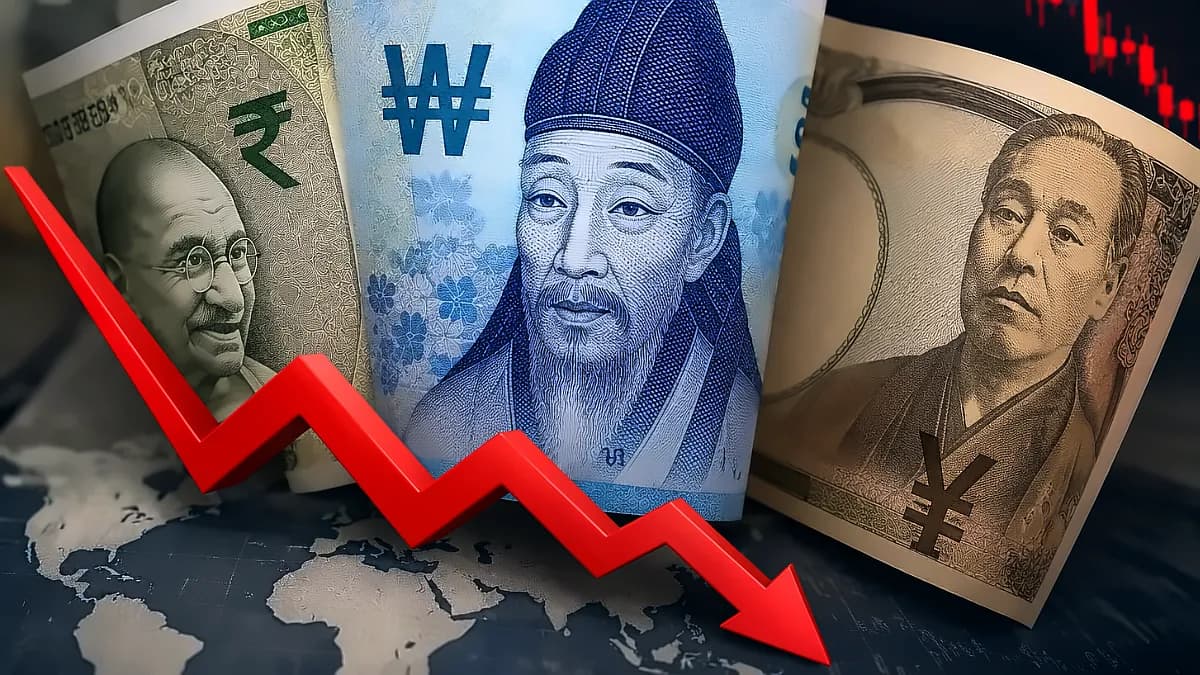
South Korea's won broke below 1,400 per dollar on Wednesday, reaching its strongest level against the dollar since September 30, 2025. According to reports from The Economic Times, the currency has gained 10.8% since early July, trading as weak as 1,557.9 per dollar on July 2 before strengthening to 1,396.6 at press time. This currency strength comes despite significant volatility in the domestic equity markets, where the KOSPI plunged 22% in July - its steepest monthly decline since the global financial crisis.
South Korea's stock market experienced severe volatility on Wednesday, with the KOSPI briefly halting trade after falling more than 5% as a renewed global semiconductor selloff sent heavyweight chipmakers tumbling. According to TradingKey, the Korea Exchange triggered its sidecar mechanism, halting KOSPI program sell orders for 5 minutes to cope with the unusual volatility. The KOSPI was last down 5.80% at 6,471.17 points, after earlier falling as much as 6.4%. SK Hynix shares plunged 9.75% to 1,500,000 won, while Samsung Electronics dropped 7.82% to 247,500 won, making the two stocks among the biggest drags on the benchmark.

The semiconductor selloff has intensified globally, with the Philadelphia Semiconductor Index plummeting 4.98%, marking its worst session since early July. According to latest reports, all memory concept stocks tumbled sharply, with Kioxia ADR falling more than 13%, SanDisk, SK Hynix ADR, and Seagate Technology dropping over 9%, while Micron Technology and Western Digital slid more than 7%. The optical communication and AI cloud service sectors also retreated, with Coherent and CoreWeave down over 12%. The selling followed a sharp reversal on Wall Street, where the Philadelphia Semiconductor Index (SOX) plunged 5.6% on Tuesday in its worst session since early July.
The semiconductor selloff was compounded by rising bond yields and growing investor concerns over artificial intelligence infrastructure investments. According to TradingKey, the 30-year U.S. Treasury yield touched above 5.33% during the session, hitting a new high since June 2007, while the 10-year yield rose to 4.72%, the highest level since January 2025. Higher yields effectively raise the rate investors use to value future corporate earnings, making expensive, high-growth technology stocks less attractive. Investors remain wary of the amount of capital Big Tech is committing to data centers and AI computing, as well as how quickly those investments will translate into profits and cash flow. For Korea, the combination of crowded AI positioning, a rapid recent rally and the heavy weighting of Samsung and SK Hynix in the KOSPI means a reversal in the semiconductor trade can have an outsized impact on the entire market.
The won's strength is primarily attributed to robust export performance, particularly in the semiconductor sector. As reported by The Economic Times, Korea shipped $98.89 billion of goods in July, up 63% from a year earlier, with semiconductor exports rising 179% to $41 billion. This surge in export earnings is directly benefiting the currency through increased dollar inflows. SK Hynix raised $26.5 billion through a US depositary receipt listing, with the company stating it will use the funds to fund domestic projects, further supporting the won's recovery.