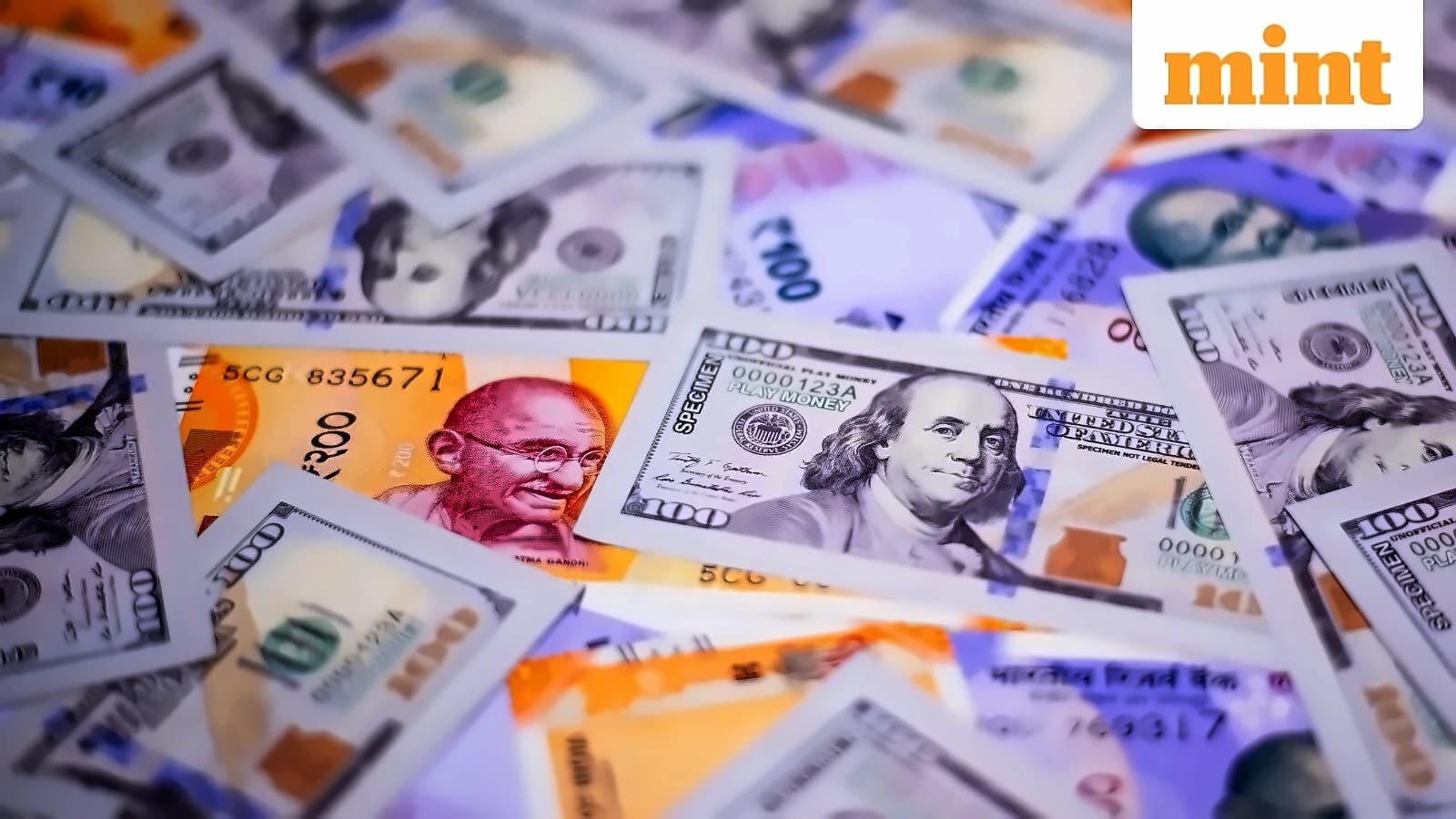
The Indian rupee closed at 92.93 per dollar on Friday, gaining 27 paise from the previous close, marking another significant recovery from earlier sessions, according to The Times of India. The currency had gained 81 paise against last Friday's close of 93.73, and 191 paise against the previous close of 93.20, representing one of the most significant daily gains in recent trading. As compared to the March 30, 2026 closing and intraday low levels of 94.83 and 95.21, respectively, the rupee has bounced back substantially in 10 trading sessions in April 2026 so far. The rupee had declined about 10% in FY26 against the dollar and became one of the worst-performing Asian and Emerging Market Economy currencies, but has had a remarkable turnaround in the current financial year so far, gaining about 2%. Renewed buying in domestic equity markets and fresh inflow of foreign funds also supported the local currency, forex traders said. Foreign Institutional Investors turned net buyers on Thursday, purchasing equities worth ₹382.36 crore, supporting the domestic currency amid constant pressure from dollar demand.
The Reserve Bank of India has opened an exclusive foreign exchange window for supplying dollars to state-run refiners, easing pressure on the spot exchange rate, currency analysts, bankers and traders told The Economic Times. It's likely routed through state-run lenders such as the State Bank of India, they said. "On an average, daily dollar demand from oil companies is around $500-550 million," said Anil Bhansali, head of treasury at Finrex Treasury Advisors. "Today (Friday) and even yesterday we saw this demand decrease. Going ahead, I expect the demand to decrease by as much as 90%. As the demand decreases, we can see the rupee appreciate till around 92 per dollar levels." This move, likely routed through state-run lenders such as the State Bank of India, aims to reduce the significant daily dollar demand from oil companies, significantly supporting the rupee's recovery. The facility is available to Indian Oil Corp, Hindustan Petroleum Corp and Bharat Petroleum Corp, which together account for about half of India's 5.2 million barrels per day refining capacity. Refiners have been encouraged to route daily dollar purchases through SBI instead of multiple banks, with consolidating flows helping reduce overall market impact.
The U.S. dollar index (DXY) fell 0.5% intraday to its weakest level since February 27, erasing its entire wartime gain after Iran declared the Strait of Hormuz "completely open" to commercial shipping, according to Gate data. As tankers resumed passage through one of the world's most critical oil chokepoints, which handles roughly a fifth of global seaborne crude flows, positioning in currency markets flipped from defence to détente, with traders now pricing a durable ceasefire and negotiations toward a broader agreement. Jayati Bharadwaj, head of foreign exchange strategy at TD Securities, noted that "Safe-haven buying has begun to fade. That is the reason for the dollar's decline." The dollar index had previously climbed as investors sought protection from the risk of supply disruption, pushing oil well above $100 per barrel at the height of the crisis, but with the channel now reopened and headlines dominated by ceasefire mechanics rather than escalation, that conflict premium is rapidly being unwound across foreign-exchange markets. Adam Button, chief currency analyst at investingLive, said "The market is acting like it's woken up from a bad dream." "You'd imagine coming out of this everyone is going to want to build larger (oil) inventories. That should be a tailwind for the Canadian dollar," he noted, as Canada is a major producer of energy products including oil.
International crude oil prices fell 3.23% to $96.18 per barrel in futures trade, with Brent crude, the global oil benchmark, trading 3.23% down at $96.18 per barrel, as reported by The Hindu BusinessLine. The rupee was also trading higher on the backdrop of the lower oil prices in the market, as the Brent crude oil remained under $100 per barrel amid the uncertainty of the peace talks. U.S. crude oil futures settled 11.45% lower at $83.85 a barrel, as reported by Reuters. Analysts said that crude oil prices fell after US President Donald Trump expressed optimism over a potential agreement with Iran, easing concerns over prolonged supply disruptions. The latest remarks from Trump, which came days after the two sides failed to reach a peaceful resolution to the conflict in West Asia, led to a sharp decline in crude oil prices, boosting the risk appetite for market participants, as noted by forex analysts. Hopes of reduced tensions in West Asia also contributed to a pullback in crude, with expectations that Iran could allow greater shipping access through the Strait of Hormuz, supporting the broader risk-on sentiment across Asian markets. Three spot FX traders said they had seen an anecdotal decline in the oil companies' activity in the spot market in recent days, reflecting the impact of the RBI's measures on oil import financing.
India's foreign exchange reserves rose by $3.825 billion to $700.946 billion in the week ended April 10, according to The Times of India. The reserves had increased by $9.063 billion to $697.121 billion in the previous week ended April 3. They touched an all-time high of $728.494 billion in the week ended February 27, before easing in the following weeks amid pressure on the rupee after the Middle East conflict, which also led to RBI intervention through dollar sales. For the week ended April 10, foreign currency assets, the largest component of the reserves, rose by $3.127 billion to $555.983 billion. Expressed in dollar terms, foreign currency assets include the effect of appreciation or depreciation of non-US units such as the euro, pound, and yen held in the reserves. Gold reserves increased by $601 million to $121.343 billion during the week. Special Drawing Rights (SDRs) rose by $56 million to $18.763 billion, while India's reserve position with the International Monetary Fund went up by $41 million to $4.857 billion, the RBI said.
Market volatility has eased significantly in recent days, with one-month implied volatility declining to about 4.9%, down from levels above 8% during earlier concerns linked to geopolitical tensions and policy-related uncertainty following recent Reserve Bank of India actions, as reported by CNBC TV18. Currency traders said intraday movement in the rupee has stayed narrow in recent sessions, typically within a 30–35 paise range, reflecting subdued directional momentum. Despite the improvement in global risk sentiment, bankers said the rupee's upside remains capped by ongoing hedging demand from importers and corporates with overseas borrowings, limiting appreciation potential. Traders expect the currency to remain range-bound in the near term, with one spot FX trader at a private sector bank pegging the likely trading range at 92.80–94 for the rest of the month. Asian equities traded higher on optimism around a potential resolution to the Iran conflict, while oil prices eased slightly on expectations of easing geopolitical tensions, supporting the overall positive market sentiment. The RBI has turned to crisis-era measures, which sources said have been in place for about two weeks, to support the rupee amid pressure linked to the Iran war. The central bank has taken other steps to shore up the currency, including clamping down on arbitrage trades that it said exacerbated market volatility and barring Indian banks from offering corporates non-deliverable forward contracts.
The rupee's recovery coincided with significant strength in domestic equity markets, with the 30-share Sensex jumping 504.86 points, or 0.65%, to settle at 78,493.54, and the Nifty rising 156.80 points, or 0.65%, to 24,353.55, as reported by The Hindu BusinessLine. Foreign Institutional Investors turned net buyers on Thursday, as they bought equities worth ₹382.36 crore, according to exchange data. In the domestic equity market, benchmark indices opened on a flat-to-positive note, lending support to the rupee, as noted by ABP Live. The rupee had hit successive lows versus the dollar after the Iran war broke out, but has recovered some losses after the RBI stepped in to curb speculation in the currency market. Anshul Chandak, head of treasury at RBL Bank Ltd, noted that "The news of the RBI asking state refiners to buy dollars using a special window instead of in market has led to dollar/rupee opening lower. The optimism around the extension of US-Iran talks is also supporting." The U.S. Labor Department said import prices rose 0.8% last month after a downwardly revised 2% gain in February, short of the 2% rise forecast by economists polled by Reuters, with import prices shot up 2.1% in the 12 months through March. Government data released on Wednesday showed that the Wholesale Price Index (WPI)-based inflation rose sharply to an over 3-year high of 3.88% in March, driven by a sharp spike in rates of fuel, power and manufactured items amid the West Asia crisis, while Consumer price index-based retail inflation rose 3.4% in March compared to 3.21% in the preceding month.