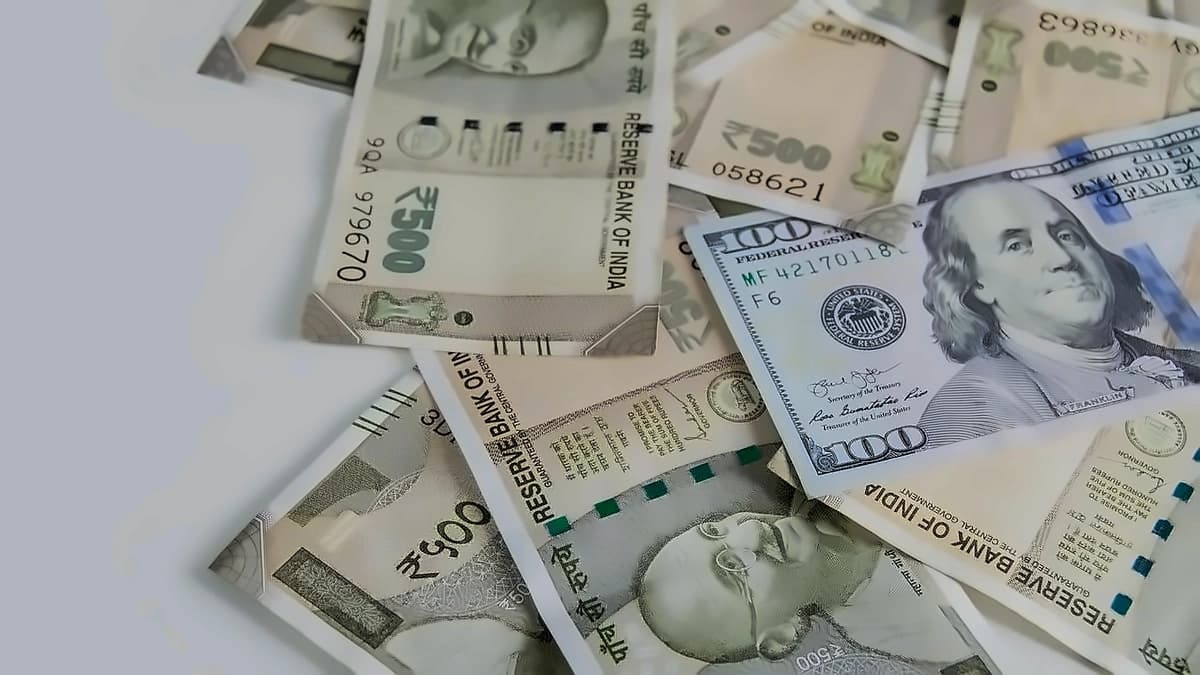
The Indian rupee gained 2 paise to 95.43 per dollar in early trade on Friday, showing marginal improvement from Thursday's close of 95.45, as reported by The Hindu BusinessLine, Business Standard, and The Economic Times. The rupee opened at 95.39 and later slipped to trade at 95.43 against the American currency in early deals, demonstrating continued volatility despite the modest gain. The dollar index, which gauges the greenback's strength against a basket of six currencies, was trading 0.08 per cent lower at 99.78, providing some relief to the rupee. Despite the 2 paise gain, the rupee remains under strain, with forex traders noting that the currency faced pressure due to the withdrawal of foreign funds from domestic equities and rising crude oil prices amid geopolitical uncertainties. On Thursday, the rupee closed 12 paise lower at 95.45 against the US dollar, highlighting the currency's recent volatility pattern. According to The Economic Times, the dollar index retreated following a fall in US Treasury yields and inflation in the world's largest economy remained below expected levels.
Brent crude oil futures were trading higher by 0.16 per cent at $87.21 per barrel in futures trade, according to The Hindu BusinessLine and The Economic Times. Oil prices rose after days of easing, as hopes of a deal to end the West Asia crisis remained in limbo, demonstrating the complex dynamics of oil price movements. India imports nearly 90% of its crude requirements, making it one of the world's most vulnerable economies to Middle East oil shocks. The Gulf situation may regain some relevance for FX, in particular through the risk-sentiment implications of the Strait of Hormuz negotiations, with analysts noting that oil prices rose as geopolitical tensions persist despite some relief from earlier declines.
The Reserve Bank of India continues to provide crucial support to the rupee through consistent dollar supply in the market. The central bank's near-daily intervention across multiple levels has helped absorb dollar demand and limited the rupee's moves, as reported by CNBC TV18. Bankers added that maturities in the non-deliverable forward market and strong dollar demand from importers have been key sources of pressure. The RBI has been continuously backing the rupee at 95.41-95.45 despite oil demand taking it lower, with the central bank's frequent interventions over recent sessions keeping volatility expectations on the dollar-rupee pair in check. A currency trader at a private-sector bank said persistent RBI intervention has supported the rupee, leaving limited room for a sustained recovery even as oil prices ease, reflecting the ongoing challenges facing the currency despite recent relief measures.
On the domestic equity market front, Sensex fell 315.50 points, or 0.40 per cent to 77,764.46, while Nifty dropped 72.70 points, or 0.30 per cent, to 24,321.95 in the morning session, according to The Hindu BusinessLine, Business Standard, and The Economic Times. The NIFTY 50 is trading at 24,344.35 (down 0.21%) and the BSE SENSEX is trading at 77,860.22 (down 0.67%) during morning market hours. Foreign institutional investors offloaded equities worth ₹510.69 crore on a net basis on Thursday, according to exchange data cited by The Hindu BusinessLine. The currency's performance reflects the broader market sentiment as investors remain cautious about oil price volatility and its impact on India's import-dependent economy. Retail inflation inched up to 4.45% in July on expensive kitchen staples, including onion and ginger, even as the price rise remained above the Reserve Bank's median target for the second consecutive month.