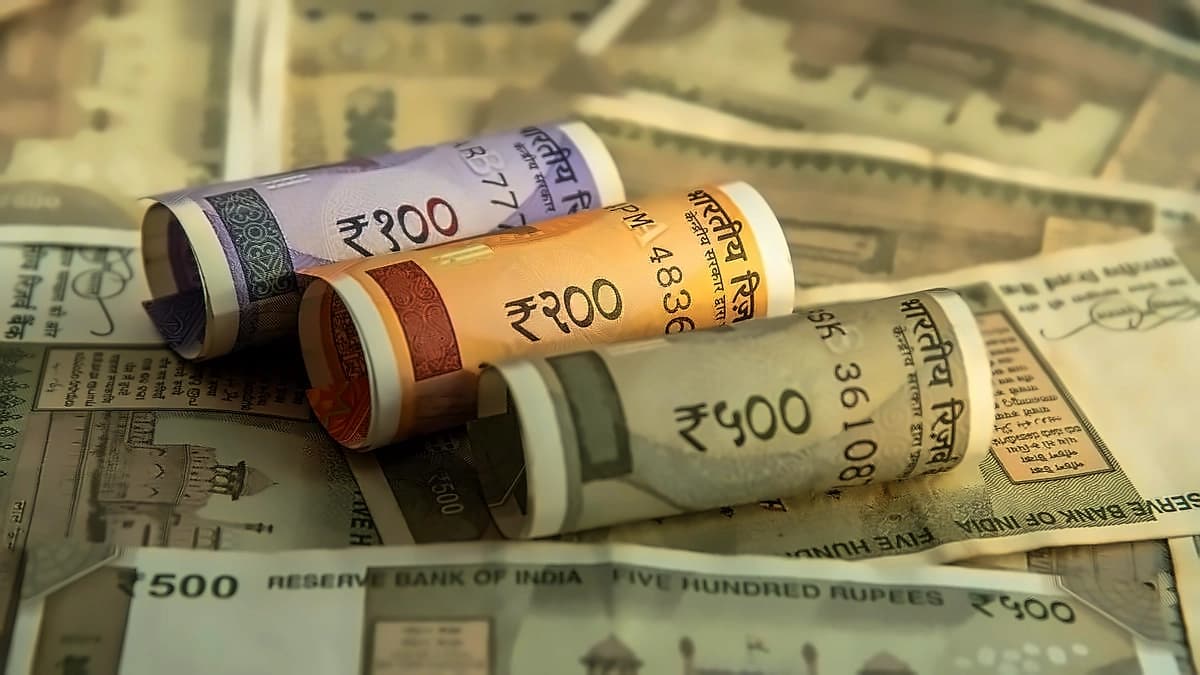
The rupee gained 26 paise to close at 95.44 against the US dollar on Tuesday, marking a significant recovery from earlier losses. According to CNBC TV18, the currency opened at 95.74, touched an intraday high of 95.40, and settled higher by 26 paise from its previous close of 95.70. The USD/INR pair remained largely range-bound around 95.50–96.00, with forex traders noting that the overall weakness in the US dollar on declining odds of a rate hike may support the rupee at lower levels. Brent crude, the global oil benchmark, was trading lower by 2.99% at $89.41 per barrel in futures trade, successfully reviving broader market risk appetite and leaving the greenback struggling to sustain its early momentum as the dollar index slipped beneath the 99 mark.
The Reserve Bank of India's August 2026 monetary policy held rates steady at 5.25% with a neutral stance, but the minutes released on 19 August reveal a markedly hawkish undercurrent. While the policy statement struck a cautious tone, the detailed member commentaries expose deeper concerns about inflation risks — particularly from food and fuel — that could force the central bank's hand before year-end. All six MPC members voted unanimously to hold the repo rate at 5.25% and maintain the neutral stance, yet the minutes reveal that this consensus conceals significant unease among individual members. The August MPC minutes struck a more hawkish tone, with members flagging that a broadening of inflation pressures could warrant a rate hike or policy recalibration.
The RBI revised its FY27 GDP growth estimate upward by 10 bps while trimming the inflation forecast by the same margin. However, the committee's projections point to core inflation rebounding to 4.3% and headline inflation touching 5.9% in Q3FY27 — levels that would bring the upper tolerance band into play. This aligns with July's CPI reading of 4.45%, where food inflation at 5.52% drove the headline number higher. Three MPC members — Saugata Bhattacharya, Indranil Bhattacharya, and Poonam Gupta — struck distinctly hawkish notes, with the first two openly suggesting that a rate hike of at least 25 bps may be warranted before 2026 ends.
Indian bond yields are experiencing a flattening trend as the RBI's policy adjustments begin to influence borrowing costs. The central bank's hints at possible interest rate increases have prompted a rise in shorter-term yields, while robust demand from institutional investors is driving interest in longer-term government securities. The 10-year India yield has decreased 28 bps to 6.85% this fiscal year, with the 10-year bond yield expected to trade with a negative bias, around 6.85% levels. Markets now price in at least one 25-bps rate hike in 2026, with the liquid five-year rate surging 17 basis points to 6.42% reflecting the market's response to the central bank's more hawkish stance. The floor is 6.87% to 6.88% for the 10-year yield, with potential upward movement if there are more crude oil shocks.
RBI Governor Sanjay Malhotra favors data dependence over projections, and has explicitly stated that a hawkish response will follow if inflation becomes generalized. The Governor's remarks provide the clearest signal on how the RBI will navigate these cross-currents. With core inflation expected to rise to 4.3% and headline inflation approaching 5%, the threshold for action is not distant. The August minutes draw a deliberate distinction between structural and incremental inflation, with the bar for a rate hike having lowered even as the MPC holds steady. For investors, this shift in RBI communication is preparing markets for tighter policy, with bond markets now pricing in rate hike expectations despite the current unanimous hold on the 5.25% rate.