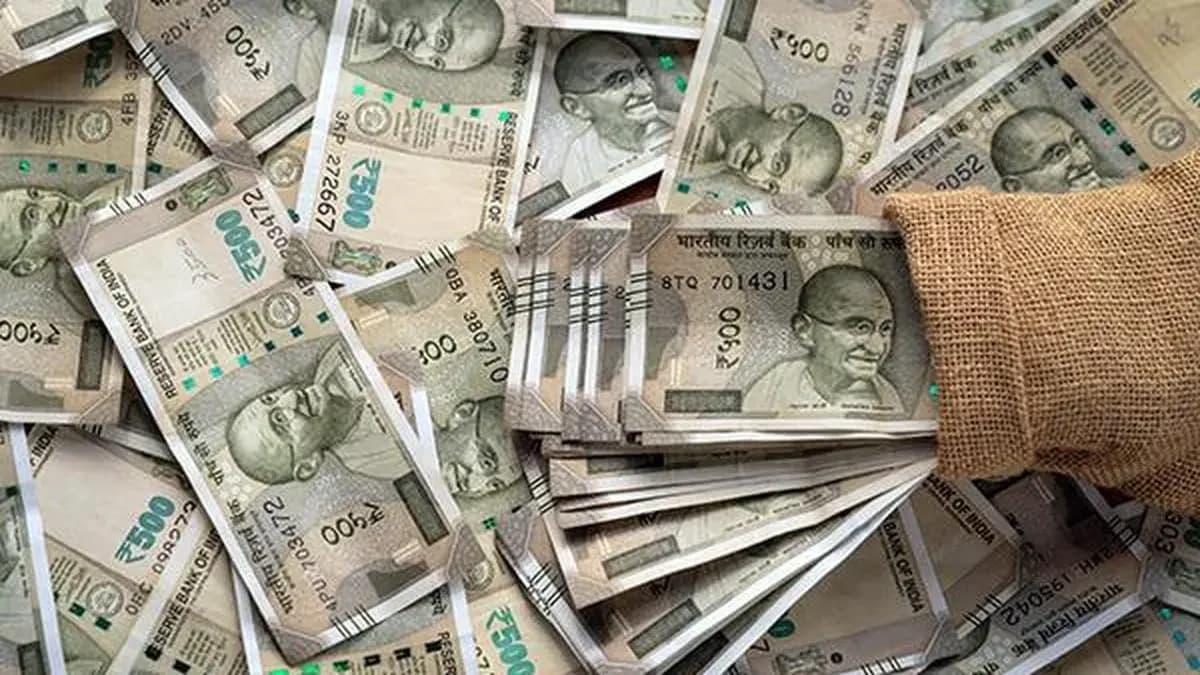
The Indian rupee strengthened for a second straight session on Friday, advancing to its strongest level in nearly a week at 95.8650 against the US dollar, gaining 0.2% from its previous close. According to 5paisa, the currency had opened flat at 96.26 per dollar but strengthened to the highs of 95 as market participants reported heavy dollar sales being undertaken by the Indian central bank. This represents a significant turnaround from the all-time low of 96.96 per dollar hit on Wednesday, following which the RBI announced a $5 billion dollar-rupee buy/sell swap auction for a three-year tenor on May 26 to inject durable liquidity into the banking system. The rupee's recovery was driven by aggressive dollar sales by the RBI through state-run banks, with traders attributing the rebound largely to this coordinated intervention strategy.
The Reserve Bank of India has stepped up intervention efforts significantly, with market participants reporting the central bank sold more than $2 billion on Thursday alone as it moved to curb excessive volatility in the currency market. As reported by Reuters, the RBI has increasingly adopted a more forceful strategy in recent sessions, including pre-market intervention aimed at disrupting speculative bearish bets against the rupee. Industry experts reported that the central bank intervened to curb long positions in the market and prevent the currency from breaching the crucial 97 mark against the dollar. "They are selling in every upward bid, ensuring that longs are cut," said Anil Kumar Bhansali, head of treasury at Finrex Treasury Advisors LLP. The RBI's intervention strategy appears to be working effectively, with the currency showing signs of stabilization after the recent volatility.
Pressure on the rupee has intensified due to the recent rally in global crude oil prices following escalating geopolitical tensions involving Iran. Since India imports a significant portion of its crude requirements, higher oil prices tend to widen the trade deficit and increase demand for dollars from refiners and importers. However, recent developments suggest this pressure may be easing, with Brent crude prices continuing to trade above $100 per barrel on supply fears over the Iran conflict and uncertainty over shipping routes through the Strait of Hormuz. The currency's performance demonstrates how volatility in global energy markets continues to dominate investor sentiment, though experts remain cautious about sustained relief as the Strait of Hormuz remains largely closed. Currency markets continue to monitor geopolitical developments closely after the U.S. and Iran maintained differing positions on Tehran's uranium stockpile and shipping controls in the region.
Despite Friday's rebound, currency market experts remain cautious on the Indian rupee, citing high foreign capital outflows and a widening current account deficit. As per Reuters, analysts at Barclays noted that "there will be little respite for Asian currencies in the short term unless the Strait of Hormuz fully opens soon and oil prices subsequently decline, neither of which appear to be close at hand." However, CR Forex Advisors' Amit Pabari believes that RBI measures and liquidity support may help provide temporary relief and contain volatility in the near term. The dollar index was hovering around its six-week high of 99.3 as uncertainty around the prolonged West Asia conflict kept investor sentiment cautious about inflation and rate hikes. Additionally, markets will react to Mint Street's record surplus transfer of ₹2.87 lakh crore announced Friday evening, which missed economists' forecast of ₹3 lakh crore but will help ease fiscal pressure on the government. According to a Reuters poll, the central bank's dividend payout is estimated to be between ₹2.9 lakh crore and ₹3.2 lakh crore, providing additional fiscal support at a time when global commodity prices and imported inflation risks remain elevated.