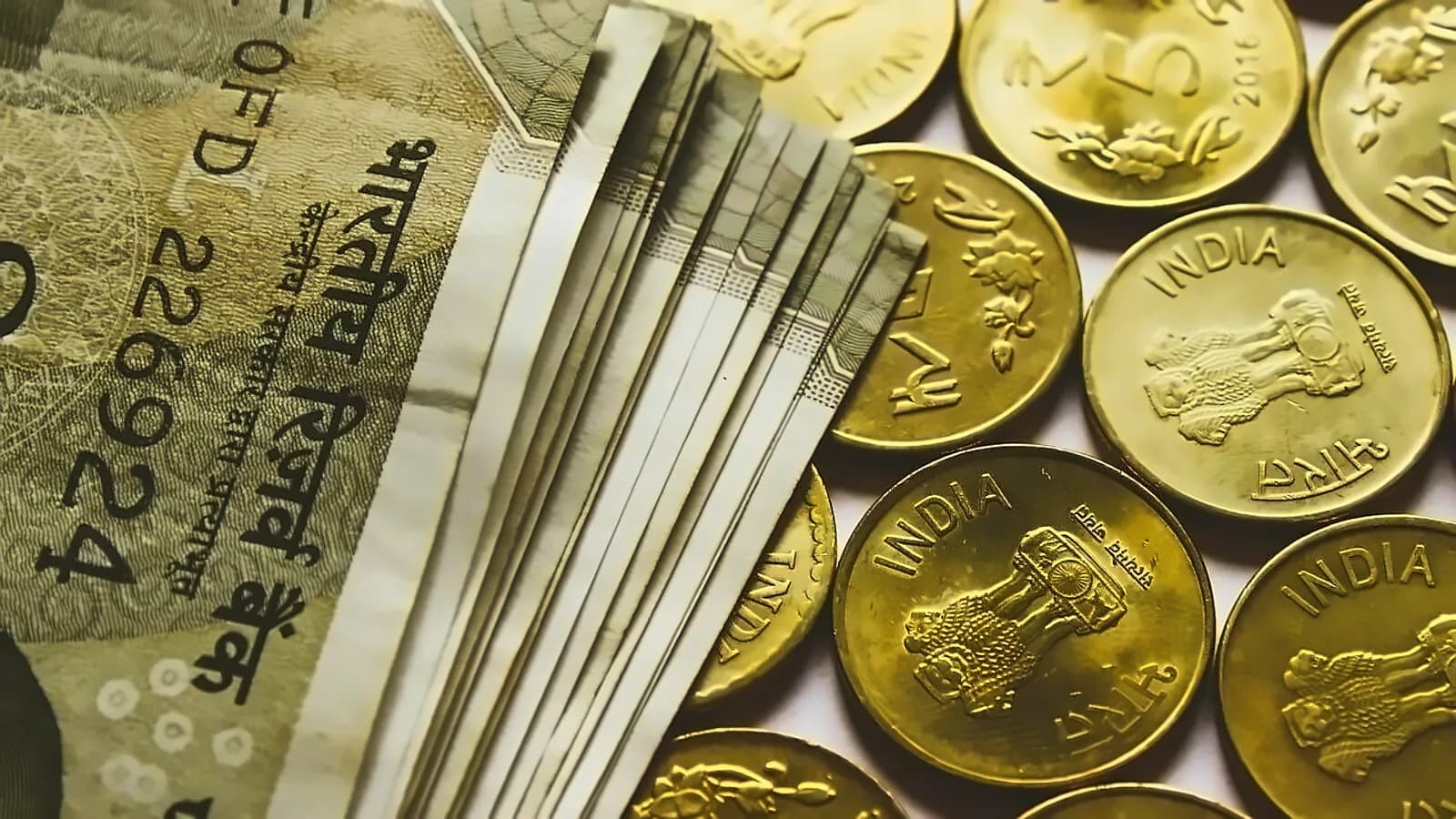
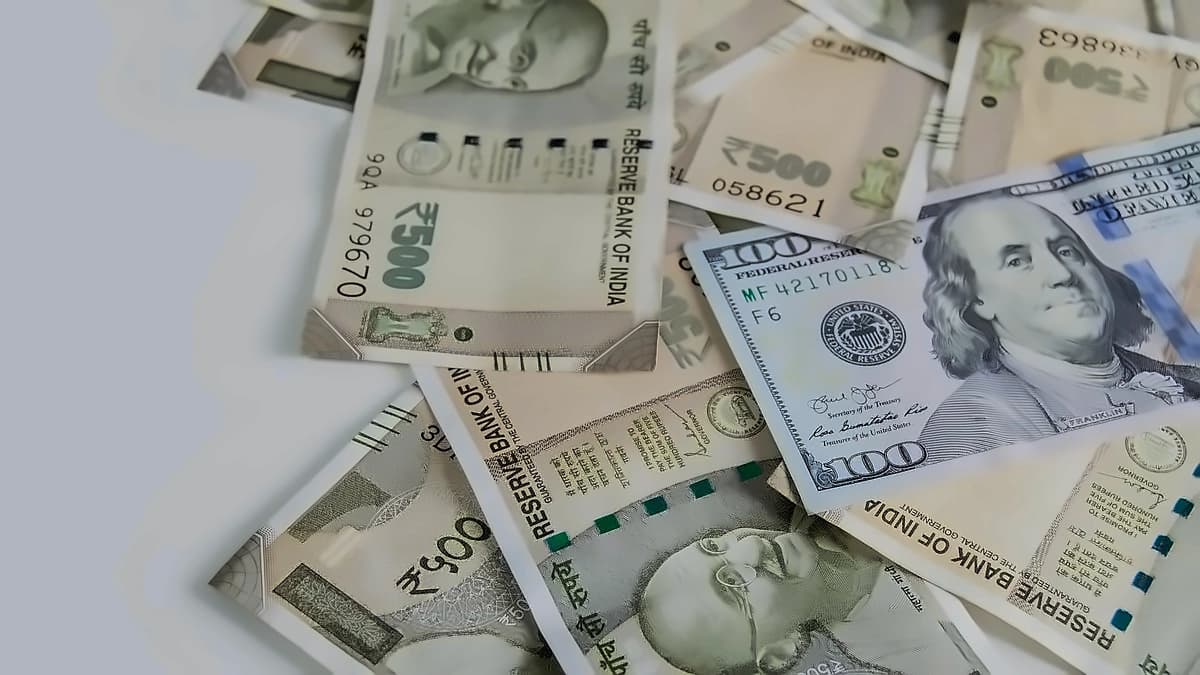
The Indian rupee strengthened 30 paise to close at ₹95.38 against the US dollar on Friday (July 31), extending its weekly gains amid sustained support from the Reserve Bank of India (RBI), a weaker US dollar and softer crude oil prices. The currency had opened at ₹95.58 on Friday and traded within the range of ₹95.25 and ₹95.47 during the session, marking its strongest weekly performance in four months. According to The Economic Times, the recent rally has been underpinned by a broad decline in the dollar index, easing crude oil prices and continued intervention by the RBI in the foreign exchange market. The rupee has also outperformed other oil-sensitive Asian currencies, including the Indonesian rupiah and Philippine peso, this week, largely due to the RBI's intervention. The currency had gained 9 paise to settle at 95.67 on Thursday (July 30, 2026), marking its fifth consecutive session of gains and breaking the recent recovery momentum.
Crude oil prices extended losses in Asian trade as investors assessed developments surrounding a Saudi Arabia-led maritime coalition aimed at strengthening security cooperation in the Red Sea, according to CNBC TV18. Brent crude futures were trading marginally lower by 0.12% at $90.63 per barrel, with oil markets remaining volatile amid renewed tensions between the US and Iran, leaving energy prices—and by extension, the rupee—vulnerable to fresh swings. Analysts said crude prices reclaimed $90-per-barrel levels amid renewed fear of disruptions in global energy supplies, as fresh flare-ups between the U.S. and Iran, after a brief calm, shattered hopes of an end to the five-month conflict in West Asia. The U.S. military said on Thursday that they have struck 'dozens' of targets belonging to Iran's Revolutionary Guard Corps in 'a heavy wave of strikes against Iran' conducted in response to an earlier Iranian missile attack on a U.S. base in Jordan. India imports nearly 90% of its crude requirements, making it one of the world's most vulnerable economies to the Middle East oil shock. State-run banks were spotted selling dollars near the day's low for the rupee around 95.75, with traders mentioning that elevated oil price volatility has also contributed to a pickup in importer hedging, which has weighed on the rupee in recent sessions.
India's IT sector demonstrated impressive growth this month, with the Nifty IT index rising 16% this month, outpacing the 2% rise in the broader Nifty 50 index, according to The Economic Times. The drawdowns in artificial intelligence linked stocks globally have shored up India's battered IT stocks, providing crucial support to the rupee's recovery. Both the benchmark indices opened positively on Friday, with the Sensex & Nifty trading higher in early trade. At around 10 AM, the BSE Sensex rose 35.55 points or 0.04% to 77,962, while the Nifty 50 surged 34 points to 24,351, according to Goodreturns. The positive equity market performance provided crucial support to the rupee's recovery, with foreign capital inflows helping to offset the impact of geopolitical tensions. Foreign Institutional Investors purchased equities worth ₹2,981.87 crore on a net basis on Wednesday (July 29, 2026), according to exchange data.
The Reserve Bank of India stepped up dollar sales last Friday (July 24) and has remained active in the market since then, with traders saying the RBI's actions suggest it is keen to prevent a sharp depreciation in the rupee from current levels, according to CNBC TV18. A trader at a private sector bank said the RBI's dollar sales near the ₹95.75-per-dollar level on Thursday signalled the central bank's intent to cap further weakness in the currency. The central bank's continued presence in the market has been crucial in supporting the rupee's recovery, with the RBI's early intervention helping set the tone for the currency and reassuring traders that it is willing to support the currency near key levels. The intensity of RBI's intervention has reduced over time, but the central bank's sustained presence has been crucial in improving sentiment and providing stability to the rupee amid global uncertainty. The currency had gained 6 paise to settle at 95.76 on Wednesday (July 29, 2026), after rising 97 paise in four back-to-back sessions since closing at 96.73 versus U.S. dollar on July 23.
The dollar index, which gauges the greenback's strength against a basket of six currencies, has come under broad-based pressure amid expectations of possible currency intervention in Japan and shifting market expectations around the US Federal Reserve's monetary policy, as per CNBC TV18. The U.S. Federal Reserve kept interest rates unchanged in the 3.50%-3.75% range on Wednesday, with three policymakers dissenting in favour of a rate hike, as per Business Standard. The dollar weakened despite three Fed officials dissenting in favour of a rate hike, as markets eyed a choppy near-term outlook for the US currency. The 30-year Treasury bond yield hit a 19-year high of 5.239% on Thursday, a day after the Federal Reserve kept interest rates on hold, but Chair Kevin Warsh offered mixed messages on the outlook for monetary policy and inflation. On Friday, a modest retreat in oil prices also aided the local currency alongside a broadly weaker dollar. As per a report by Finrex, although the US Dollar Index weakened to around 100.80, the rupee was unable to benefit significantly as higher oil prices and domestic dollar demand outweighed the positive impact of a softer dollar.