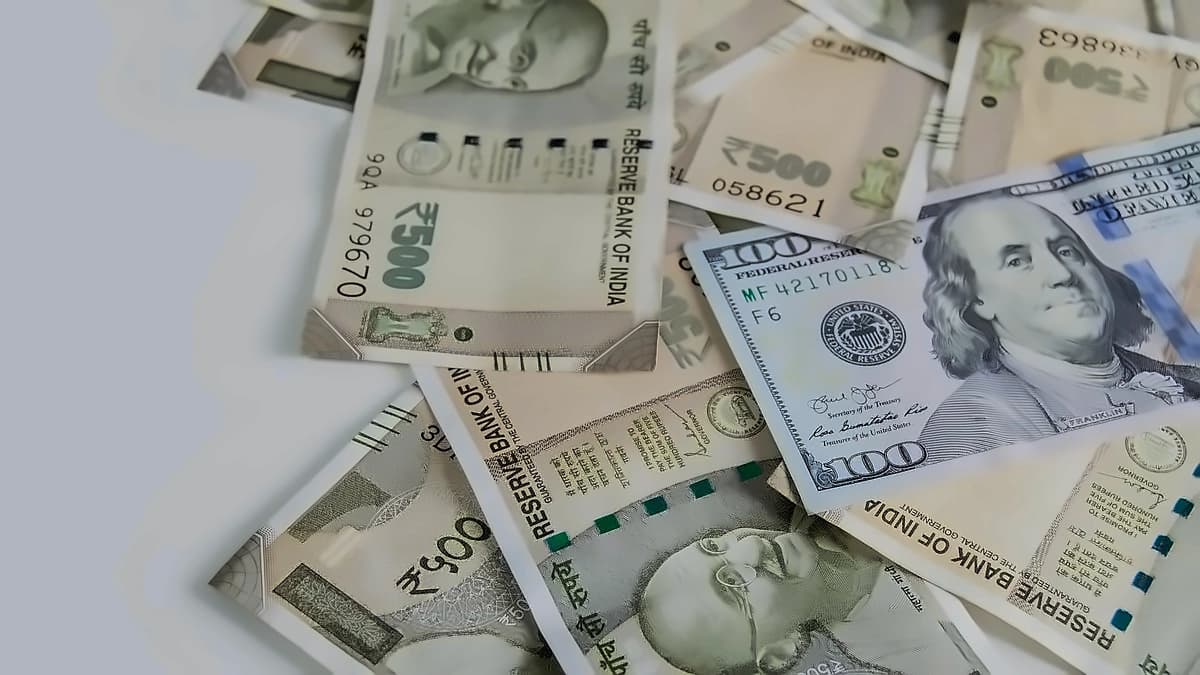
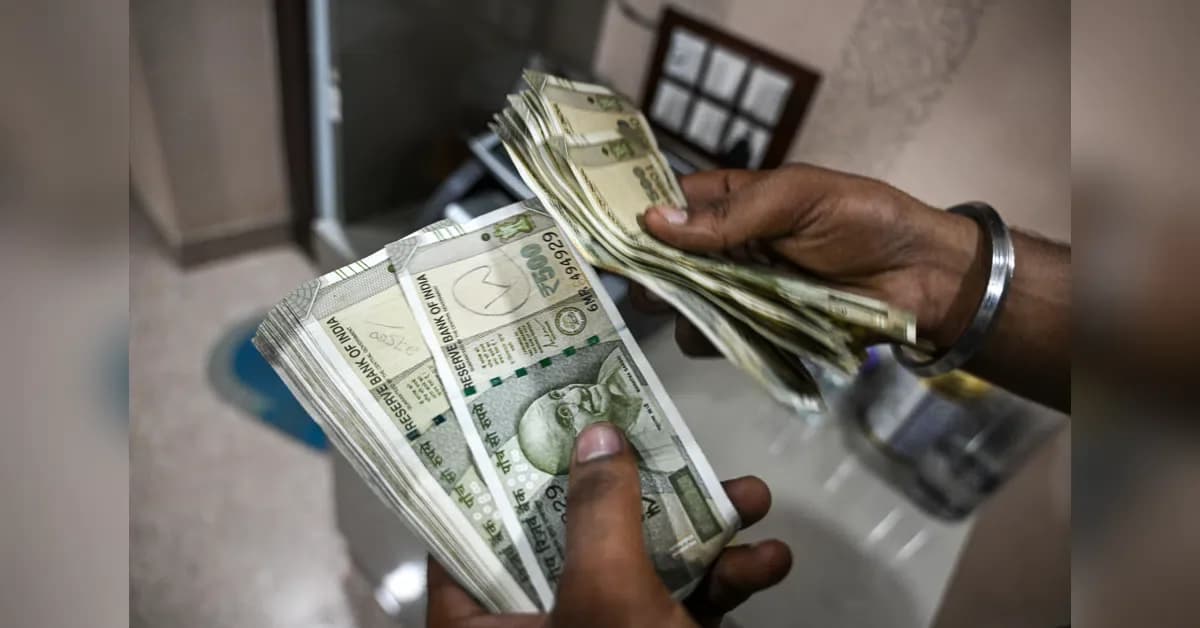
The Indian rupee closed 18 paise weaker at 95.40 against the dollar on Monday, marking a three-week low as persistent dollar buying by oil marketing companies (OMCs), demand linked to maturing non-deliverable forward (NDF) contracts, and a rise in the dollar index outweighed support from lower crude oil prices. According to Business Standard, the rupee settled at 95.40 per dollar against the previous close of 95.22, the lowest level since June 11 this year, after touching an intraday low of 95.48 per dollar. The currency has depreciated in five of the last six trading sessions, highlighting sustained pressure from multiple factors. The dollar index strengthened to around 101, while most Asian currencies also traded lower, contributing to the rupee's weakness.
State-run and private oil companies remained aggressive buyers of dollars to meet crude oil payment obligations, making importer demand the biggest source of pressure on the rupee during the session. As per Business Standard, a foreign bank also purchased dollars, while exporter selling remained limited, creating an imbalance in the market. Demand arising from the maturity of NDF contracts further boosted dollar buying, with the RBI's outstanding net short dollar position in the forward market increasing to a record $106.66 billion at the end of May from $95.30 billion at the end of April. Of the $106.66 billion net short dollar position, $19.82 billion was in one-month contracts, $8.86 billion in one- to three-month tenures, $21.90 billion is set to mature between three months and one year, and the remaining $56.07 billion was in contracts of more than one year.
Despite Brent crude sliding to around $71 per barrel with a 26% fall over the past month, the Indian rupee has failed to recover from its recent lows, as reported by The Financial Express. The substantial decline in crude prices from previous conflict-driven highs has yet to provide the expected support to the rupee, highlighting the complexity of currency movements beyond commodity price fluctuations. The rupee's resilience to oil price improvements suggests that other factors, including dollar strength and domestic demand patterns, are currently overshadowing the positive impact of lower crude costs. Market analysts note that while equities and oil prices showed positive signs, the rupee's movement has largely been driven by sentiment with dollar demand remaining elevated.
On the positive side, government bond yields softened, tracking the fall in crude oil prices. The yield on the benchmark 10-year government bond settled at 6.69 per cent, the lowest since March 13, against the previous close of 6.71 per cent, as reported by Business Standard. Market participants noted that traders were chasing fresh arbitrage opportunities between the local foreign exchange market and offshore non-deliverable forwards, adding to the downward pressure on the rupee. Most Asian currencies ended lower as the dollar index rose nearly 2% over the past month on growing expectations of a hawkish stance from the Federal Reserve. Currency dealers reported that the Reserve Bank of India carried out modest dollar interventions, capping further weakness in the currency.
Market participants expect the rupee to remain in the 95.00-95.75 per dollar range on Tuesday unless exporter selling or central bank intervention intensifies, according to Business Standard. Dilip Parmer from HDFC Securities noted that while the rupee remains below 96, the outlook is not immediately worrisome, expecting the currency to trade in the range of 94.45-95.80 in the near-term. However, Amit Pabari from CR Forex warned that the one-sided response to dollar index movement shows underlying fragility, with a fresh negative trigger potentially pushing the rupee towards 95.80-96.00 while support holds near 94.80-95.00. Since the onset of the Iran conflict, the currency has depreciated by 4.64 per cent, reflecting persistent pressure from dollar demand and global uncertainty, while forward premiums softened with the one-month premium easing to 2.65 per cent and the one-year premium declining to 2.80 per cent.
According to The Hindu BusinessLine, foreign investors have extended their selling spree in June, withdrawing ₹49,340 crore ($5.16 billion) from Indian equities. As reported by Central Depository Services (India) Ltd, total withdrawals by Foreign Portfolio Investors (FPIs) from Indian equities have surged to ₹2.7 lakh crore so far in 2026, surpassing the ₹1.66 lakh crore pulled out during the entire calendar year 2025. The outflows were triggered by a combination of early-month global risk aversion, a preference for developed markets, soaring US bond yields, and stretched valuations in the domestic market. On Wednesday, foreign institutional investors sold equities worth ₹1,140.50 crore on a net basis, according to exchange data.