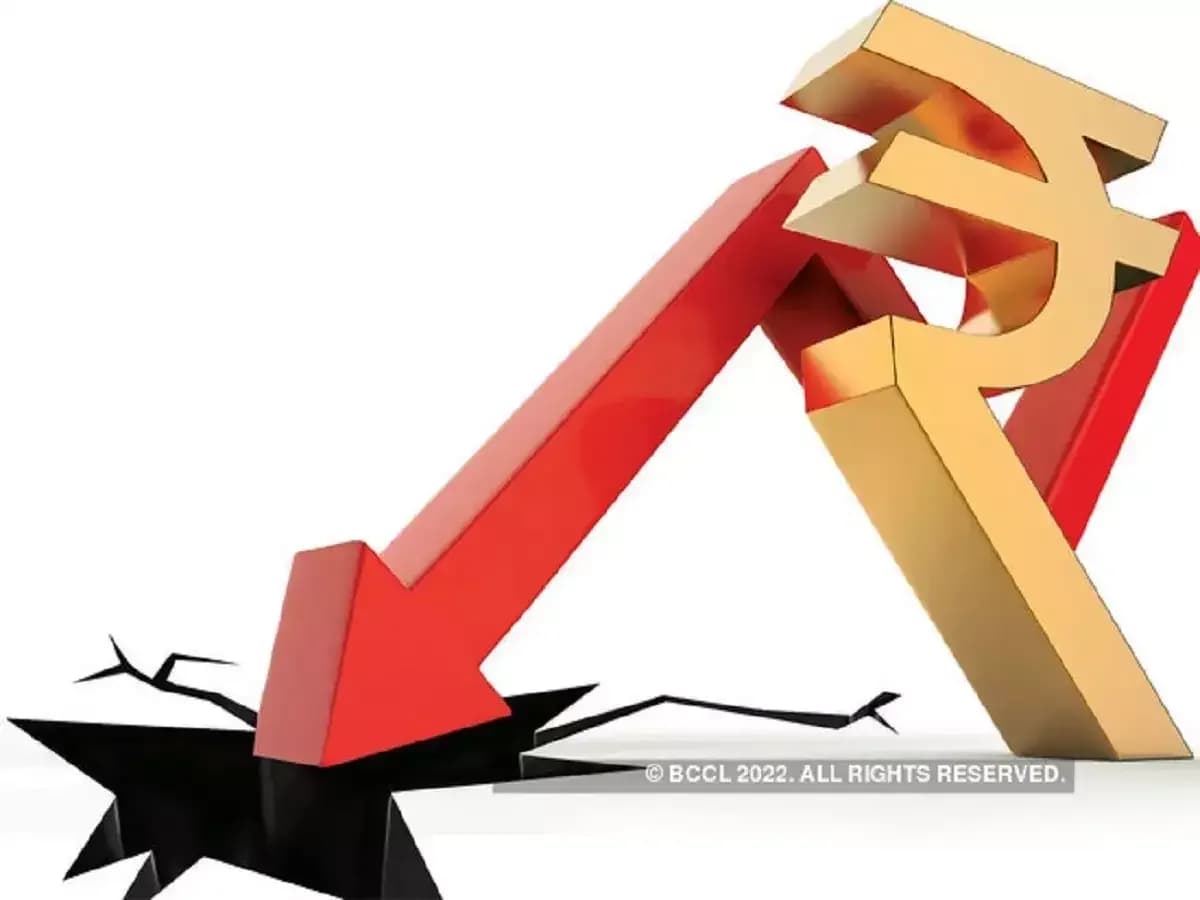
India's rupee has reached a new all-time intraday low of 95.22 against the dollar, surpassing previous records as the Iran war escalates. According to The Times of India, the currency has declined by roughly 4% since the onset of geopolitical tensions, with analysts at Wells Fargo and Van Eck Associates Corp warning that sustained high crude oil prices are likely to accelerate the currency's decline by pushing up inflation and widening the current account deficit. The currency has already been one of Asia's worst performers against the dollar this year, with the rupee's slide spurring the Reserve Bank of India to take one of its boldest steps in more than a decade, capping banks' end-of-day positions in the onshore currency market at $100 million.
Brent crude has jumped about 44% since hostilities broke out late February, reaching a high of $119.50 per barrel. According to The Times of India, Brent crude rose $2.26, or about 2%, to $115.04 a barrel in early trade, after hitting its highest level since March 19 in the previous session. US West Texas Intermediate (WTI) crude gained $3.10, or around 3% to $105.96 a barrel, marking its highest level since March 9. Some analysts warn prices may climb further — potentially to $150 or even $200 — if the near-closure of the Strait of Hormuz persists over the next six to eight weeks. The disruption is a result of the ongoing war involving the US, Israel, and Iran, which has already prompted Persian Gulf producers to cut millions of barrels of daily supply.
The impact on the global oil market could be enormous, with energy-market consultancy FGE NexantECA highlighting that every week, 100 million barrels of oil is not going through, and every month, 400 million barrels are not going through, according to Chairman Emeritus Fereidun Fesharaki. As reported by Bloomberg, he noted that "the losses to the market will be astronomical" and emphasized that "the physical reality of supply disruptions would determine oil prices, rather than political statements." The oil shock has compounded pressures for the world's third-largest crude importer, while a potential drop in remittances from Indians in the Gulf may further dent inflows and sentiment. As reported by The Economic Times, the rupee's trajectory will depend on how high energy prices rise and how long they stay elevated.
The market was closed on Tuesday, but Monday's price action highlighted the limits of RBI measures. According to The Times of India, the rupee initially strengthened by as much as 1.4% following the announcement of RBI curbs, but later reversed sharply, slipping to a new low of 95.125 during the session before recovering slightly to settle at 94.83, its weakest closing level on record. The RBI's curbs force lenders to shrink their books and limit their ability to run large one-sided bets against the rupee. However, analysts suggest these measures look more like short-term stabilization tools than a structural solution. Market experts note that bearish positions on the rupee continue to persist, with some traders still betting against the currency despite recent regulatory measures.
Uncertainty over the war's duration has prompted global funds to pull about $12 billion from Indian equities in March, its steepest monthly outflow on record, as reported by The Economic Times. Analysts warn that elevated oil prices will accelerate the rupee's decline by worsening inflation and the current-account deficit. The rupee was already under pressure before the war, weighed down by widening external balances and capital outflows, with some investors doubting that even an end to the Middle East conflict would fully arrest its decline. Options pricing shows traders assigning about 13% chance of dollar-rupee trading at 100 by the end of June, and around 41% probability by year-end, according to data compiled by Bloomberg.
Aroop Chatterjee, a global macro strategist at Wells Fargo, pointed to Russia's 2022 invasion of Ukraine as a guide, when the currency fell about 10% over six months. He noted that if the US-Iran war continues through the end of April, it's very likely that dollar-rupee finds itself above 100. As reported by The Times of India, Ahmed Azzam, head of financial market research at Equiti Group, stated that "100 per dollar is no longer a tail risk — it is a credible stress scenario if current conditions persist." Some analysts caution that prices could rise further, potentially reaching $150 or even $200, if the near shutdown of the Strait of Hormuz continues for another six to eight weeks. The physical reality of supply disruptions is expected to determine oil prices, with Fesharaki emphasizing that "the market will choke, and the prices will go up."