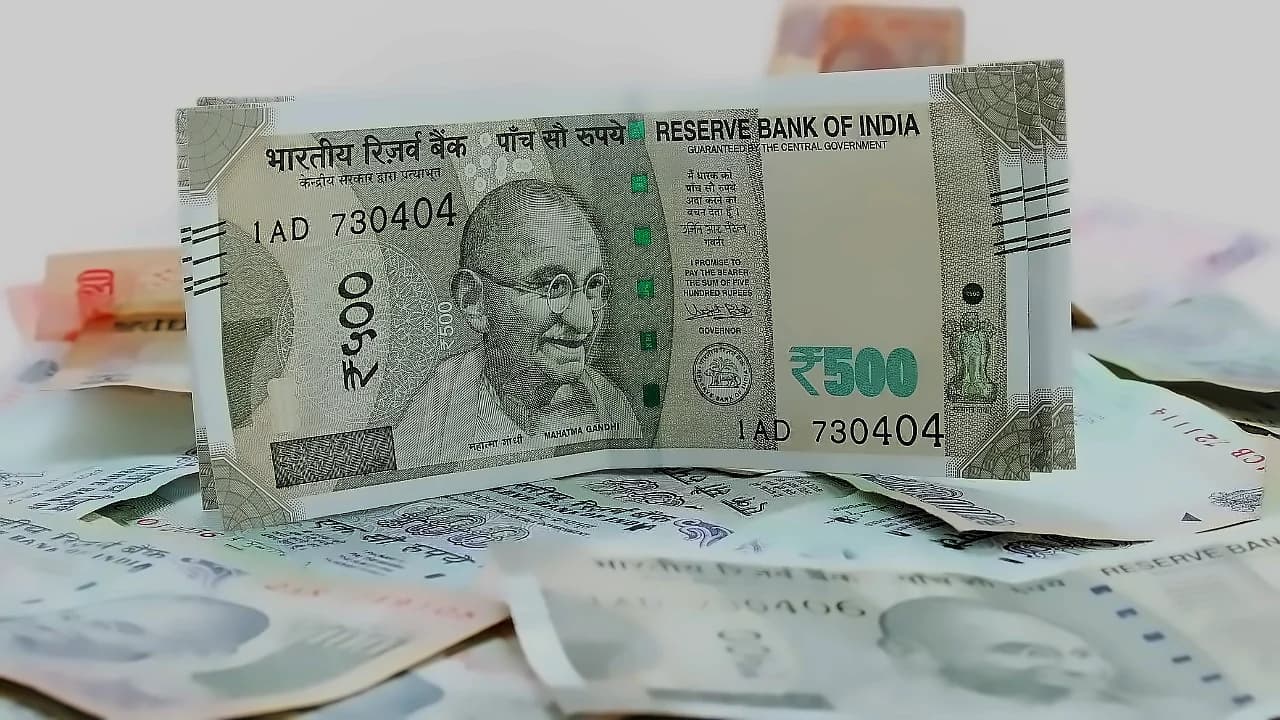
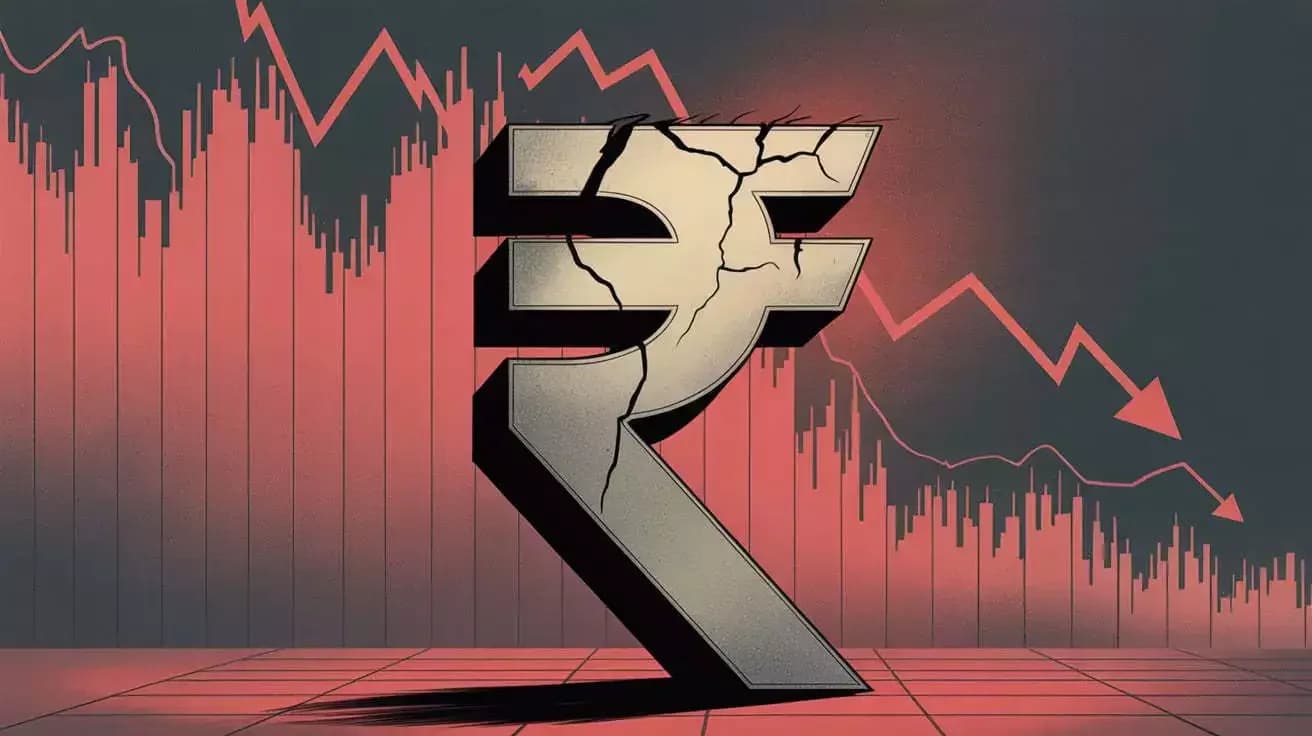
The Indian rupee hit a fresh record low of 95.82 against the US dollar on Wednesday, May 13, marking its steepest single-day decline with a fall of 0.3% from its previous close. According to PTI, the rupee opened at 95.52 against the US dollar, recording a gain of 16 paise from its previous all-time closing low. This represents a significant deterioration from the currency's earlier recovery attempts, with the rupee now trading at levels that surpass even the previous record lows. Crude oil prices climbed to near $105 per barrel with Brent crude futures surging to the $105 mark, while the US benchmark West Texas Intermediate was quoted around $99 per barrel level. Most Asian currencies declined on Tuesday amid stalled peace negotiations, with the Indian rupee being the worst-performing Asian currency, followed by the Philippine pesso and the South Korean won. So far in the calendar year, the rupee has fallen over 6%, with major depreciation happening with the onset of the war in March. The dollar index also strengthened, adding to pressure on emerging market currencies. The Indian rupee had started the day on a weak note falling to the 95.62 mark in early trade, following which traders cited that RBI intervened to help curb the currency's fall.
India's foreign exchange reserves have declined by nearly $38 billion since the outbreak of the Iran conflict, marking the steepest drop among regional economies. However, economists remain confident that the country's reserves remain robust enough to defend the rupee from its free fall. India's import cover, a key indicator showing how many months of imports can be financed using existing reserves, stands at nearly nine months after accounting for the central bank's future dollar liabilities. According to The Times of India, during the 2013 taper tantrum, India's import cover had fallen below seven months, making the current situation less severe. Anubhuti Sahay from Standard Chartered noted that the benchmark for evaluating India's forex reserves is likely to be higher during the current episode compared with earlier crises, even if crude oil prices remain at similar levels, because capital inflows have weakened. India is expected to face a shortfall in foreign inflows for a third straight year while trying to finance a widening current account deficit amid persistently high crude oil prices.
ANZ Research's Dhiraj Nim expects the rupee to end the year at 97.5 against the US dollar, driven by widening current account pressures, sustained dollar demand and weak capital flows. Speaking to CNBC-TV18, Nim said persistent oil price pressures, FII outflows and rising hedging demand are keeping the rupee under strain. "The chatter is, of course, alive in terms of what next could be done," Nim said, referring to possible measures the RBI could deploy to stabilise the currency. "Every option for the RBI is on the table," he added, noting that market participants are discussing a range of possible policy responses, including FCNR(B) deposit schemes, quasi-fiscal bond issuance and even interest rate hikes to defend the currency. However, ANZ is not building such measures into its baseline forecasts until formally announced. Despite growing market discussion around the rupee potentially touching 100 against the dollar, Nim said such a move would require very different macroeconomic conditions and would likely prompt stronger policy intervention from the RBI before that level is reached. Last week, ANZ lowered its December target for the rupee to 97.5 from 93, while BMI, a unit of Fitch Ratings, flagged the risk of the currency sliding to 100 if the Iran war worsens.
US President Donald Trump said the ceasefire with Iran was "on massive life support" as Tehran rejected a US proposal to end the conflict and stuck to a list of demands the US president described as "garbage". As per The Economic Times, Trump told reporters at the Oval Office that "It is at its weakest... After reading that piece of garbage they sent us... It's on massive life support." Trump added that "They think that I'll get tired of this, or I'll get bored, or I'll have some pressure, but there's no pressure, there's no pressure at all. We're going to have a complete victory." This escalation comes after Iran sent its response to the latest US ceasefire proposal via Pakistani mediators and wants negotiations to focus on permanently ending the war, according to Iran's state-run media. The U.S.-Israeli conflict with Iran, now running for about two-and-a-half months, showed little sign of resolution despite a tenuous ceasefire in place since April 8. The extended West Asia conflict, with the Strait of Hormuz remaining largely closed, continues to weigh on the rupee as India is a net oil importer and meets more than 80% of its energy requirements from the Middle East. Oil prices settled higher, with Brent crude futures last traded near $108 a barrel, following Trump's comments about the Iran ceasefire being on massive life support. The longer the conflict drags on, the greater the likelihood that oil prices will remain high, keeping the rupee under sustained pressure, analysts said.
The Indian government hiked import duty on gold, silver and platinum amid uncertainties over US and Iran tensions, adding to the rupee's pressure. According to PTI, the Indian currency hit record low of 95.74 against US dollar in early trade on Tuesday, May 12, before opening at 95.52 on Wednesday, May 13. Jateen Trivedi, VP Research Analyst - Commodity and Currency at LKP Securities, said "Weakness in secondary markets and continued FII outflows have added to pressure on the rupee, with investors turning defensive amid global uncertainty and rising oil prices. In the near term, rupee is expected to trade within a range of 95.25–96.00, with volatility likely to remain elevated." Prime Minister Narendra Modi's comments over the weekend added pressure on the rupee, with dealers saying his cautious approach amid the war crisis added to currency concerns. Modi urged the nation to adopt a cautious approach amid the war crisis, calling for temporary reduction in foreign spending, holding off on gold purchases, and cutting fuel use, among others. "Markets interpreted these remarks as a subtle acknowledgment that India's trade deficit and balance-of-payments pressures could worsen if crude prices remain elevated for longer," said Amit Pabari, MD at CR Forex Advisors. "Trump's rejection of Iran's terms to end the war, which drove up oil prices and the dollar index, has pressured all Asian currencies. Additionally, sustained oil buying intensified rupee weakening. Markets interpreted Modi's comments as signaling an economic slowdown, adding further pressure today (Tuesday)," said Anil Kumar Bhansali, treasury head, Finrex Treasury Advisors LLP.