The rupee has lost about 10 per cent against the dollar over the past 12 months, marking the worst performance among Asian currencies. According to reports from Business Standard, the local currency's tumble to successive all-time lows, including a brush with the 97-per-dollar mark last week, has made it a dominant theme on corporate earnings calls this results season. Mentions of 'rupee depreciation' and 'hedging' in calls hosted by firms that are part of the BSE AllCap Index rose past 350, the highest level in almost eight years, as reported by Bloomberg data. The relentless slide is prompting tougher scrutiny of Indian companies as investors and analysts press executives on their foreign-exchange strategy.
India is likely to announce measures within a week to attract foreign capital inflows to support the rupee as it seeks to finance a widening current account deficit, according to the Financial Express. The government is considering more than a dozen proposals to boost foreign investment, including a reduction in the long-term capital gains tax and a cut in the withholding tax on bonds held by foreign investors. Both tax relief measures could be temporary, as reported by the Financial Express, citing people who were not identified. This potential policy intervention comes as the rupee faces mounting pressure from foreign capital outflows and the country's deteriorating trade balance.
The rupee depreciation and narrowing yield spreads are making Indian bonds less attractive to foreign investors. India's benchmark 10-year government bond yields 7.004%, compared with 4.435% on the US 10-year Treasury, leaving a spread of about 256 basis points, according to the latest available data. The yield spread, around the start of the war, was at around 272 bps and dropped to 235 bps in March, before recovering. While spreads have improved compared to where they were in 2025, experts said they have historically been above 300 bps, which is considered attractive. Foreign portfolio investors have been net sellers of $836 million in the general debt route and $490 million in the voluntary retention route so far this financial year, as reported by NSDL data. However, they have been net buyers of $448 million in the passive fully accessible route due to Indian debt being included in Bloomberg and JP Morgan indices.
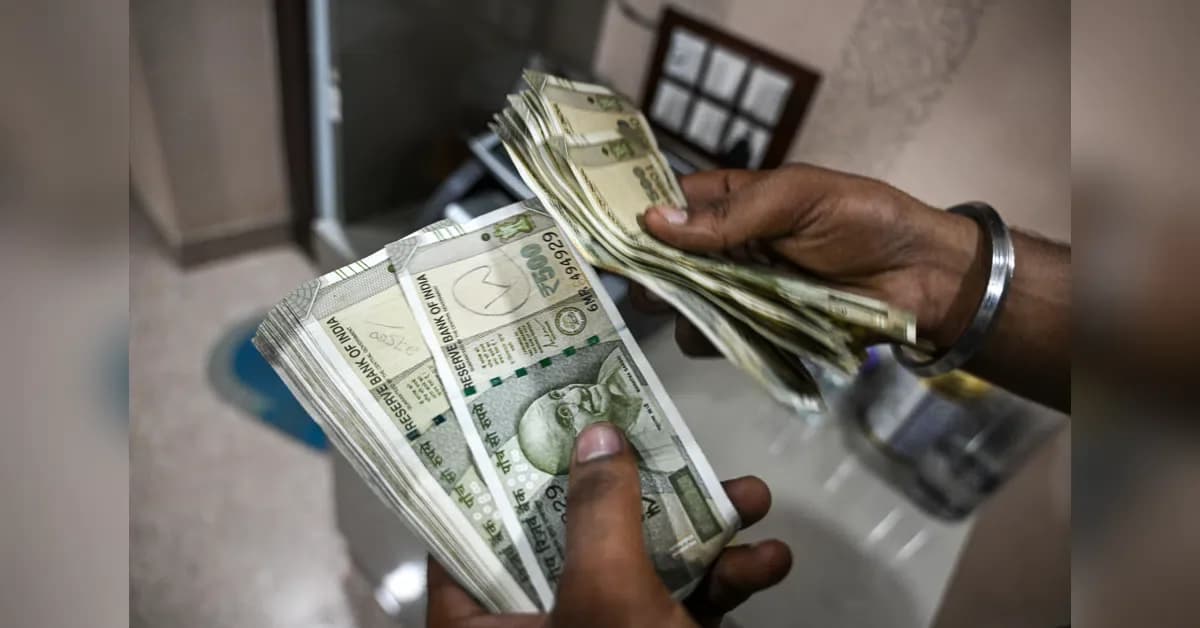
The currency weakness is creating divergent impacts across different business segments. While a weaker rupee has boosted overseas revenue for software firms and other exporters, import-dependent businesses are grappling with higher raw material and freight costs. Welspun Living Ltd., a supplier of towels used at the Wimbledon Championships, faced questions about whether overseas customers were seeking a share of rupee depreciation gains. CEO Dipali Goenka revealed that while the company benefits from a depreciating rupee, costs for crude, cotton, yarns and polymers were up in the range of 10 per cent to 40 per cent, resulting in no net delta gain. The rupee's weakness is particularly challenging for import-heavy sectors, with companies implementing various hedging strategies to manage currency risks.
Currency hedging costs have risen sharply as market participants respond to rupee weakness. As reported by Business Standard, the dollar-rupee one-year forward premium climbed to its highest level since 2022 in late March. The Reserve Bank of India has limited banks' daily open currency positions to just $100 million in a bid to curb speculation in the foreign-exchange market, contributing to increased hedging costs and market constraints. Despite these measures, the rupee faces a mild depreciating bias over the medium term due to structural factors such as trade deficits and global dollar strength.