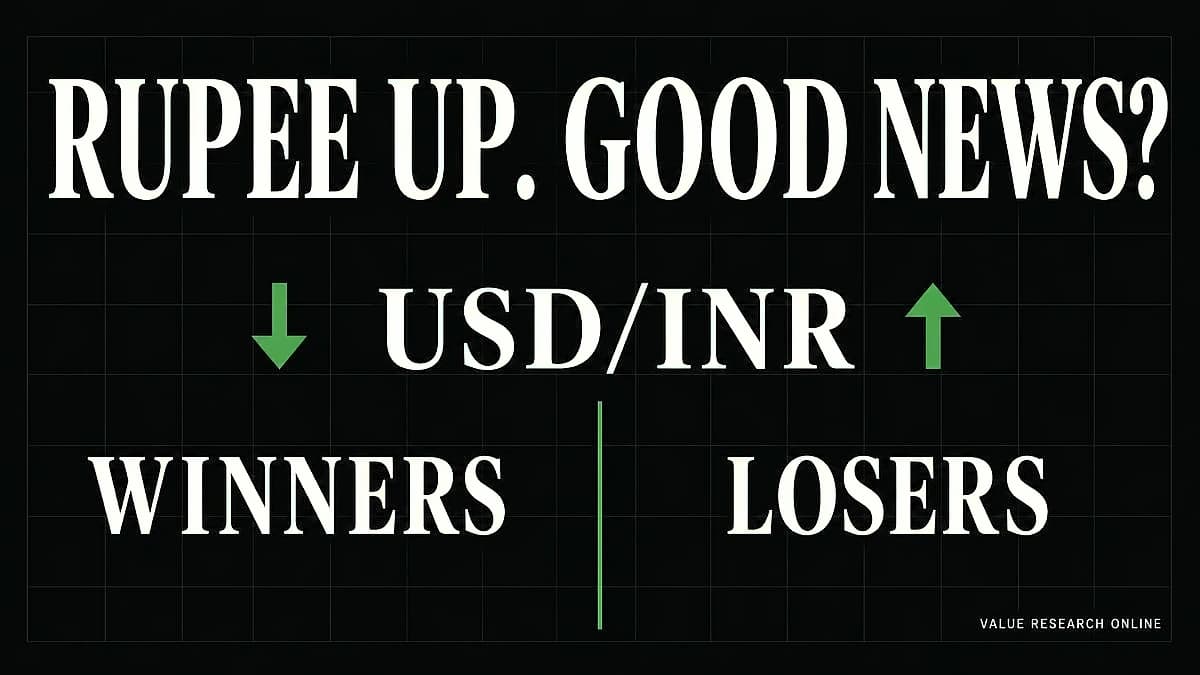
According to a comprehensive study by Elara Capital based on 18-year market history, what moves the Nifty is not the rupee level itself but the year-on-year change in depreciation intensity. As reported by Business Standard, markets have historically absorbed roughly 2-3% annual rupee depreciation without major disruption. The turning point comes when depreciation accelerates materially versus the previous year, as the market reacts to deterioration in macro conditions that rapid depreciation usually signals. Garima Kapoor, deputy head of research & strategist at Elara, explained that "At 2-3% annual depreciation, the long-run average is absorbed comfortably by equities. The inflection point is when the pace rises materially vs the previous year."
The study reveals significant market impact when rupee depreciation crosses certain thresholds. According to Elara Capital's analysis, when median rupee depreciation climbed to 7% in 2008 versus 2% in the previous year, Nifty returns compressed to 4% versus 20% earlier. Conversely, when forex stress eased, median rupee depreciation reversed to 2% and Nifty returns recovered to 20%. This pattern demonstrates how markets react more to the pace of depreciation than absolute levels, with the reverse correlation being equally important for market recovery.
The rupee has emerged as one of the worst-performing emerging market currencies this year, losing 7% against the US dollar amid a crude oil spike due to West Asia crisis. As reported by Business Standard, the currency has again slipped below the 96 mark versus USD, reviving imported inflation and external sector risks. According to a Bloomberg report, the central bank stepped into foreign exchange markets to support the rupee after the currency weakened toward a record low. The currency debates often become fixated on psychological levels, yet history suggests markets care less about those milestones than about what they imply for the direction of macro risks.
According to Elara Capital's research, a worsening FX impulse affects equities through multiple channels. The study notes that sharper rupee weakness often follows elevated oil prices and widening current account deficit (CAD). Foreign institutional investor positioning turns defensive as dollar-denominated returns erode, triggering outflows. Additionally, earnings quality deteriorates as imported input costs threaten margins and bottom lines, creating a cascading effect across market segments. As noted by Garima Kapoor and her co-author Saharsh Kumar, a worsening FX impulse affects equities through macro, flow, and earnings channels.
Looking ahead, G Chokkalingam, founder of Equionomics Research, expects the rupee to appreciate once West Asia conflict resolves and confidence returns. According to Business Standard, he anticipates oil prices will crash back to $60, resulting in a 30-40% fall in oil prices that would save around $30-35 billion in foreign exchange. The brokerage believes after two consecutive years of above-trend rupee depreciation, even a moderation in depreciation intensity can act as a macro normalization signal. With Q4FY26 and Q1FY27E earnings breadth improving, SMID profit growth leading the recovery, and Nifty50 one-year forward valuation closer to long-period average, Elara Capital believes the risk-reward is turning more favourable for a CY27 beta trade, including potential FII re-entry.