The Indian rupee breached the 96/$ mark for the first time on Friday, as US President Donald Trump's latest social media post warning that the "war (West Asia) is to be continued" pushed crude oil prices up significantly. According to The Financial Express, the domestic currency closed at 95.97, down 20 paise from the previous close, after hitting an intraday low of 96.14. The currency has closed at all-time closing lows in each of the five trading sessions this week, ending the week about 1.57 per cent weaker (or down about 149 paise) against last Friday's close of 94.48. Market experts noted that the rupee has emerged as one of the weakest-performing Asian currencies in recent weeks as investors continue to reassess risks in emerging markets. The USD/INR pair finally settled at 96.07 (provisional) against the US dollar, registering a fall of 22 paise from its previous close, helped by likely RBI intervention. The sharp fall comes as global markets remain volatile over the Iran crisis, with analysts warning that higher energy prices could further weaken the currency in the coming weeks.
The rupee's weakness was driven by multiple global pressures including rising crude oil prices, strong US dollar, elevated bond yields and weak foreign inflows. As reported by The Financial Express, crude oil prices rose 3.7% to $109.64 per barrel on Friday, with Brent crude, the global oil benchmark, trading up 3.14% at USD 109.04 per barrel in futures trade. India's merchandise trade deficit expanded to $28.38 billion in April due to supply disruption and higher oil prices amid the West Asia crisis. Dilip Parmer, research analyst at HDFC Securities, explained that "Over the past few days the rupee held the 96 level, but it broke below that today. Once that level was breached, market participants began covering their short positions, which also contributed to the move." The dollar index strengthened to 99.21 compared to 97.90 a week ago, reducing expectations of aggressive Federal Reserve rate cuts and adding to dollar strength. With US assets turning safe haven amid the West Asia conflict, FPIs are selling their equity holdings in emerging markets, including India, increasing the demand for dollars for repatriation purposes and putting pressure on local currencies.
The Indian rupee has shown significant deterioration over recent periods, with nearly 1.5% decline in the last one week and 2.6% drop against the US dollar over the last one month period. According to PTI reports, the currency has lost 5% since the beginning of the US-Iran conflict, highlighting the sustained pressure from geopolitical tensions. In the past six trading sessions, the rupee has depreciated nearly 2% as Iran war risk escalation pushed crude oil prices higher. The in the current calendar year, the currency depreciated 6.8%, as reported by The Financial Express. The dollar index, which gauges the greenback's strength against a basket of six currencies, was trading at 99.15, higher by 0.34%, reducing expectations of aggressive Federal Reserve rate cuts and adding to dollar strength. The sharp fall comes as global markets remain volatile over the Iran crisis, with analysts warning that higher energy prices could further weaken the currency in the coming weeks.
The persistent rupee weakness is expected to have significant economic implications, with experts warning of potential imported inflation, impact on corporate margins and negative impact on market sentiment. According to INVAsset PMS analysis, while export-oriented sectors may benefit from currency depreciation, businesses dependent on oil imports, logistics and consumer spending could face margin pressure if the rupee remains weak for an extended period. Banking stocks may also witness treasury-related volatility, though stronger lenders with stable deposits are expected to remain relatively resilient. Experts believe the Reserve Bank of India may intervene to reduce volatility, but global crude prices and continued dollar strength could keep the rupee under pressure in the near term. USD-INR spot price is expected to trade in a range of 95.60 to 96.20, according to Anuj Choudhary, Research analyst at Mirae Asset ShareKhan. The current rupee depreciation (12 per cent year-on-year) erodes the yield differential (255 basis points difference in 10 year G-Sec yield vs US 10-year Treasury), making fixed income arbitrage opportunities between India and developed markets less attractive after accounting for currency risk.
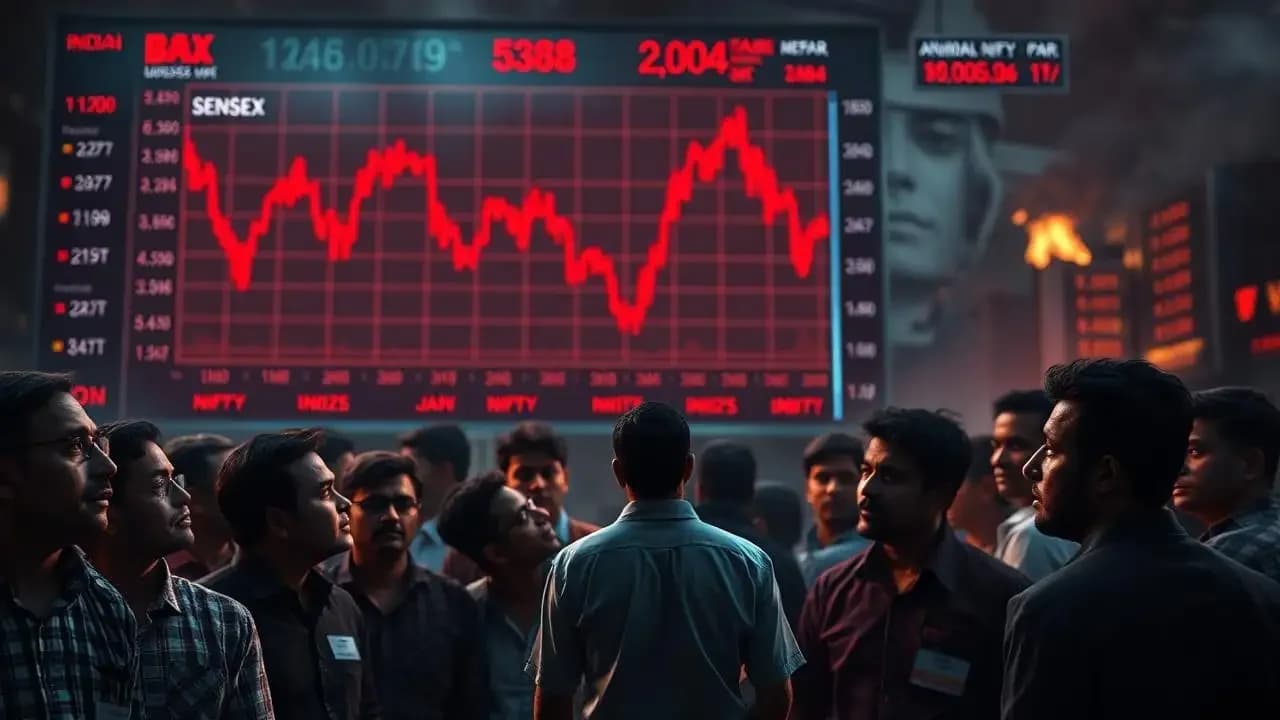
Despite foreign investor resumption of equity purchases, the support was insufficient to boost emerging market sentiment. According to NSE data, Foreign Institutional Investors turned net buyers, purchasing equities worth ₹187.46 crore on Thursday, as reported by exchange data. However, foreign institutional investors have turned net sellers in the currency market, contributing to rupee weakness. On the domestic equity market front, Sensex fell 160.73 points to settle at 75,237.99, while Nifty declined 46.10 points to 23,643.50. Meanwhile, the country's exports in April rose by 13.78% to USD 43.56 billion despite global challenges, while imports grew 10% year-on-year to USD 71.94 billion in April, with the trade deficit during the month standing at USD 28.38 billion. Global uncertainties, relatively high valuations, and the lack of AI-led investment opportunities have weighed on capital flows, while weak net FDI inflows are likely to exert pressure on the balance of payments.