The Indian rupee traded in a narrow range against the US dollar at ₹95.70 in early trade on Thursday, registering a rise of 7 paise from its previous close of ₹95.76. According to The Hindu BusinessLine, the rupee opened at ₹95.70 and touched ₹95.69 in initial trade, showing some stability after recent volatility. This follows Wednesday's depreciation of 40 paise to close at ₹95.76 against the US dollar. The dollar index was trading at 99.47, down 0.06%, providing some relief to the rupee's decline. However, the currency continues to face pressure from multiple headwinds including rising equity outflows and dimming prospects of US-Iran truce renewal. Forex traders have identified prolonged West Asia crisis posing a major risk for India, which relies heavily on energy imports.
Despite widespread predictions of dollar decline, recent data reveals the US dollar's share of allocated reserves remains at 56.77% as of Q4 2025, essentially flat versus the prior quarter. The IMF's COFER release shows total foreign exchange reserves at $13.14 trillion at year-end 2025, with the dollar maintaining its position as the dominant reserve currency. Treasury Secretary Scott Bessent has been actively discussing extending dollar swap lines to allies in the Persian Gulf and Asia, with the United Arab Emirates as the lead candidate. As reported by The Economic Times, the UAE's recent decision to leave both OPEC and OPEC+ on April 28, just six days after Bessent's Senate testimony, demonstrates how Washington is planting new dollar funding nodes in regions where alternative payment systems have been gaining prominence. The latest developments include US Trade Representative proposing a 12.5% additional duty on Indian imports citing labour violations, further weighing on the rupee.
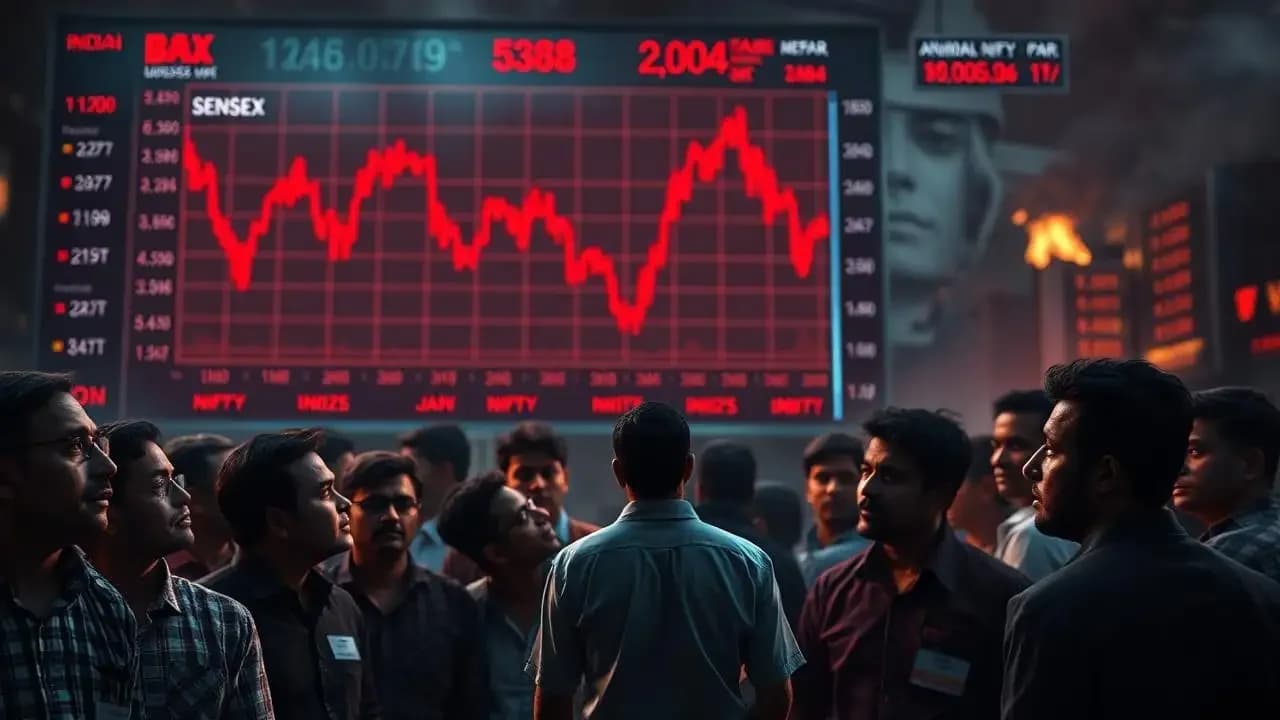
Latest market data shows Brent crude trading lower by 0.93% at $96.90 per barrel in futures trade, providing some relief to the rupee after recent oil price volatility. According to The Hindu BusinessLine, BSE Sensex declined 229.69 points to 74,139.32 and the NSE Nifty dropped 66.30 points to 23,339 in early trade. Foreign institutional investors offloaded equities worth ₹5,616.56 crore on a net basis on Wednesday, adding to persistent foreign fund outflows. As CR Forex Advisors MD Amit Pabari noted, "For India, every rise in crude oil carries an additional burden. Like an unexpected increase in household expenses, higher oil prices mean more dollars are required to meet import needs, often putting pressure on the rupee." The 10-year average depreciation rate of 3.4% continues to impact dollar-denominated assets for Indian investors, with the rupee's weakness creating additional pressure on domestic markets.
Foreign investors have withdrawn approximately $26.4 billion from Indian markets this year, already surpassing last year's record outflows, according to CR Forex Advisors. At the same time, overseas direct investments by Indian companies rose to $48.39 billion during FY 2025-26, while resident remittances abroad touched $28.9 billion. As Pabari explained, "Every dollar leaving the country increases demand for foreign currency and adds pressure on the rupee's valuation." The article identifies three structural catalysts driving the rupee's weakness that are unlikely to resolve quickly. India's CPI has run structurally above US CPI over any five-year horizon, with purchasing power parity adjustments creating persistent pressure. The Nifty 50 TRI delivered 14.6% CAGR in INR terms for the decade ending 2023, while the S&P 500 in INR delivered approximately 15-16% annualised over the same period, with uncorrelated drivers providing portfolio diversification benefits.
The spotlight now shifts to the RBI Monetary Policy Committee decision on June 5, with policymakers facing unprecedented challenges including a rapidly weakening rupee, elevated oil prices, and shifting global interest-rate expectations. As Pabari noted, "Ordinarily, markets would be debating growth and inflation. This time, however, policymakers also have to consider a rapidly weakening rupee, elevated oil prices, and shifting global interest-rate expectations." The article advocates for 20 to 30% allocation to US equities through the LRS route, built over time via low-cost index ETFs and direct stocks accessible through platforms like Appreciate. This recommendation addresses the structural reality that the rupee has weakened at approximately 5% annually for 34 years, with three sustained catalysts continuing to pressure the currency today. The analysis suggests that a portfolio concentrated entirely in one currency carries risks that data has been pricing in for decades, with recent developments showing that gold accumulation by central banks reinforces dollar dominance rather than threatens it.