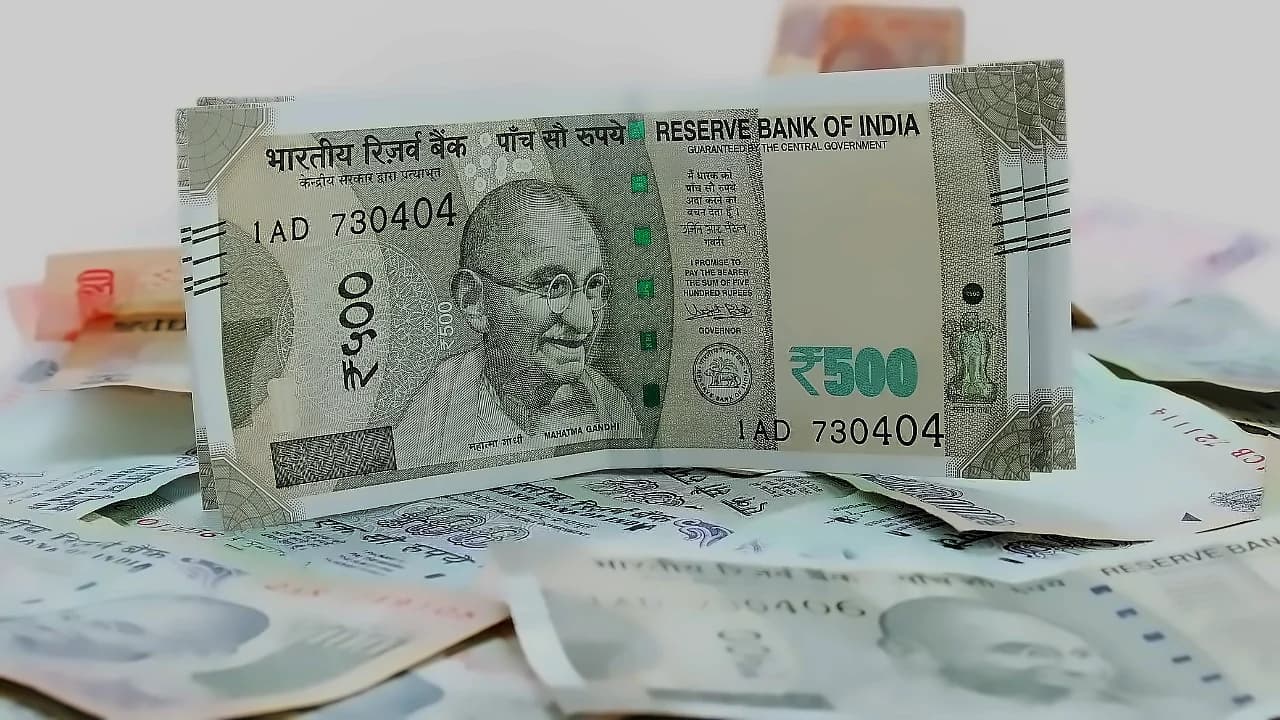
The Indian rupee rebounded 49 paise to close at 96.37 against the US dollar on Thursday, marking a significant recovery from its all-time closing low of 96.95 hit on Wednesday. According to Business Standard, the currency opened at 96.25 against the dollar, touched an early high of 96.05 and a low of 96.60 in intraday trade before settling at the day's close. Crude oil prices fell amid easing geopolitical tensions and central bank actions, providing crucial relief to the rupee after a string of all-time lows. Dilip Parmar, Research Analyst at HDFC Securities, noted that "This recovery follows a retracement in crude oil prices amid tentative signs of easing geopolitical friction, alongside active central bank intervention." The recovery comes after the rupee had declined 30 paise to close at a fresh lifetime low of 96.86 on Tuesday, marking its seventh consecutive session of decline amid rising inflation and global market concerns.
The rupee has depreciated over 14% in just over a year, tumbling from 85 in March 2025 to a record low of almost 97 this week, making it Asia's worst-performing currency in 2026 with a decline of over 7%. According to The Times of India, in the one-year forward market, the rupee breached the 100 level on Wednesday, indicating that currency markets are pricing in a weakening bias for the USD/INR pair over the next 12 months. With no end in sight on the US-Iran conflict and flows through the Strait of Hormuz disrupted, the pressure on rupee caused by higher oil prices is not likely to abate anytime soon. India spent $18.7 billion on crude oil imports in April alone, highlighting the country's heavy dependence on oil imports. The dollar index, which gauges the greenback's strength against a basket of six currencies, was trading at 99.2 on Thursday, approaching again April-highs, with DBS Bank having lifted their USD/INR forecasts into a 95-100 range for the rest of 2026.
The Reserve Bank of India deployed heavy dollar sales via state-run banks before market open on Thursday to halt a persistent slide in the rupee after a string of all-time lows. According to The Economic Times, the rupee closed at 96.20, up 0.6% from its close at 96.82 in the previous session, marking its best one-day gain in two weeks. The currency fleetingly climbed above the 96 per dollar mark before shedding intervention-led gains, with traders noting that intermittent dollar sales from state-run banks persisted through the session. The intent of intervention was visibly more aggressive than recent sessions, signalling discomfort with the one-way rupee moves from 94.50 on May 8 to a record low of 96.96 hit on Wednesday. This marks a significant escalation from the RBI's previous strategy of selling dollars across levels without targeting specific lines, as the central bank appears to have concluded that its steady intervention was having limited impact with the rupee continuing to weaken "no matter what."
Foreign institutional investors have taken out ₹2.65 lakh crore from Indian markets in 2026 so far, close to last year's total exit of ₹3.04 lakh crore, as reported by The Economic Times. This represents a significant escalation in capital flight that continues to weigh heavily on the rupee. On Wednesday, Foreign Institutional Investors offloaded equities worth ₹1,597.35 crore on a net basis, according to exchange data. In 2026, foreign investors have already sold net equities worth over $23.2 billion, estimates suggest, with last year's net outflow figure standing at $18.9 billion. Vinay Rajani, senior technical research analyst at HDFC Securities, explained that "The weakness in the local currency reflects persistent FII outflows, elevated crude prices, and safe-haven demand for the dollar amid global risk-off sentiment." Madan Sabnavis, chief economist at Bank of Baroda, warned that "Crude oil continues to hover around the $110 per barrel level. The market will be testing 97 against the $ in the absence of any positive development on the war front." KN Dey cautioned that "With no bottom in sight, trying to forecast a stabilisation point is pure guesswork, and even a psychological slide to 100 may be on the table."
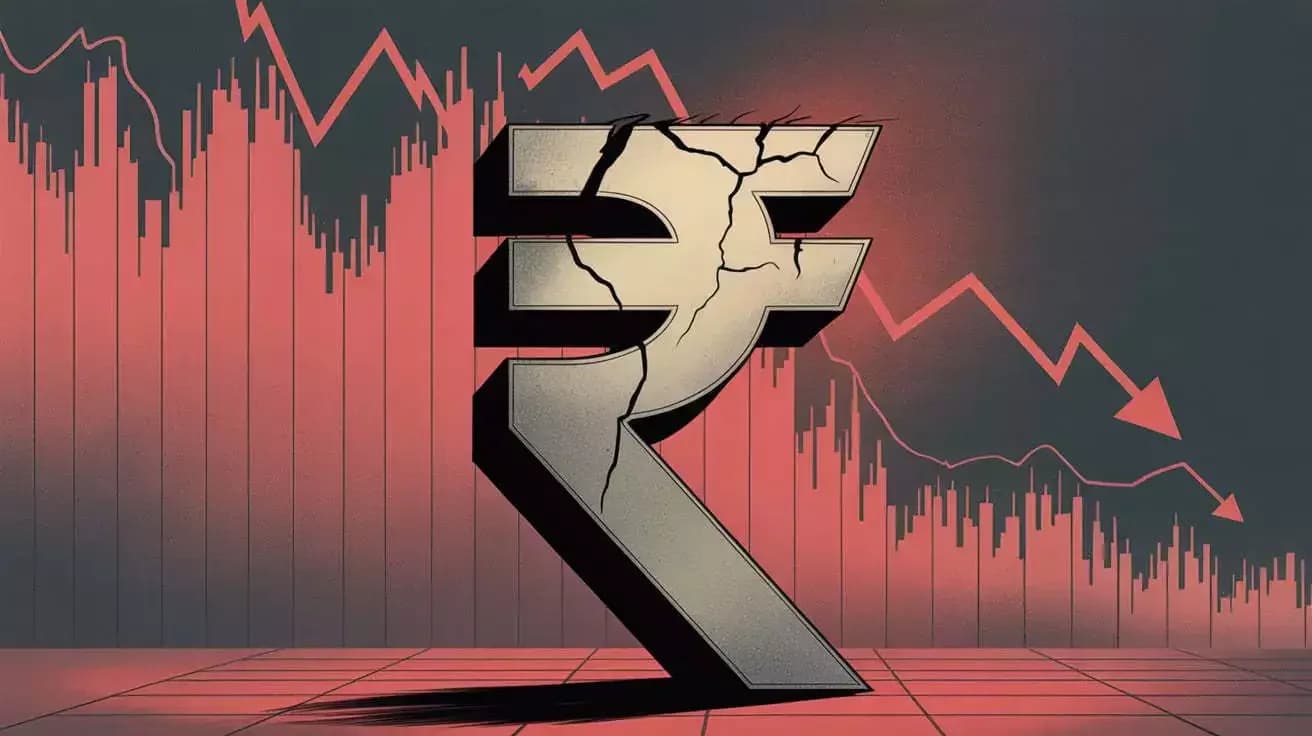
When the rupee depreciates, it increases the cost of imports including crude oil, chemicals, electronics, machinery, and fertilisers, leading to inflation in the form of rising fuel, transport and food prices. According to The Times of India, foreign loans and overseas borrowings become more expensive for companies and individuals, feeding into the economic cycle and eventually slowing growth while raising inflation. The government has recently increased the import duty on gold and silver in a bid to discourage imports, with PM Narendra Modi recently appealing to Indians to avoid unnecessary purchases to preserve forex for essential commodities. A higher trade deficit is adding to the rupee's woes, as exports are not able to counter the increased import costs. Ranen Banerjee suggests measures including bringing back attractive sovereign gold bonds for NRIs, tax incentives for housing to wean investable surplus from gold to real estate, and short-term dollar deposit schemes for NRIs to strengthen the rupee. For year-end 2026, experts say the base-case expectation is that the domestic currency could settle within the 97 to 98 per dollar zone, with HDFC Securities expecting the currency to find some ground within the target range of 94 to 98.