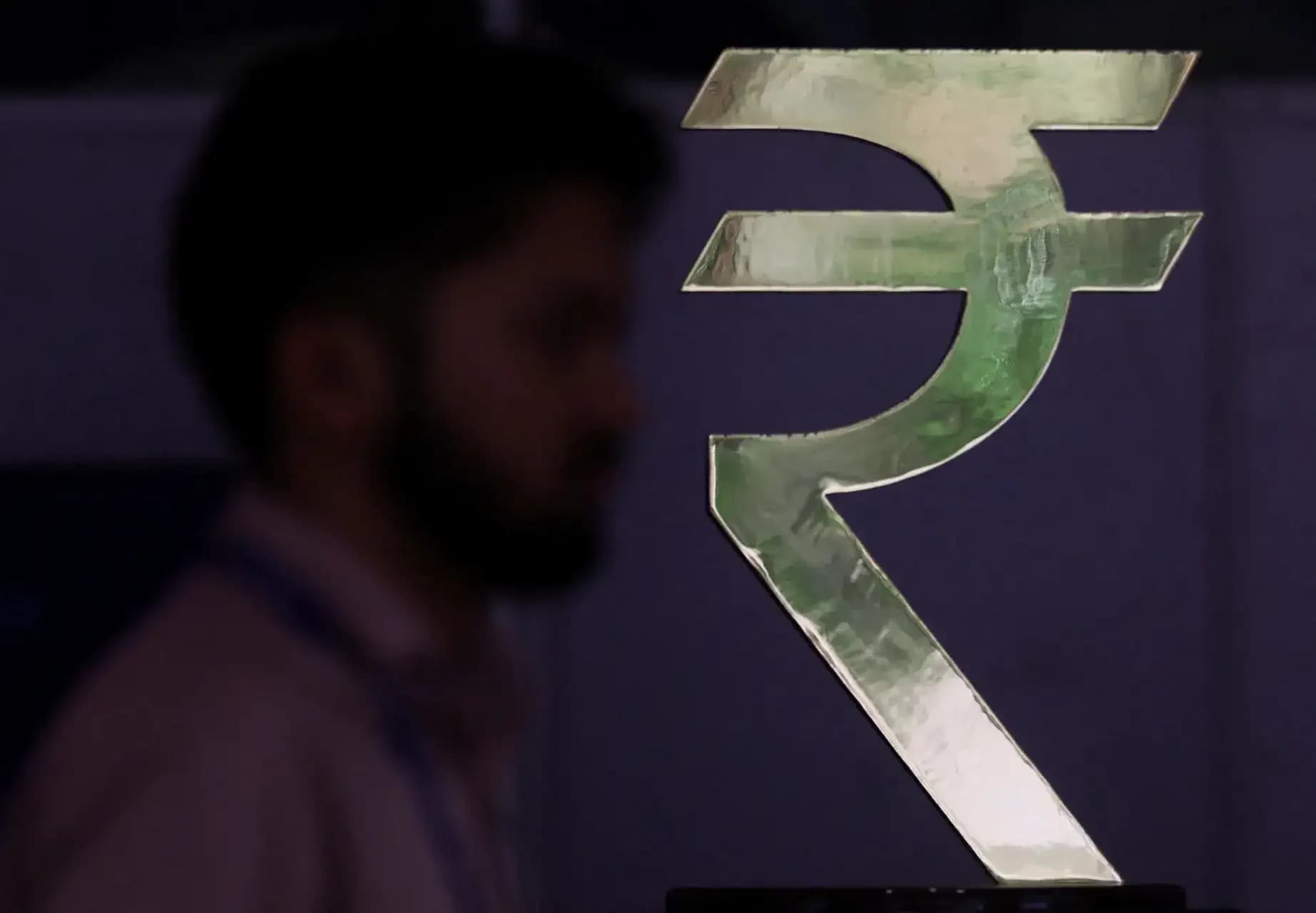
The Indian rupee closed at a new low of 96.53 per dollar against the previous close of 96.36 per dollar, marking the seventh consecutive session at historic lows. During intraday trading, the currency touched a fresh intra-day low of 96.61 per dollar, according to Business Standard. This represents a significant decline from previous levels and marks a new historic closing low for the currency. The rupee has emerged as Asia's worst-performing currency in 2026, with the currency having depreciated close to 7 per cent in 2026, making it the worst-performing Asian currency. Since the start of the West Asia conflict, the Indian unit has fallen 6 per cent, demonstrating sustained pressure from geopolitical tensions.
Brent crude prices have risen over 50 per cent since the start of the conflict, with the commodity trading at $110.96 per barrel against the previous day's $109.89 per barrel on Tuesday, as per Business Standard. The oil price surge has been a key driver of rupee weakness, with elevated crude oil prices, higher US Treasury yields, and continued foreign fund outflows weighing on the currency. Market participants noted that oil prices had remained relatively stable during the day while the dollar index and Asian currencies were not showing significant weakness, but state-owned banks bought dollars around the 96.27 level and continued purchases till 96.40 per dollar, after which short-covering in the market added to the move. The yield on the benchmark 10-year US Treasury bond rose to 4.62 per cent, its highest level in more than a year.
President Trump's social media post spurred significant market recovery, with the S&P 500 erasing most of its intra-day decline following his announcement of calling off fresh attacks on Iran. As per Deutsche Bank analysts, Trump claimed he had called off attacks following requests from Gulf leaders, stating that "serious negotiations are now taking place" and that Gulf authorities believe "a Deal will be made, which will be very acceptable to the United States of America, as well as all Countries in the Middle East, and beyond." The president added that the agreement will include "NO NUCLEAR WEAPONS FOR IRAN!" while maintaining military readiness for potential escalation. Iranian state media reported Tehran's new peace proposal to end hostilities and see US forces exit areas close to Iran, along with reparations linked to war-related damage. On Monday, Iran proposed ending hostilities across fronts, including Lebanon, and sought the withdrawal of US forces from areas close to Iran, along with reparations linked to war-related damage.
The yield on the 10-year government bond fell 2 basis points (bps) on Tuesday to close at 7.11 per cent, down from a two-year high reached on Monday, while the five-year bond yield dropped 5 bps to 6.89 per cent, according to Business Standard. The bond market is awaiting the surplus transfer announcement by RBI which is expected this week following the central bank's board meeting. Market expectations for the RBI dividend are largely in the ₹3.3 trillion - ₹3.5 trillion range, with anything below ₹3 trillion seen as a disappointment and above ₹4 trillion as a positive surprise. The rate setting panel of the RBI will review the monetary policy 3-5 June and is widely expected to keep the policy repo rate unchanged, though it remains to be seen if the growth and inflation projection for the current financial year will be revised due to the impact of the West Asia conflict.
Indian equity benchmarks surrendered early gains in volatile trading, with the BSE Sensex declining 114.19 points (0.15%) to close at 75,200.85 and the NSE Nifty 50 slipping 31.95 points (0.14%) to finish at 23,618.00, according to Business Standard. The S&P 500's recovery following Trump's diplomatic comments helped remove some risk premium that had built up during the previous session. Amit Pabari, managing director at CR Forex, noted that the rupee was facing pressure from higher crude oil prices, foreign portfolio outflows, and global risk aversion. As per Anil Kumar Bhansali, head of treasury at Finrex Treasury Advisors LLP, "Rupee was expected to stay within the range of 96.40 today (Tuesday), but the dollar buying continued and took it to a low of 96.62 per dollar." The Reserve Bank of India's intervention was largely limited to intraday operations aimed at containing sharp moves, with the central bank relying not only on spot market intervention but also on the offshore market, despite India having comfortable foreign exchange reserves of around $697 billion.