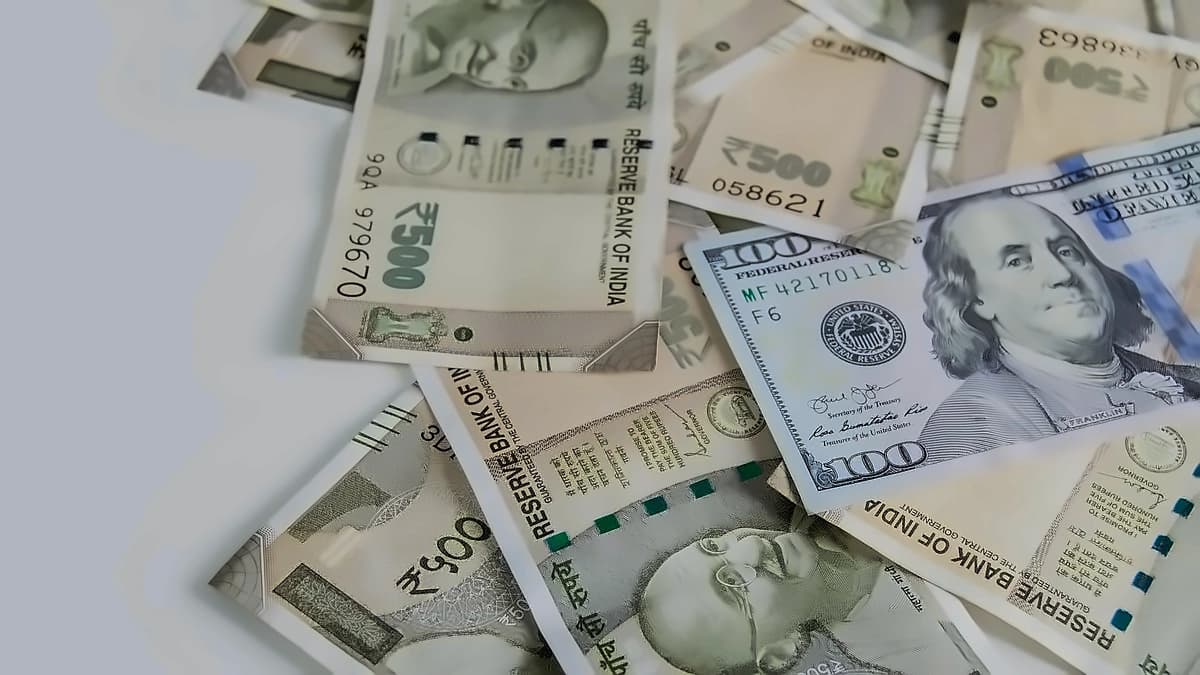
The Indian rupee delivered its biggest single-session gain in over three weeks, closing at 94.97 per dollar, representing a 0.46% increase from the previous session's close of 95.40. According to The Times of India, this was the rupee's sharpest single-session gain in three weeks, supported by lower crude prices, improved global risk sentiment, and dollar selling in offshore markets. The currency tested a high of 94.95 and low of 95.37 during intraday trading. The recovery was driven by sustained debt inflows, easing demand from oil companies and a weaker greenback, with currency dealers noting that the recent buy-the-dips sentiment that held for the past few days reversed today. The rupee's performance comes after it had declined 5.67% so far in 2026 and depreciated 9.5% over the past one year.
V Rama Chandra Reddy, Head – Treasury at Karur Vysya Bank, confirmed there was talk in the market of central bank intervention (sale of dollars) through public sector banks, as reported by The Hindu BusinessLine. The turning point came when traders observed a pickup in dollar-selling interest in the non-deliverable forward (NDF) market, with the selling momentum visible in the 1-month NDF points briefly trading below the 1-month onshore forward premium. As reported by The Financial Express, currency dealers noted that there has been some selling in the NDF market by foreign banks while oil-importer demand was largely missing. This reversal marked a significant shift from recent sessions where the NDF points had traded above their onshore counterparts, with the former seeing a higher intensity of dollar selling interest. Anil Kumar Bhansali, head of treasury at Finrex Treasury Advisors, noted that there were some NDF maturities that took dollar up in the last few days, but today oil bidding ended and allowed rupee to gain up to 94.95 levels after about a week of downside.

According to The Hindu BusinessLine, pressure on the domestic currency eased as crude oil prices are relatively subdued and foreign portfolio investors (FPIs) are gradually coming back into the Indian markets, eyeing investment in IPOs. Amit Pabari, MD at CR Forex Advisors, observed that the primary driver behind today's move was the continued decline in crude oil prices. Brent crude remains near $72 per barrel, its lowest level in more than four months, after OPEC+ agreed to increase production once again and Saudi Aramco cut the official selling price of its Arab Light crude for Asian buyers. For an oil-importing economy like India, lower crude prices reduce the country's import bill and ease demand for dollars, providing direct support to the rupee. Oil is currently trading around $72 per barrel, and analysts expect the rupee to gradually appreciate if geopolitical tensions do not escalate and oil prices remain steady.
FPIs turned net buyers of Indian financial stocks in the second half of June, investing ₹14,634 crore after being net sellers earlier in the month, as reported by The Hindu BusinessLine. According to Business Standard, debt-related inflows lent further support to the currency, while stop-losses on long dollar positions accelerated the gains as the session progressed. These inflows, driven by global index rebalancing and value buying, boosted dollar supply in the domestic market. The global dollar remained broadly range-bound, allowing domestic positives to have a greater influence on the rupee's performance. Amit Pabari assessed that despite today's sharp appreciation, the move can be viewed more as a corrective pullback rather than the start of a sustained strengthening trend.
The rupee's recovery was part of a broader trend across Asian currencies, with the Indian unit being the best-performing Asian currency after the South Korean won, which gained 0.91%. As reported by Business Standard, Asian currencies strengthened on Tuesday as expectations of aggressive US Federal Reserve tightening eased following softer-than-expected US labour market data. The regional strength reflects investor sentiment as they forecast a reduction in U.S. interest rate hikes for the remainder of the year. Inflows into the debt market are also contributing to the rupee's strength, with analysts expecting the currency to move toward about 94.10 in a scenario where geopolitical tensions do not escalate and oil prices remain steady, though the central bank's likely curb on significant appreciation may keep the rupee trading roughly in a 94-95.50 range in the near term. Traders said market participants will continue to monitor RBI intervention and the pace of expected foreign currency inflows, which are seen as key drivers of the rupee's trajectory in the near term.