The Japanese yen strengthened to around 159.54 per dollar in early Asian trading on Friday, building on Wednesday's recovery from a two-day decline. According to Business Standard, the latest strength comes as firmer-than-expected Tokyo inflation reinforced expectations of a Bank of Japan rate hike as early as its September 17-18 policy meeting. The yen also drew support from a softer dollar ahead of key US inflation data and a speech by Federal Reserve Chair Kevin Warsh later this week, with investors now awaiting his Jackson Hole speech for clues on the US interest-rate outlook. Any hawkish remarks from Warsh could potentially limit the dollar's losses and the yen's advance.
Tokyo headline CPI rose to 1.9% YoY in August from 1.8% in July, while core CPI accelerated to 1.8%, above the 1.7% market forecast, according to Business Standard. Inflation excluding food and energy climbed to 2.0%, highlighting persistent price pressures across Japan's economy. The stronger inflation readings have provided fresh support to the yen and weighed on USD/JPY, with the data reinforcing expectations that the Bank of Japan may need to tighten monetary policy to combat rising price pressures. This acceleration in core inflation metrics suggests that the BOJ's gradual pace of monetizing tightening may need to accelerate to address persistent inflationary pressures.
Japanese businesses are increasingly turning to longer-term supplier agreements and currency hedging as the yen's prolonged weakness raises import costs and makes expenses harder to predict. According to Reuters, companies are locking in prices and exchange rates for longer periods, while exporters are also seeking protection against currency swings as uncertainty over the yen's outlook persists. Daiwa Securities has reported a sharp increase in demand for currency hedging, while Bank of America has expanded its Japan foreign-exchange team over the past two years to meet rising demand. The shift is extending hedge durations, with some Japanese companies now seeking to lock in exchange rates for as long as five to 10 years, compared with shorter hedging periods that were more common previously. As Akira Hirayama, executive director at Daiwa Securities, explains, "Previously companies would hedge through banks just for a few months to a year. Now there are cases where customers want to lock rates in for as long as five to 10 years."
The yen has lost more than 30% against the dollar over the past five years, making it the weakest-performing G10 currency over that period. The currency fell to nearly 164 per dollar in July, its weakest level in almost four decades, before authorities intervened. The joint US-Japan intervention on July 31, 2026 was the first such operation since 1998, when Treasury Secretary Bob Rubin helped Japan at a moment of financial-system crisis. Treasury Secretary Scott Bessent, a former hedge fund trader, brought a theatrical quality to the operation, sitting with his back to reporters at a Camp David cabinet meeting with a visible to-do list reading "Buy Japanese yen 5 to 10 billion." The intervention was executed through the euro, not dollars, using the Treasury's Exchange Stabilization Fund — a flexible vehicle dating to the 1930s with over $200 billion in assets. Chris Anstey offers two interpretations of the euro route: either Bessent wanted to avoid depreciating US assets and driving up Treasury yields, or he calculated that the euro-yen cross, being less liquid than dollar-yen, would give him more market impact per unit of intervention. The episode also notes that Japan's Treasury holdings fell by $26.4 billion in June 2026, to $1.12 trillion, suggesting that Japanese official selling of US debt was already a live concern for Bessent.
Taku Ueno, CEO of Takara MC, which operates 43 supermarkets in Japan, exemplifies the impact of yen weakness on import-dependent businesses. His company sources beef from America, olive oil from Spain and tomatoes from Italy, and estimates that a one-yen rise in the dollar-yen exchange rate reduces his profit by around 2 billion yen, or approximately $15.9 million. "Japan is completely losing its buying power," Ueno says, explaining that he now negotiates with overseas suppliers every three months instead of monthly, as the exchange rate changes so quickly. "You have to go to suppliers in person and bow your head to make a purchase," he adds, noting that he finds himself routinely outbid on beef deals lately by buyers from China or Thailand. Nitori Holdings, Japan's largest furniture retailer, is another example of the impact, sourcing a significant portion of its products from overseas and estimating that a one-yen rise reduces its profit by around 2 billion yen, or approximately $12.5 million. While Nitori does not currently hedge its currency exposure, the company could consider using forward contracts if the yen remains extremely weak for an extended period. Even exporters are increasingly looking for protection against unexpected currency movements, with Bank of America noting that some exporters are considering hedging against a stronger yen to secure the value of their overseas earnings. The approach provides greater visibility over costs and allows companies to delay price increases that could otherwise hurt customer demand.
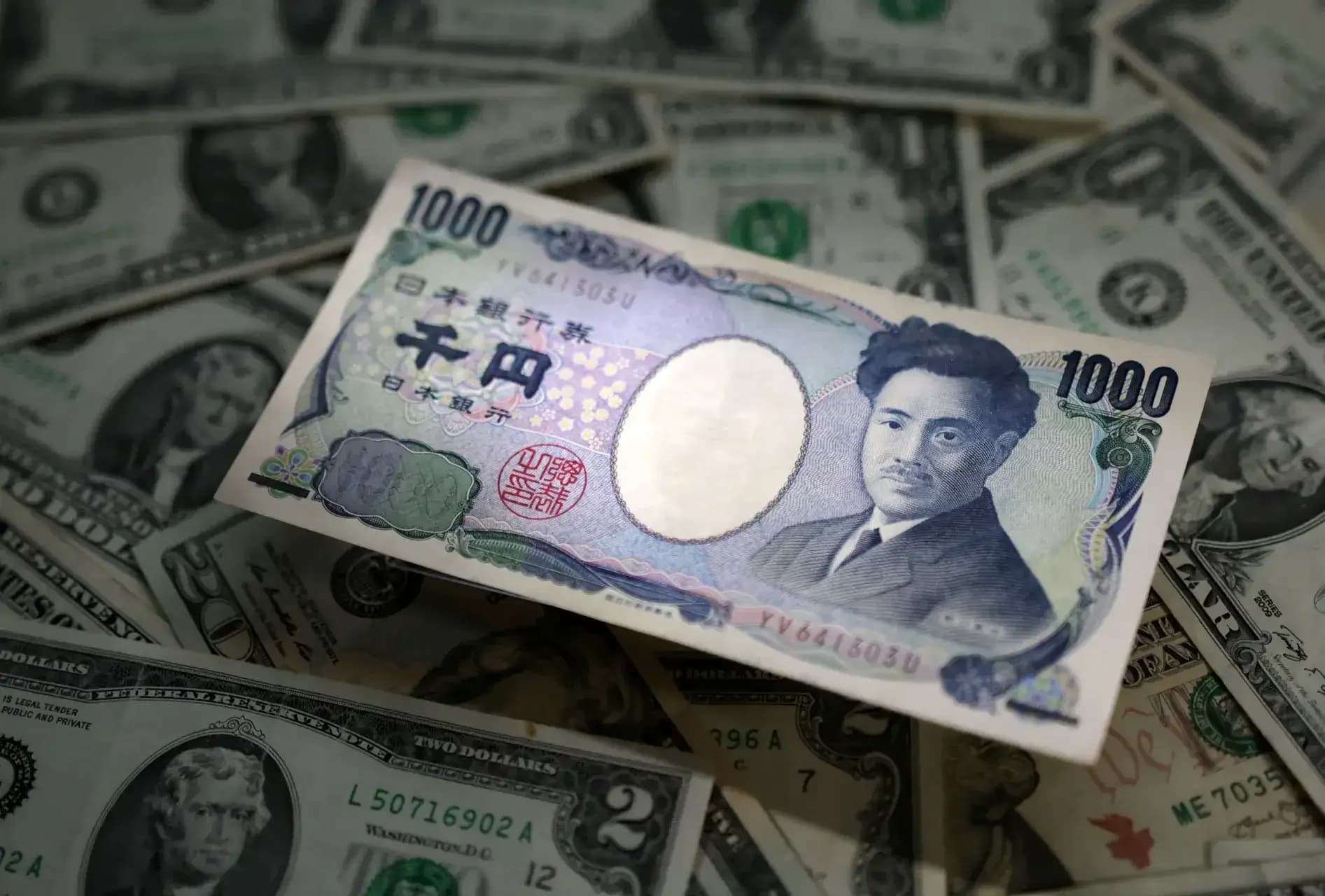
Market participants continue to see a broad dollar-yen range around 155 to 165 as a likely scenario, reflecting expectations that authorities may resist a major decline below 150 but may also struggle to engineer a sustained yen recovery. The changing strategy reflects growing concern that the yen may not return quickly to its previous levels, with companies increasingly preparing for continued currency volatility rather than assuming a quick recovery. As Nagahama from Bank of America notes, "While some Japan-based market participants argue that the tide in the FX market has turned, most investors including offshore accounts, remain sceptical." The yen remains under structural pressure from wide interest rate differentials, mounting fiscal concerns and elevated energy and import costs, with Brent at $93.09 and WTI at $85.65 after two consecutive weekly gains above 5%. Japan imports essentially all of its hydrocarbons, creating additional cost pressures. The domestic case for tightening has strengthened materially, with Japanese inflation accelerating for the second consecutive month, strengthening the case for a near-term rate increase. The arithmetic underlying the pair is unforgiving, with the Federal Reserve holding the funds rate at 3.50% to 3.75% while the Bank of Japan holds its policy rate at 1.00%, creating a nominal differential of 250 to 275 basis points in the dollar's favor. Even under a best-case scenario where the Bank of Japan hikes to 1.25% in September, the differential remains above 225 basis points heading into the fourth quarter.