India's outward remittances under the Liberalised Remittance Scheme (LRS) experienced a marginal decline in FY26, according to RBI bulletin data. Total LRS remittances slipped by 2% year-on-year to $28.9 billion in FY26, down from $29.6 billion in FY25. The decline was attributed to heightened global uncertainty and a geopolitical climate that impacted overseas spending patterns. This reduction occurred alongside the RBI's aggressive dollar sales strategy to manage exchange rate volatility.
The decline was primarily driven by significant reductions in traditional overseas spending categories. Remittances towards studies abroad dropped over 20% to $2.3 billion compared to $2.9 billion in the previous year. Similarly, remittances towards international travel fell about 3% to $16.5 billion. In March 2026 specifically, travel remittances decreased to $1.09 billion from $1.13 billion in March 2025, as reported by the RBI bulletin. The RBI's decision to provide detailed breakdowns by purpose indicates a growing need to track outward foreign remittances more closely by their specific purpose and destination.
Despite the overall decline, certain investment categories showed strong growth that helped offset the reduction in traditional spending. Remittances towards investment in foreign equity/debt grew 56% year-on-year to $2.7 billion in FY26, according to RBI data. This significant increase in investment remittances provided some balance to the overall decline in outward remittances. The RBI's strategic approach to forex intervention has been particularly effective, with bankers estimating the central bank made at least 10% profit on its sales, generating nearly ₹50,000 crore of income from forex intervention in FY26.
The RBI significantly stepped up its dollar sales in FY26 to manage exchange rate volatility, recording a total net sale of $53.1 billion compared to $41.1 billion in FY25. In March 2026 alone, the central bank executed a net sale of $9.8 billion, marking a swift reversal from February 2026 when it absorbed dollars with a net purchase of $7.4 billion. Given that dollars were purchased when the rupee was stronger, bankers estimate the RBI made at least 10% profit on its sales, with the impact on reserves partly cushioned by gold price increases. The central bank maintained a decisive stance as a net seller of foreign currency across both fiscal years, with the highest volume of net dollar sales occurring in November 2024 when it flooded the market with $20.2 billion.
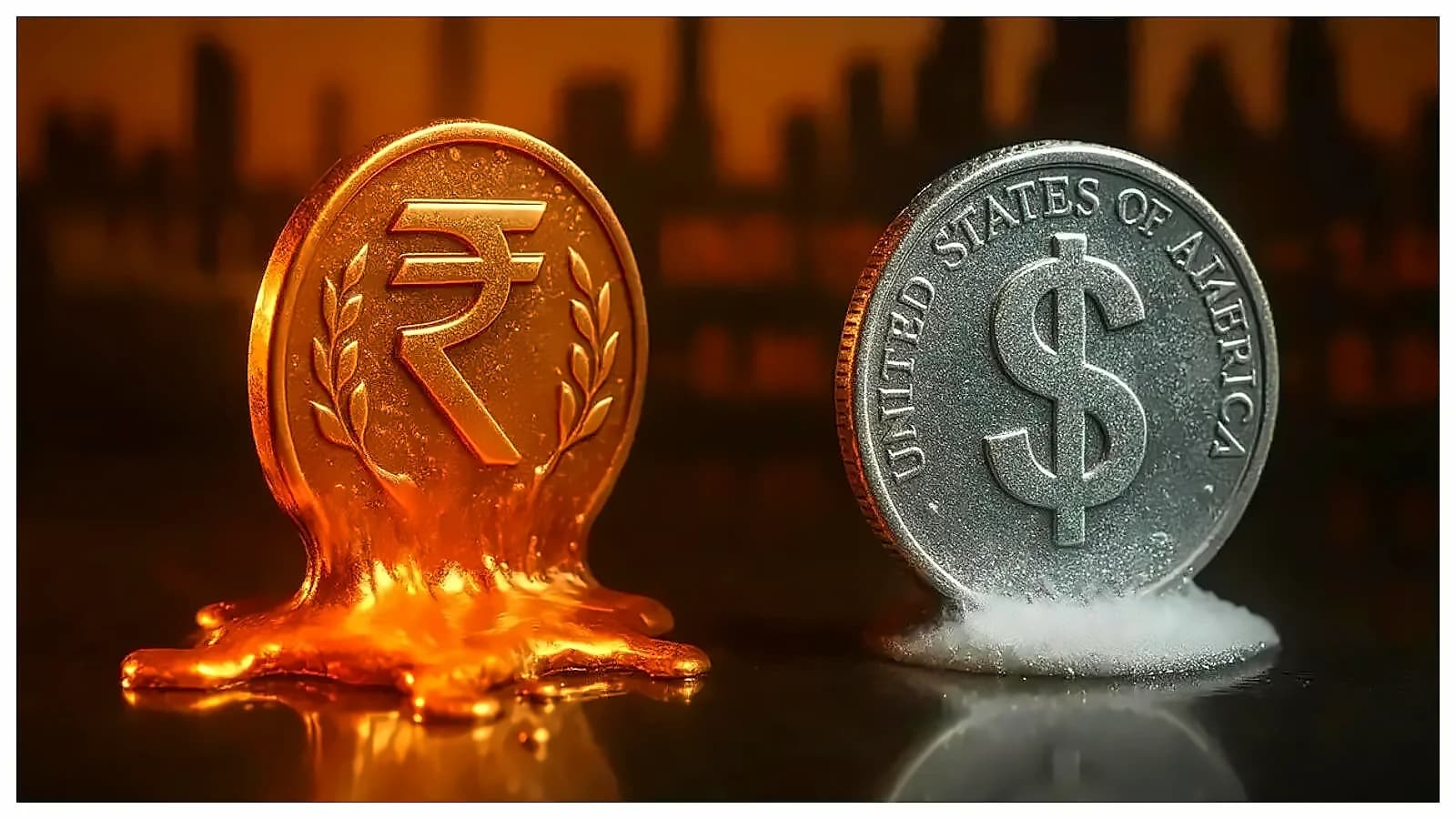
According to analysts cited by businessline, the decline in overseas education spending is attributed to tightening Visa regulations in the US coupled with weak job markets globally, especially for STEM roles. This has led students to opt for new, lower-cost destinations. Similarly, rupee depreciation has been nudging Indians to travel to less expensive locations abroad. The RBI's decision to provide detailed breakdowns by purpose indicates a growing need to track outward foreign remittances more closely by their specific purpose and destination. The central bank's aggressive forex intervention strategy demonstrates its commitment to maintaining currency stability while managing the impact of global uncertainties on India's external sector.