The Hong Kong dollar edged closer to the weak end of its trading band against the US dollar on Tuesday, raising the prospect of intervention by the Hong Kong Monetary Authority (HKMA) to defend the currency's peg. According to reports from Reuters, as of 0325 GMT, the currency was trading at 7.8475 per US dollar, approaching the weak-side limit of 7.85. Hong Kong maintains a linked exchange rate system that keeps the local currency within a narrow range of 7.75 to 7.85 per US dollar. If the Hong Kong dollar reaches the weaker end of the band, the HKMA must sell US dollars and buy the local currency to maintain the peg, which drains liquidity from the banking system and pushes up local interbank rates. As reported by Bloomberg, the currency traded around 17 pips shy of the 7.85 boundary on Wednesday, with traders remaining cautious about pushing the Hong Kong dollar lower while the aggregate balance is thin.
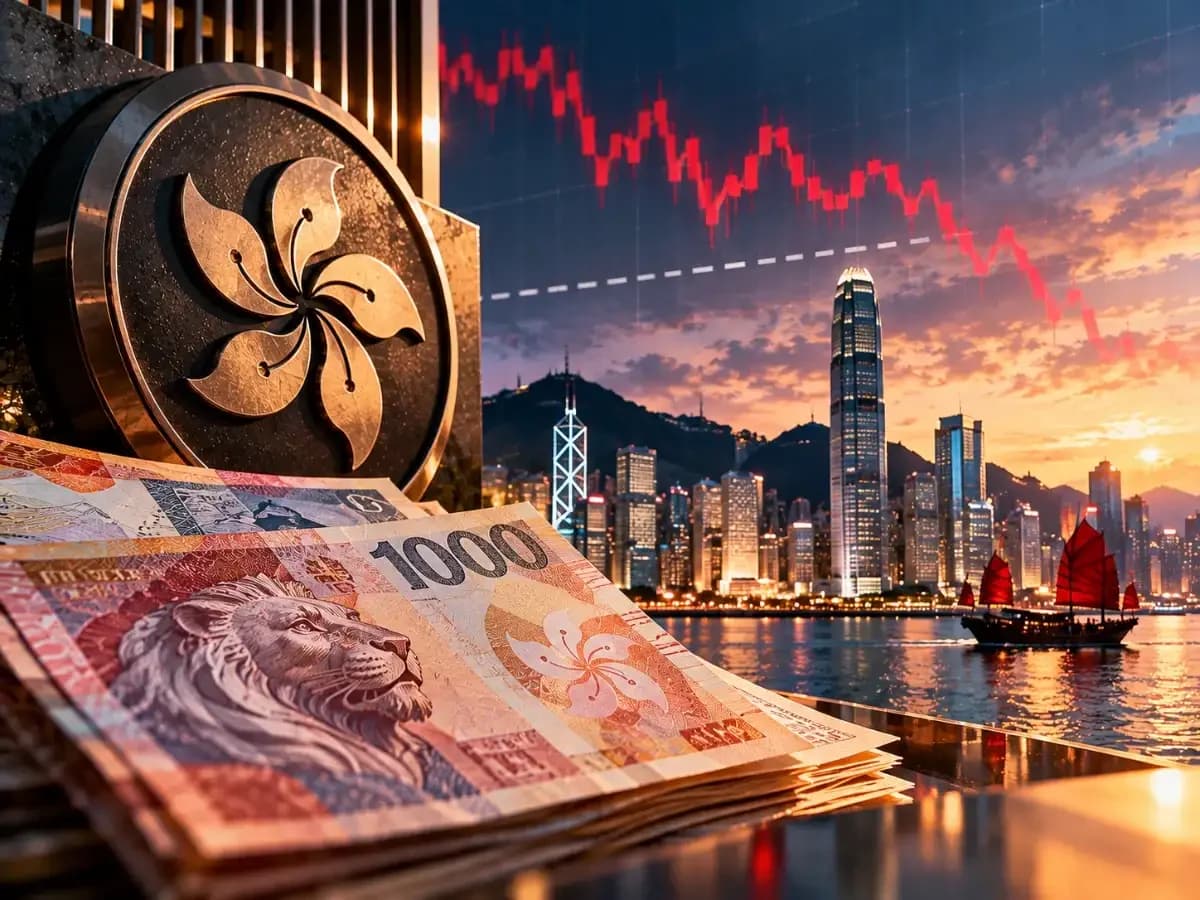
Strategists are warning that currency defenses are raising the risk of volatility in borrowing costs as the Hong Kong dollar nears its weak-side limit. According to Bloomberg, the interbank cash reserves have fallen to HK$54 billion ($6.9 billion), a threshold crossed only once in 2023 during active stretches of currency defense. The HKMA's operations to prevent currency breach drain the aggregate balance, which drives up interbank borrowing costs and makes it less attractive for traders to short the Hong Kong dollar. Carie Li, a strategist at DBS Bank, noted that "For Hong Kong Interbank Offered Rates, the overall trend is set to be upward. It could be volatile if aggregate balance falls to the previous lows." The one-month Hibor has fallen to around 2.7% from a nine-month high of 3.02% touched in late September, though it remains at the widest spread with US overnight indexed swaps since May.
Hong Kong stocks recouped all their intraday losses on Tuesday as the market recovered from early losses despite continued pressure on technology stocks. As reported by Live Mint, Hong Kong's benchmark Hang Seng Index swung to a gain of 0.3% at the close, extending its winning run to third day, but the Hang Seng Tech Index remained in the red, falling 0.8%. The recovery came as Asian markets were mixed, with Chinese and Hong Kong indexes recovering from steep intraday losses while South Korea, Japan and Taiwan fell amid a technology sell-off. The weakness was driven by emerging competitive threats from Chinese chipmakers and mounting concerns about AI valuations.
Demand for the Hong Kong dollar has been dampened this year by sluggish performance in the local equity market and tepid southbound investment flows from mainland Chinese investors. These factors have also weighed on local interbank interest rates. Meanwhile, US interest rates have risen over the past two months as markets reassessed the likelihood of Federal Reserve rate hikes, adding to pressure on the Hong Kong dollar. The city's currency peg closely links its monetary conditions to those of the United States, limiting Hong Kong's ability to set interest rates independently. As noted by Morgan Stanley analysts, while a low aggregate balance revives memories of 2022-2023 when aggressive Fed rate hikes and HKMA interventions drove up Hibor and mortgage costs, Hong Kong's broader buffers should limit the impact this time.