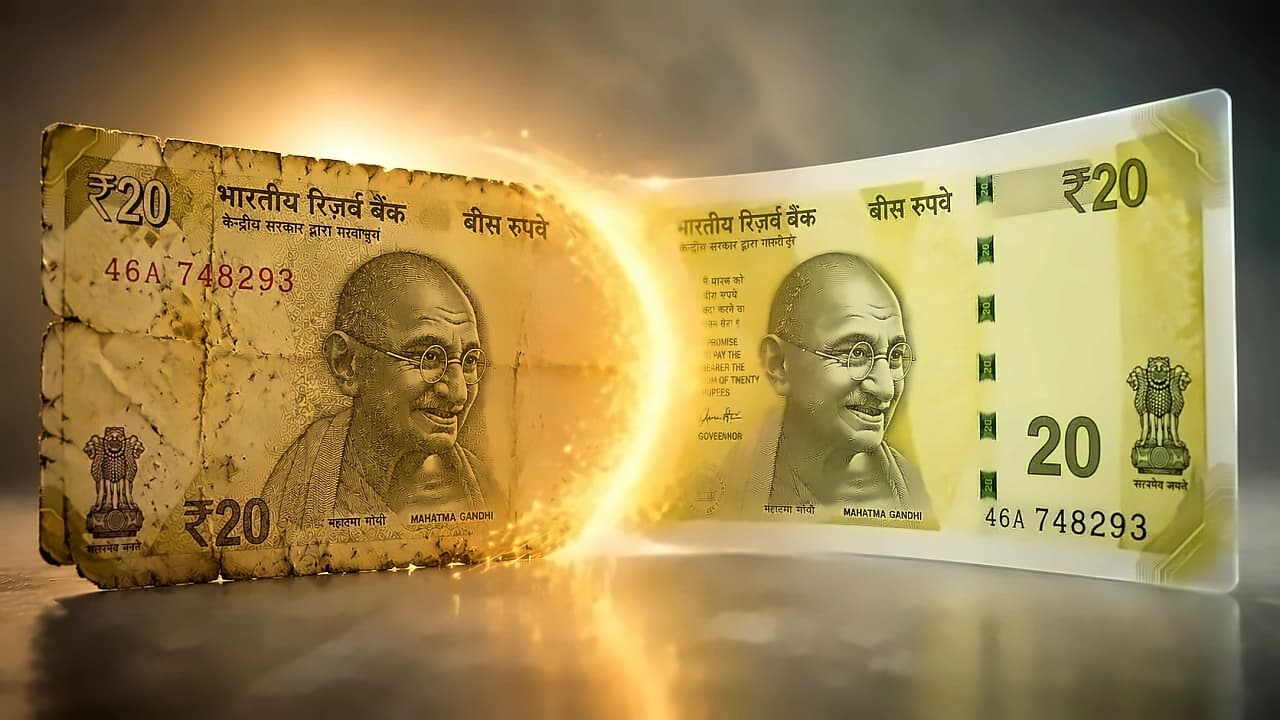
The Government of India has officially dismissed social media reports claiming that the Reserve Bank of India will withdraw all paper currency notes and replace them with plastic notes by the end of this month. According to reports from The Hindu BusinessLine, ANI, Lokmat Times, Goodreturns, and Zee News, the clarification came after multiple messages circulated across digital platforms, triggering concern among citizens regarding the status of their legal tender. Official sources confirmed that the central bank has issued no such directive, and the existing paper currency will continue to remain in circulation. The government's latest statement emphasizes that according to RBI, there are no plans to withdraw paper currency notes or IC currency notes by June 30, 2026. The PIB has now reiterated that authentic information regarding currency and banking policies should be obtained only through official RBI communications and not through viral social media posts.
The Press Information Bureau (PIB) officially flagged the viral messages as completely baseless, urging the public not to succumb to panic or spread unverified rumours. As reported by The Hindu BusinessLine, ANI, Lokmat Times, Goodreturns, and Zee News, PIB Fact Check stated on X, 'Several social media posts are falsely claiming that RBI will withdraw paper currency notes and replace them with plastic currency notes from June 30, 2026.' The government factual verification handle explicitly stated that the central bank is not executing any transition toward synthetic alternatives, with the post adding 'This claim is Fake.' The agency further noted that the banking regulator maintains its current currency structure, reinforcing the official position that no such plans are under consideration. The PIB has now specifically advised people to rely only on official sources for information related to currency and banking matters, warning against spreading misinformation that uses manipulated videos of Prime Minister Narendra Modi to support false narratives.
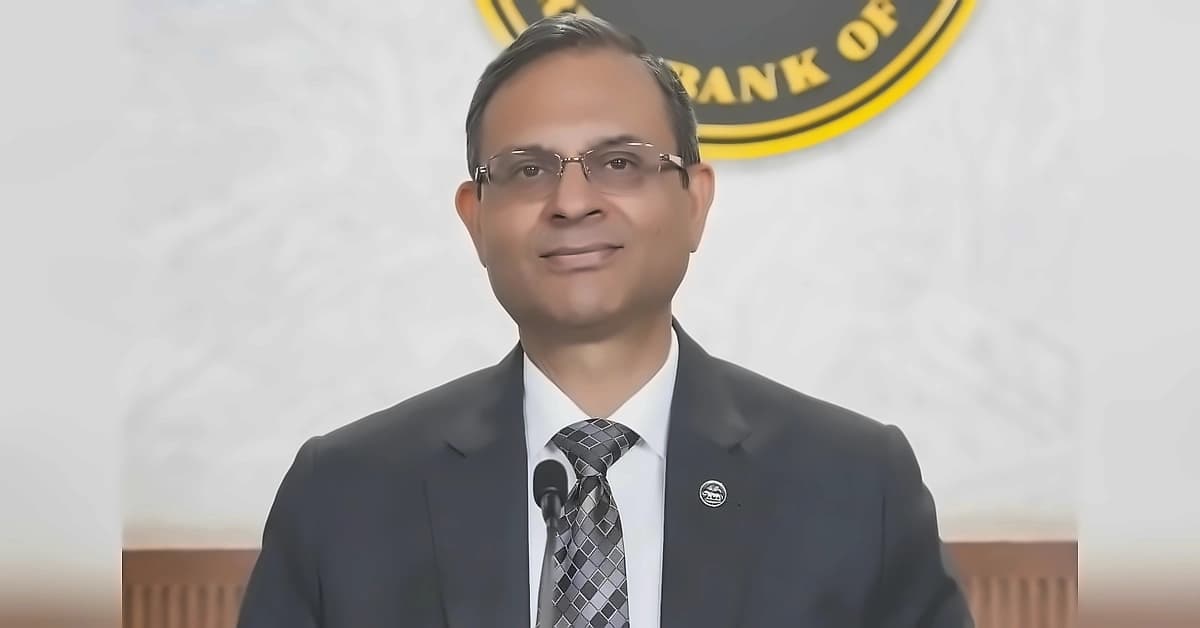
RBI Governor Sanjay Malhotra has provided definitive clarification on the viral rumours, stating that while the central bank is exploring the idea of introducing polymer-based currency notes, the process remains in a very early stage. As reported by Goodreturns, Governor Malhotra clearly stated that no final decision has been taken and there is no timeline fixed for replacing paper currency. The Governor emphasized that the exploration phase is still in preliminary stages, with no concrete plans or implementation timelines currently under consideration. During the post-monetary policy press conference in Mumbai on June 5, Malhotra said, "As far as polymer notes are concerned, the proposal is under consideration. As soon as any decision is taken on it, we will inform you. We are examining the pros and cons of it and whether it would be worthwhile to implement. It is still at a preliminary stage." This official clarification directly contradicts the viral social media claims that suggested an imminent transition to plastic currency by June 30, 2026.
Despite RBI's efforts to introduce accessible features for visually impaired individuals, significant challenges persist in the new currency design. According to reports from National Herald, the new banknotes feature intaglio or raised printings of Mahatma Gandhi portrait, Ashoka Pillar emblem and angular bleed lines on the left and right sides, with different bleed line configurations for different denominations. However, advocates like Advocate Banerjee argue that the embossing on currency notes cannot be felt by the visually impaired with their hands. The National Association for the Blind (NAB) has filed petitions in both Delhi and Bombay High Courts, with the Bombay High Court seeking RBI's response on why visually impaired individuals cannot identify recent notes and coins. The All India Confederation of the Blind has contested that "the bleed lines on polymer notes are perceptible, not on paper notes," while JL Kaul of the All India Confederation of the Blind emphasizes that mobile apps and braille cannot address the problems of rural blind people who remain illiterate or have limited digital access.
The currency redesign has resulted in significant cost implications for the government and raises questions about accessibility trade-offs. As reported by National Herald, the cost of printing currency notes increased to ₹7,965 crore in 2016-17, according to government information provided to Parliament. Organizations working for the blind argue that the cost of lost livelihoods and economic independence for visually impaired entrepreneurs is economically and socially much higher than the cost of withdrawing inaccessible notes and coins. The new currency design has also created additional barriers for blind people, who have been debarred from ATM services and digital banking platforms as apps and websites don't cater to their special needs. While some visually impaired individuals have bank accounts and debit cards, digital currency remains totally inaccessible for them, compounding the challenges faced by the visually impaired community.