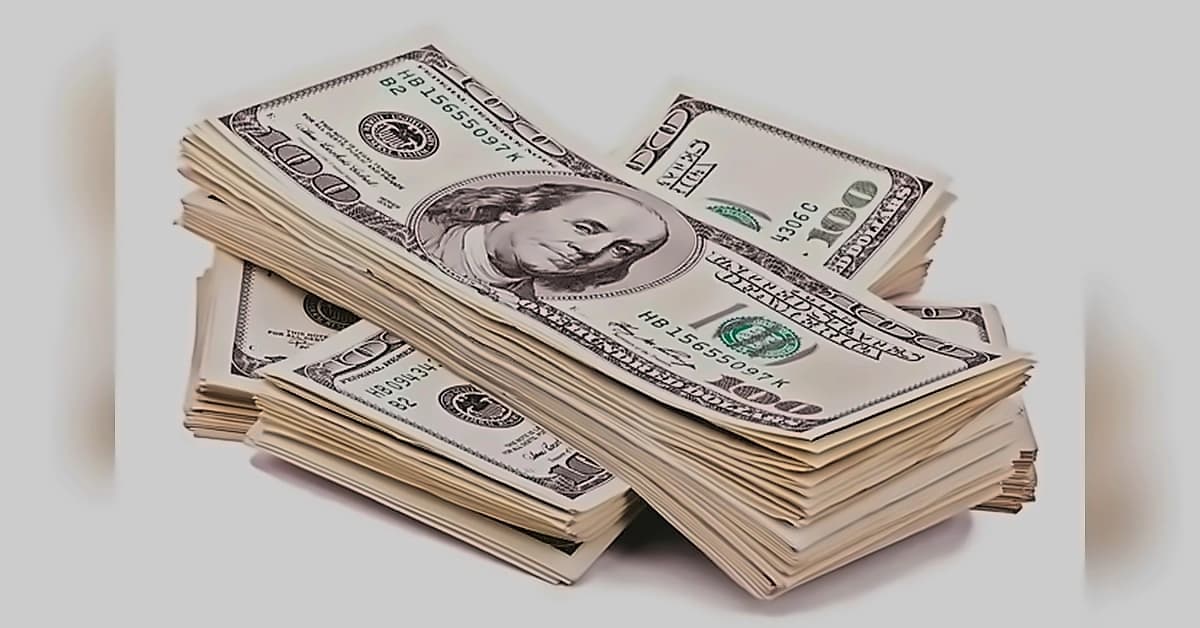
The U.S. dollar strengthened on Thursday as investors anticipate a highly anticipated meeting between President Donald Trump and China's Xi Jinping in Beijing, where the U.S. President is aiming to secure economic wins and maintain a fragile trade truce. According to The Economic Times, the offshore yuan held near a more than three-year high at 6.7860 per dollar, with analysts at Barclays expecting the onshore yuan to hold steady in the near term, which would 'also help ease the path of discussions between the U.S. and China.' However, pushback by authorities suggests limited patience with rapid appreciation. The meeting comes as Trump rejected Iran's latest peace proposal on Monday, calling it 'TOTALLY UNACCEPTABLE' in a social media post, with Iran offering to transfer some of its stockpile of highly enriched uranium to a third country but rejecting dismantling its nuclear facilities.
The dollar got a lift from elevated U.S. Treasury yields as investors wagered the Federal Reserve would hike rates this year, with markets now pricing in a 31.8% chance that the Fed will raise rates in December, up from just over a 16% chance a week ago. According to The Economic Times, the change in rate expectations and fears of a surge in inflation have sent U.S. Treasury yields higher, with the two-year yield at 3.9750% and the benchmark 10-year yield at 4.4669%, having touched close to one-year highs in the previous session. Carol Kong, a currency strategist at Commonwealth Bank of Australia, noted that the inflation data received this week certainly won't be welcomed by FOMC officials, with the bank forecasting the FOMC will have to start a tightening cycle from December this year, and forecasting three hikes in the cycle for now.

Share futures slipped and the dollar climbed in Asia on Monday as talks between the United States and Iran appeared deadlocked, leaving the vital Strait of Hormuz all but shut and sending oil prices higher. President Donald Trump on Sunday rejected Iran's response to a U.S. proposal for peace talks to end the war, saying Tehran's demands were 'totally unacceptable.' An Iranian plan sent to the U.S. stressed the need for an end to the war on all fronts and the lifting of sanctions on Tehran, along with reparations and a recognition of Iran's control of the Strait, according to Iranian media. Bruce Kasman, global head of economics at JPMorgan, noted that the conflict in the Middle East is now entering its 11th week, with energy prices having surged but remaining at levels that are headwinds rather than expansion-ending obstacles. The risk of a sharper move rises with each week the Strait of Hormuz stays closed, with JPMorgan's commodities team seeing operational stress levels starting sometime in June.
The U.S. dollar advanced against major peers in early Asia trade on Monday, supported by strong U.S. jobs data and escalating geopolitical tensions. According to reports from Reuters, the dollar index was trading at 98.001 in early Asia, with the greenback finding support from robust employment figures. The currency strengthened as President Donald Trump rejected Iran's response to a U.S. peace proposals, dashing hopes for an imminent end to the 10-week-old conflict. S&P 500 futures contracts fell 0.3% in early Asia trading as equity markets reacted to the deteriorating diplomatic situation. Nasdaq futures eased 0.2% as markets caught up to Friday's Wall Street performance, with shares having hit record highs last week on upbeat corporate earnings and solid payrolls. Against the Chinese yuan, the U.S. dollar was flat at 6.7951 yuan in offshore trade after data released at the weekend showed China's export growth accelerated in April, with exports increasing 14.1% from a year earlier in dollar terms.
Oil prices jumped dramatically as trading resumed on Monday, with Brent crude futures quickly rising 3.3% to $104.65 a barrel after President Trump rejected Iran's response to U.S. peace proposals. As reported by Reuters, Trump wrote on Truth Social that he doesn't like the Iranian response, calling it 'TOTALLY UNACCEPTABLE' without providing further details. The surge in oil prices added to safe-haven demand for the dollar amid the escalating Middle East tensions. Gold slipped 0.5% to $4,690 an ounce, having drawn scant support as a safe haven or as a hedge against inflation risks. The oil price spike creates headwinds for major importers Europe and Japan, while the U.S. remains a net exporter. Despite the ceasefire in place since April 8, recent incidents continue to threaten stability, with a drone strike on Sunday briefly setting a cargo vessel ablaze off Qatar in the Persian Gulf, marking the latest shipping attack in the region.
The Chinese yuan has risen almost 6% against the dollar in the past year, making it one of Asia's best-performing currencies, with both onshore and offshore rates climbing past the closely watched 6.8 per dollar level this week to their strongest since early 2023. However, Morgan Stanley sees room for the yuan to climb further but disagrees with more bullish views that the currency is significantly undervalued. According to the bank's latest forecasts, the Chinese yuan may advance to 6.70 against the dollar in the near term, supported by stronger growth and improving risk sentiment, while raising its year-end expectations to 6.75 from 6.7 previously. Chief China economist Robin Xing noted that the CFETS index has returned to levels in line with recent years, suggesting the catch-up phase after earlier weakness is over. The differing views come down to how investors interpret China's policy priorities, with bulls highlighting strong exports and improving investor sentiment as reasons for continued strengthening, while more cautious analysts say Beijing has little incentive to push for broad-based currency gains with domestic demand still uneven.