Japan's Prime Minister Sanae Takaichi will deliver a video address at WebX 2026 on July 13-14, 2026, marking a historic moment for Web3 innovation in Asia. As reported by multiple sources, Takaichi's appearance as the 105th Prime Minister signals Tokyo's deepening political embrace of blockchain technology and Web3 innovation. The video format allows the Prime Minister to engage without security and scheduling demands while still granting the sector top-level recognition. This development contrasts sharply with regulatory gridlock in Washington, where banks are pushing to kill a landmark crypto bill days before a Senate vote. Takaichi's government has inherited a Japanese policy apparatus that already treats digital assets as a regulated growth sector, not a legal gray zone. Recent data shows Ethereum, BNB Chain, and Polygon leading on-chain developer activity, with Asian teams dominating many ecosystems, making Tokyo a natural venue for conversations about the next phase of infrastructure and adoption.
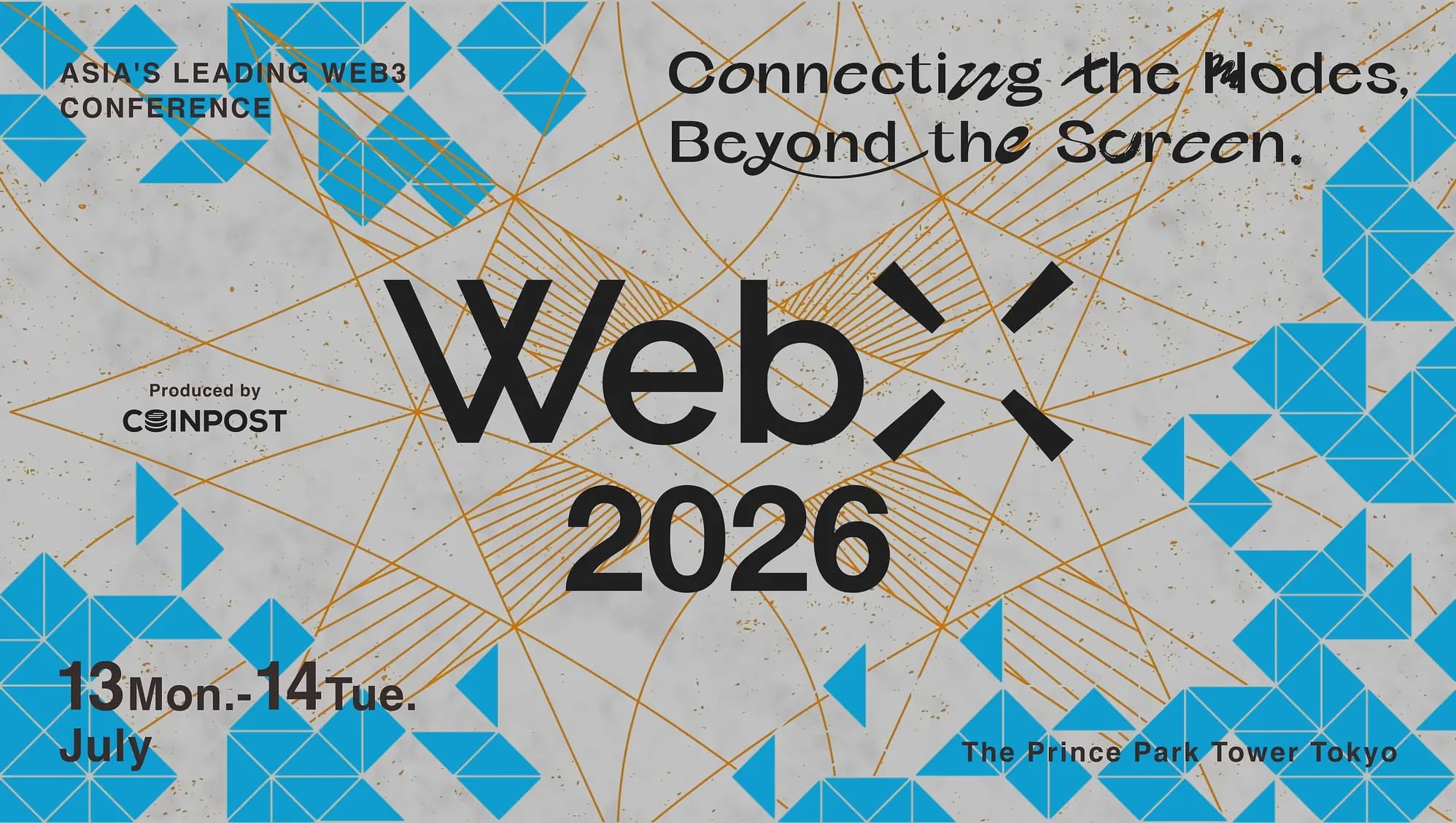
WebX 2026, Asia's leading Web3 conference, will return to The Prince Park Tower Tokyo on July 13-14, 2026. According to reports from CoinPost, the conference is planned and operated by the crypto media outlet and will feature keynote sessions, panel discussions, exhibitions and curated networking opportunities. The two-day program operates under the theme of 'Connecting the Nodes Beyond the Screen' and is designed to support meaningful partnerships and long-term industry development. The 2026 edition builds on the success of last year's event, which welcomed over 14,000 attendees from more than 90 countries and hosted over 170 side events across Tokyo. AI-driven Web3 applications are gaining traction, as seen in projects like UXLINK and Origins Network's decentralized computing partnership, adding to the conference's relevance in the current technological landscape. The program will examine developments including stablecoins, AI, tokenization and regulatory frameworks, with sessions such as 'Asia as a Crypto Powerhouse: Policy, Liquidity and Trust for Robust Growth' and 'Stablecoins in Action: Reimagining Retail Payments Across Asia Pacific'.
The 2026 edition arrives at a pivotal moment for Japan's technology and financial landscape, as reported by CoinPost. Japan's approach to crypto has been steady rather than headline-grabbing, following the 2018 Coincheck hack when the FSA tightened exchange licensing without shutting the doors. The country enacted a world-first regulatory framework for stablecoins in 2022, opening a path for bank and trust-company issuers. Tokyo has since hosted a dedicated Web3 policy office and eased tax rules that previously drove founders abroad. Ryo Sakai, CEO of WebX, stated that Japan has taken deliberate steps to advance its digital transformation strategy, with regulatory clarity expected to unlock greater institutional participation and expand access to new sources of growth capital. These conversations come at a pivotal moment as the country continues to advance its regulatory framework for digital assets, with Takaichi's government maintaining the steady post-2018 regulatory path that includes tighter exchange licensing and a 2022 stablecoin framework. The program comes as Japan advances its digital asset regulatory framework, including proposals to classify crypto assets as financial instruments under the same rules as traditional securities.
WebX 2026 will welcome a diverse audience of executives, entrepreneurs, investors, policymakers, and technology leaders from Japan and around the world. Confirmed speakers include Tom Lee, Chairman of the Board at Bitmine; Franklin Bi, General Partner of Pantera Capital; Yoshitaka Kitao, Representative Director, Chairman, President and CEO of SBI Holdings; Giselle Lai, Director of Digital Assets Strategy APAC at Fidelity International; Christian Rau, Senior Vice President of Digital Assets and Blockchain at Mastercard; Carole House, Former White House Advisor and CEO of Penumbra Strategies; Chetan Karkhanis, Senior Vice President at Franklin Templeton; Fiona Murray, Vice President and Managing Director APAC at Ripple; David Walsh, Head of Enterprise at Ethereum Foundation; Avalon Ingram, Digital Assets Business Lead at Swift; Sunayana Tuteja, Former Chief Innovation Officer at Federal Reserve System; and Takafumi Horie. The agenda features discussions exploring tokenised capital markets, digital asset regulation and AI through perspectives from global financial institutions, technology companies and policymakers. Web3 advocates inside the LDP have long pushed for policy clarity that encourages token listings, stablecoin experiments, and institutional staking—areas where Japanese regulators have been comparatively pragmatic.
WebX 2026 is supported by a distinguished roster of global partners, with new Title Sponsor Advasa joining Bitbank, bitFlyer, BitLending, eole Inc., SBI Holdings, Simplex and UPCX. Platinum Sponsors include Canton, Sun Sun House, Fireblocks, Gonka, MetaPlanet and TRON. Their participation underscores WebX's growing role as a platform where financial institutions, technology companies and infrastructure providers come together to explore the next phase of blockchain adoption and industry collaboration. Programme highlights include a Special Keynote by Tom Lee, Chairman of the Board at Bitmine, alongside discussions such as 'Asia as a Crypto Powerhouse: Policy, Liquidity and Trust for Robust Growth' and 'Stablecoins in Action: Reimagining Retail Payments Across Asia Pacific'. The agenda also features discussions exploring tokenised capital markets, digital asset regulation and AI through perspectives from global financial institutions, technology companies and policymakers. Makoto Aoki, Chairman of WebX, noted that the pace of change across digital assets continues to accelerate, driven by growing institutional participation, advances in payments infrastructure and greater regulatory clarity across key markets, creating a forum where ideas can be exchanged, partnerships can be forged and the future of the industry can be discussed.
What remains uncertain is the substance behind Takaichi's video address, as reported by industry sources. A prime minister's video address can range from broad platitudes about innovation to concrete pledges on tax reform, token classification, or public-private partnerships. No advance details have been released about the specific content of Takaichi's remarks. The market will watch whether she mentions ongoing work around DAO legal structures, the metaverse's role in Japan's tourism strategy, or the treatment of airdrops and earned tokens under income tax—all points of friction that industry groups have lobbied to change. Without specifics, the immediate effect is reputational; with them, WebX 2026 could become a policy turning point. The presence of government at this level may encourage more cautious Japanese corporations to explore tokenization and Web3 partnerships, with analysts looking for cues from FSA officials and LDP lawmakers who typically attend side sessions. If Takaichi's address is followed by concrete ministerial announcements, the conference could provide a directional signal not just for Japan but for other Asian jurisdictions considering similar overtures.