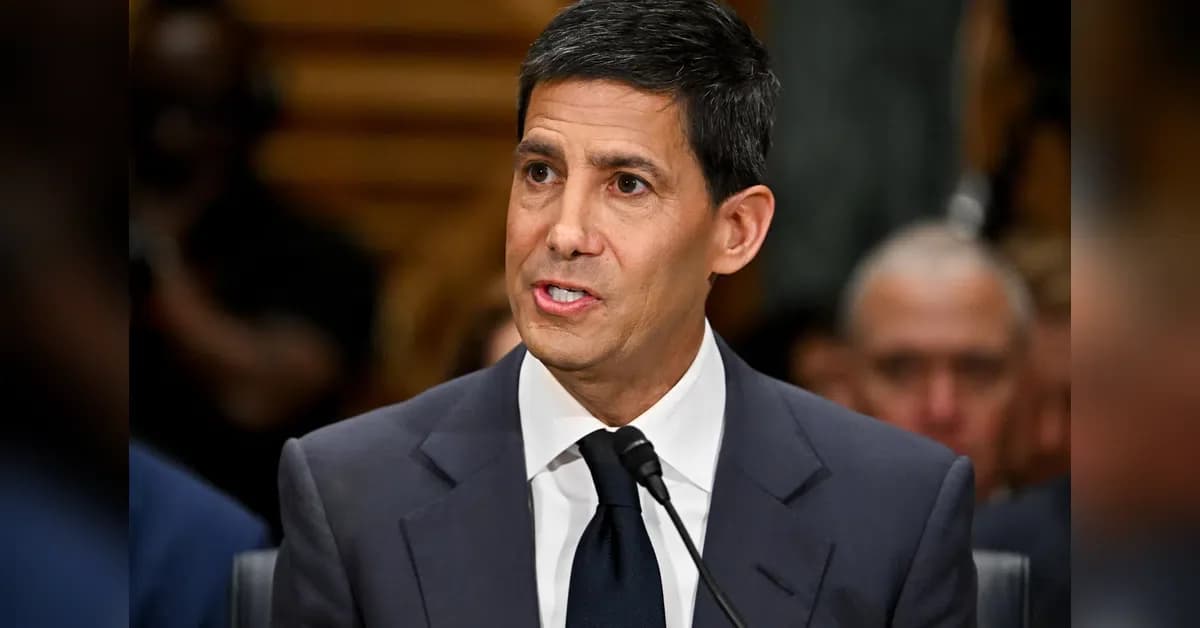
During his Senate Banking Committee hearing on Tuesday, Kevin Warsh outlined his comprehensive plan for transforming Federal Reserve operations, which he calls 'regime change'. As reported by CNBC, Warsh declared that 'Milton Friedman had a phrase that always stayed with me: He always worried about government officials that lured and hung around with what he called the tyranny of the status quo. Status quo practices and policies are especially harmful when the world is changing this fast'. The former Federal Reserve governor, who served from 2006 to 2011 under Presidents George W. Bush and Barack Obama, has positioned himself as a 'regime change' advocate who would fundamentally alter Fed operations. His plan includes abandoning forward guidance - the Fed's traditional method of signaling market expectations - and moving away from the Fed's preferred inflation measure, the core personal consumption expenditure, which he dismissed as a 'rough swag' of economic conditions. Warsh believes these changes are essential to lower long-term interest rates that burden Americans through higher mortgage and credit-card rates, arguing that current Fed policies have lost credibility with both markets and the public.
During his Senate Banking Committee hearing on Tuesday, Kevin Warsh gave direct endorsement to incorporating digital assets into the U.S. financial system. According to reports from Crypto.news, when asked by Sen. Cynthia Lummis about expanding investment access while ensuring consumer protection, Warsh stated that 'digital assets are already part of the fabric of our financial services industry in the United States'. The former Federal Reserve governor has also provided detailed market analysis, explaining that 'in a bare market, which I would argue that we are in right now, you can always see this trend of weak hands selling their assets to strong hands'. His analysis of Q1 2026 data shows businesses purchased 69,000 Bitcoin, governments purchased 25,000, funds and ETFs bought 3,000, while individuals sold their Bitcoin. Warsh's unprecedented crypto portfolio, valued at over $100 million across more than 20 blockchain projects, makes him the first Fed Chair nominee with substantial cryptocurrency investments. During the nearly 3-hour public session, pro-crypto Senator Cynthia Lummis questioned whether digital assets should be incorporated into the financial system to give Americans more investment options and consumer protections, with Warsh's response widely interpreted as crypto-advocacy rather than a hostile stance.
Financial disclosures released ahead of the hearing revealed significant exposure to crypto-linked firms and assets, with Warsh's total net worth estimated at $192 million alone. As reported by Crypto.news, Warsh's holdings included positions tied to decentralized derivatives platform dYdX, exchange protocol Lighter, venture capital firm Polychain, NFT company Dapper Labs, along with tokens such as Solana and Optimism. His portfolio demonstrates sophisticated diversification across the cryptocurrency ecosystem rather than simple Bitcoin speculation. The Bitwise Asset Management stake indicates belief in regulated investment vehicles that bridge traditional finance and crypto markets, while his Solana position suggests appreciation for high-throughput blockchain architectures that compete with Ethereum's smart contract dominance. Investments in dYdX demonstrate understanding of decentralized derivatives infrastructure, and his Polymarket exposure reveals interest in prediction markets that could revolutionize information discovery and pricing mechanisms. His stakes include Solana, dYdX, Bitwise, Flashnet, and 20 other crypto projects, with senators raising concerns about potential conflicts of interest in crypto policy formation.
Senators raised significant concerns about potential conflicts of interest during the hearing, with Senator Elizabeth Warren questioning Warsh regarding Fed independence. To address these concerns, Warsh committed to divest the majority of his financial assets before being sworn in as Fed Chair. This divestment commitment addresses the fundamental conflict between his personal crypto holdings and his potential regulatory oversight responsibilities. The nomination comes amid mounting political friction around the Federal Reserve, with President Donald Trump selecting Warsh after repeatedly criticizing current Chair Jerome Powell over interest rate policy. Current Fed Chair Jerome Powell's term expires May 15, creating a narrow window where Warsh's policy priorities will face intense scrutiny. Market analysts expect Warsh to be a proponent of rate cuts in 2026, though his former hawkish persona may make a comeback in future policy decisions.
Warsh's nomination comes at a critical time for Federal Reserve policy, with the central bank facing significant division among its members. According to Investopedia, some more hawkish officials have disagreed with the Fed's rate cuts, while a couple of Trump appointees have supported more aggressive action. The FOMC's decisions in 2025 drew dissenting votes in both directions, but Powell nonetheless steered the committee toward three quarter-point cuts between September and December. Sen. Thom Tillis has pledged to block the nomination in committee until the Department of Justice ends its criminal probe of current Fed chair Jerome Powell, who has said he will stay on as chair until the matter is resolved. Market analysts expect Warsh to be a proponent of rate cuts in 2026, though his former hawkish persona may make a comeback in future policy decisions. His leadership could influence interest rates, mortgage costs, and market stability for years to come, with any decisions requiring approval from the 19-member FOMC where consensus remains key.