President Donald Trump has reaffirmed his commitment to maintaining the United States' position as the global leader in cryptocurrency and prediction markets, promising to build a 'future-proof' market structure that will never be undone by 'Crypto Haters.' According to reports from The Economic Times, Trump posted on Truth Social defending the cryptocurrency industry and the Commodity Futures Trading Commission's oversight of prediction markets, stating that 'Where we are currently the Crypto (Bitcoin, etc.) Capital of the World, other Countries are trying diligently to replace us in that capacity, but we won't let that happen.' The statement comes as regulatory tensions intensify between federal authorities and state governments over jurisdiction and control.
In a recent Truth Social post on Tuesday, Trump explicitly backed the Commodity Futures Trading Commission's exclusive authority over prediction markets, stating 'It's critically important that the CFTC's exclusive authority over prediction markets is maintained and that they thrive. It's a major industry, and we must protect it.' Trump framed prediction markets as 'financial markets' rather than gambling platforms, contrasting with critics who portray them as betting sites. As reported by The Economic Times, the president slammed Chris Christie, an advisor to the American gambling industry lobby, and called governors and judges pushing back against prediction markets 'scums.' The CFTC has moved to block state moves to ban or regulate these markets, claiming sole authority in the sector, with Trump's backing potentially boosting the federal regulator's push and authority claim.
The regulatory battle has intensified with Minnesota Governor Tim Walz signing a first-of-its-kind law prohibiting prediction market platforms from operating in the state, with criminal charges for anyone found operating them. As reported by The Economic Times, Arizona, Connecticut, Illinois, New York, and Wisconsin have also moved to ban or regulate these markets, with some states arguing that these platforms are operating as betting sites and should be treated as such under gambling laws. The trading volumes on major platforms Polymarket and Kalshi are dominated by sports and elections markets, which critics argue makes them '100% gambling platforms.' However, different rulings on jurisdictional fights by lower courts suggest the final decision may rest with the Supreme Court, not Trump's support.
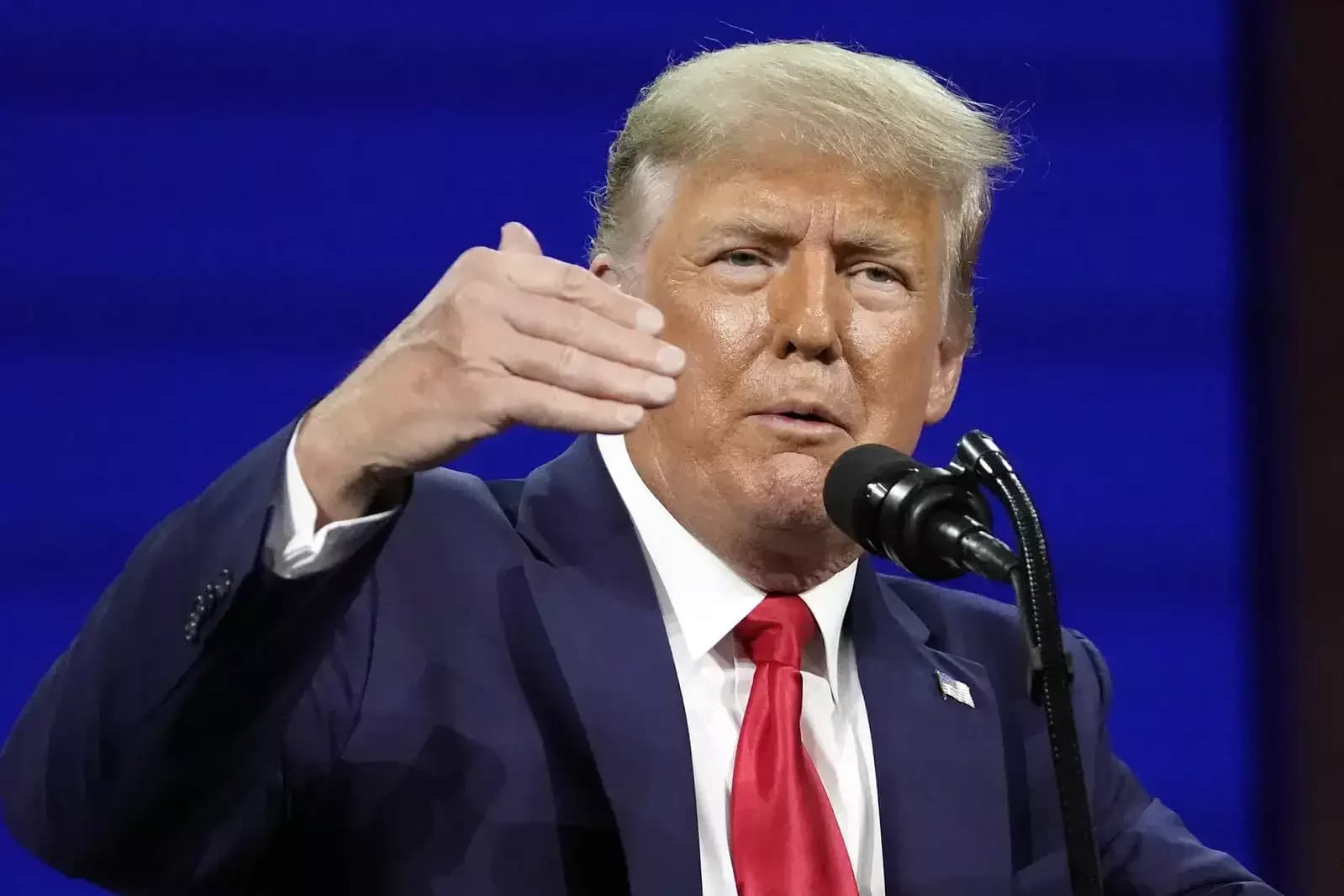
Trump and members of his family have significant financial connections to both the crypto and prediction market industries at the center of the ongoing regulatory dispute. According to The Economic Times, his eldest son Donald Trump Jr. is an investor and part of the advisory board at Polymarket, and serves as a strategic advisor to Kalshi. Trump himself has been linked to World Liberty Financial, a crypto venture that has attracted scrutiny amid his broader support for digital assets. Trump's Truth Social has rolled out its prediction platform, TruthPredict, in partnership with Crypto.com, adding another layer to the family's involvement in the sector. Elizabeth Warren (D-Mass.), Ranking Member of the Senate Banking Committee, has vigorously opposed the CLARITY Act, citing its failure to tackle conflicts of interest arising from Trump and his family's involvement in cryptocurrency ventures, including the Official Trump (CRYPTO: TRUMP) memecoin and World Liberty Financial.
Trump's claim that cryptocurrency companies are 'coming back' to the U.S. has some evidence of a positive shift, though it's not a massive wave of relocations yet. Notably, Bitcoin mining firm HIVE Digital Technologies Ltd. (NASDAQ:HIVE) relocated its headquarters from Canada to Texas in late 2024, anticipating a more supportive regulatory and business climate under the Trump administration. However, Tether (CRYPTO: USDT), issuer of the world's largest stablecoin, relocated its operations to El Salvador, citing the cryptocurrency-friendly policies and favorable regulations of the Central American nation. The outcome of the regulatory battle could determine whether prediction markets are allowed to operate freely across the US or face varying restrictions at the state level.