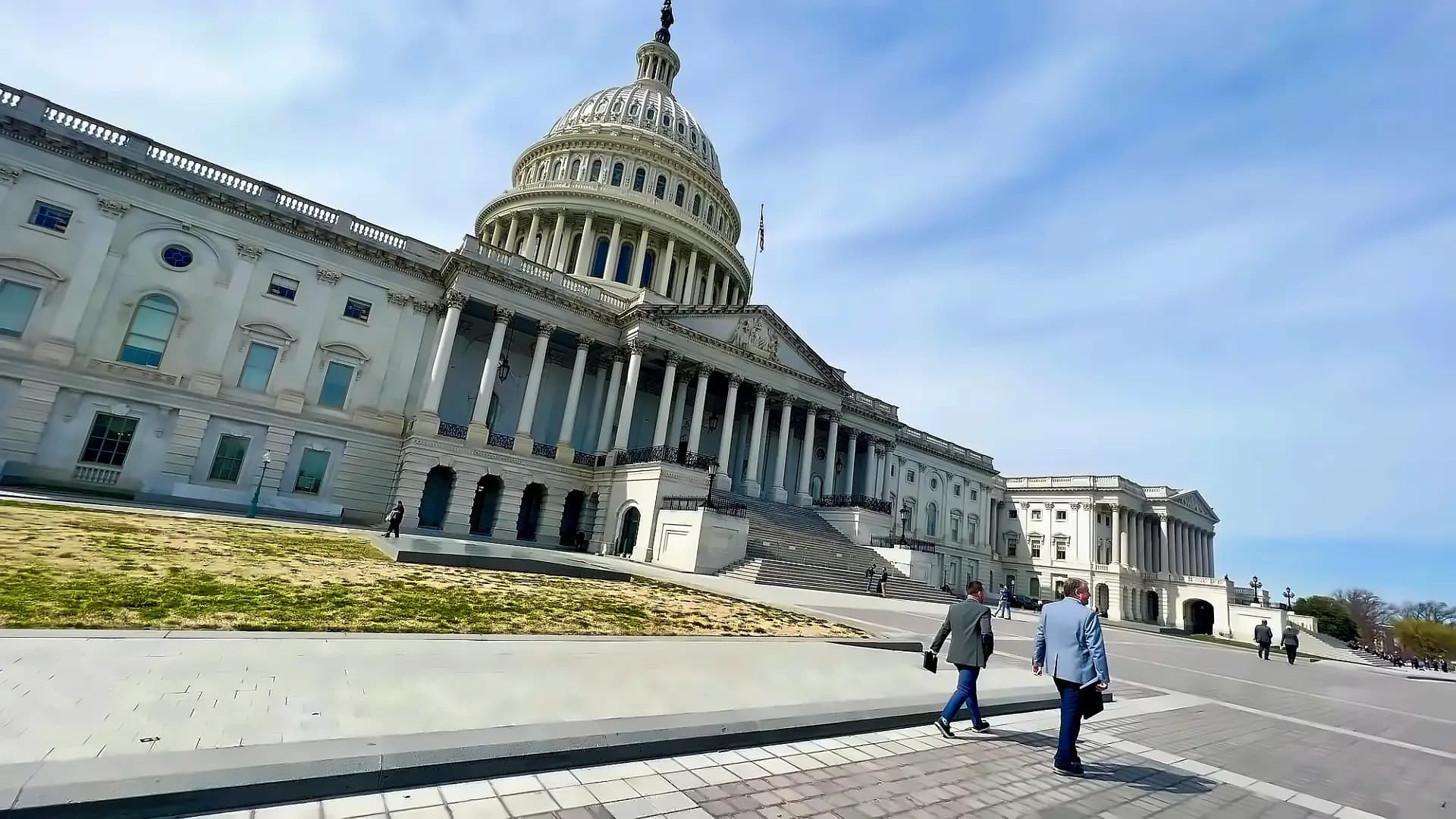
Senator Kirsten Gillibrand took the mainstage at Consensus Miami 2026 on Wednesday, expressing optimism about the CLARITY Act's prospects in Congress as the legislation approaches its May 21 Memorial Day deadline. Appearing alongside Kevin O'Leary and Coinbase executive Paul Grewal, Gillibrand's comments added a Democratic voice to the Consensus stage at a critical moment when the bill's fate depends heavily on bipartisan support. Her appearance came as the Senate Banking Committee moves toward what may be its last viable markup window for the legislation this cycle. As reported by crypto.news, Chair Tim Scott has secured most Republican votes but Senator John Kennedy has withheld support, leaving the path to markup unresolved. Senator Thom Tillis separately raised a new complication: law enforcement groups oppose a DeFi developer liability provision in the bill, adding another hurdle to the legislative process.
Exchange stablecoin reserves have declined by approximately $4 billion over the past week, falling from $70.37 billion to $66.37 billion according to data shared by Ali Martinez. This 5.18% drop represents a significant shift in liquidity conditions as the CLARITY Act advances toward Senate markup. The decline occurred while Bitcoin traded near $80,000, creating a critical juncture where lower liquidity meets regulatory clarity. Stablecoins serve as a core liquidity layer in crypto markets, with traders relying on them to rotate capital quickly into spot and derivatives positions. Fewer stablecoins remaining on centralized platforms during elevated price levels typically reduces the pool of readily deployable capital, potentially limiting buying pressure and making it harder for prices to maintain upward momentum after initial moves.
Senate Banking Chairman Tim Scott has publicly confirmed that lawmakers are 'nearing consensus' and working toward a bipartisan CLARITY Act markup in May, setting the most concrete timeline commitment yet on the long-delayed legislation. As reported by CoinDesk, Senator Bernie Moreno reinforced this urgency during a recent address at the Solana Accelerate USA conference, projecting that the Senate will move the CLARITY Act through committee in the coming weeks. His ultimate target is to coordinate the necessary cross-panel jurisdictions and deliver a finalized legislative package to President Donald Trump's desk before the end of June. The stakes for the US digital asset ecosystem are immense, with the CLARITY Act designed to fundamentally restructure how the government interacts with digital markets, drawing long-awaited jurisdictional boundaries between the Securities and Exchange Commission (SEC) and the Commodity Futures Trading Commission (CFTC).
The industry has responded with unprecedented urgency to Scott's timeline commitment. Coinbase CEO Brian Armstrong posted 'Mark it up' on social media, while Circle urged the Banking Committee to move without further delay. More than 120 crypto organizations have already submitted a joint letter demanding immediate action on the bill, led by the Crypto Council for Innovation and the Blockchain Association. According to crypto.news, Congress breaks for Memorial Day recess on May 21, leaving fewer than four weeks of effective legislative time to advance the bill. Senators Cynthia Lummis and Bernie Moreno have both warned that failure before that deadline pushes the next opportunity to 2030. The Senate Banking Committee is targeting the week of May 11 for the markup, with Chair Tim Scott still working to resolve a holdout from Senator John Kennedy before proceeding.
The United States has established its first federal regulatory framework for payment stablecoins through the GENIUS Act, which passed nine months ago. According to reports from CoinDesk, this legislation has produced demonstrable results, with the stablecoin market growing 49% in 2025 to reach $306 billion by year's end. The CLARITY Act now addresses the broader digital asset market, establishing rules for trading venues, intermediaries, and jurisdictional boundaries between the SEC and CFTC. Beyond stablecoin regulations, the bill attempts to establish clear operational standards for asset custodians, decentralized finance (DeFi) participants, and exchange platforms, offering critical safe harbors for network validators and node operators. The legislation is expected to give clear legal status to Bitcoin and altcoins, allowing institutional investors to enter the market by removing legal risk barriers.
Despite the bipartisan compromise reached by Senators Tillis and Alsobrooks, US banks are mounting an aggressive lobbying effort to stall the CLARITY Act. A coalition of major trade groups, including the American Bankers Association, Bank Policy Institute, Consumer Bankers Association, Financial Services Forum, and Independent Community Bankers of America, issued a joint front this week criticizing the language drafted by the senators. The banking coalition argues that the current text of Section 404 is riddled with loopholes, claiming it permits digital asset exchanges and intermediaries to distribute rewards tied to membership programs, provided they are not calculated or distributed in the same way as traditional bank interest. However, Senate negotiators reached a compromise on stablecoin reward rules that allows crypto firms to offer rewards tied to stablecoin usage and activity, including cashback on transactions, free memberships, or discounted services linked to platform use. This compromise allows crypto firms to protect usage-based rewards while blocking stablecoins from operating like high-yield savings products, with Coinbase supporting the compromise text after earlier concerns.