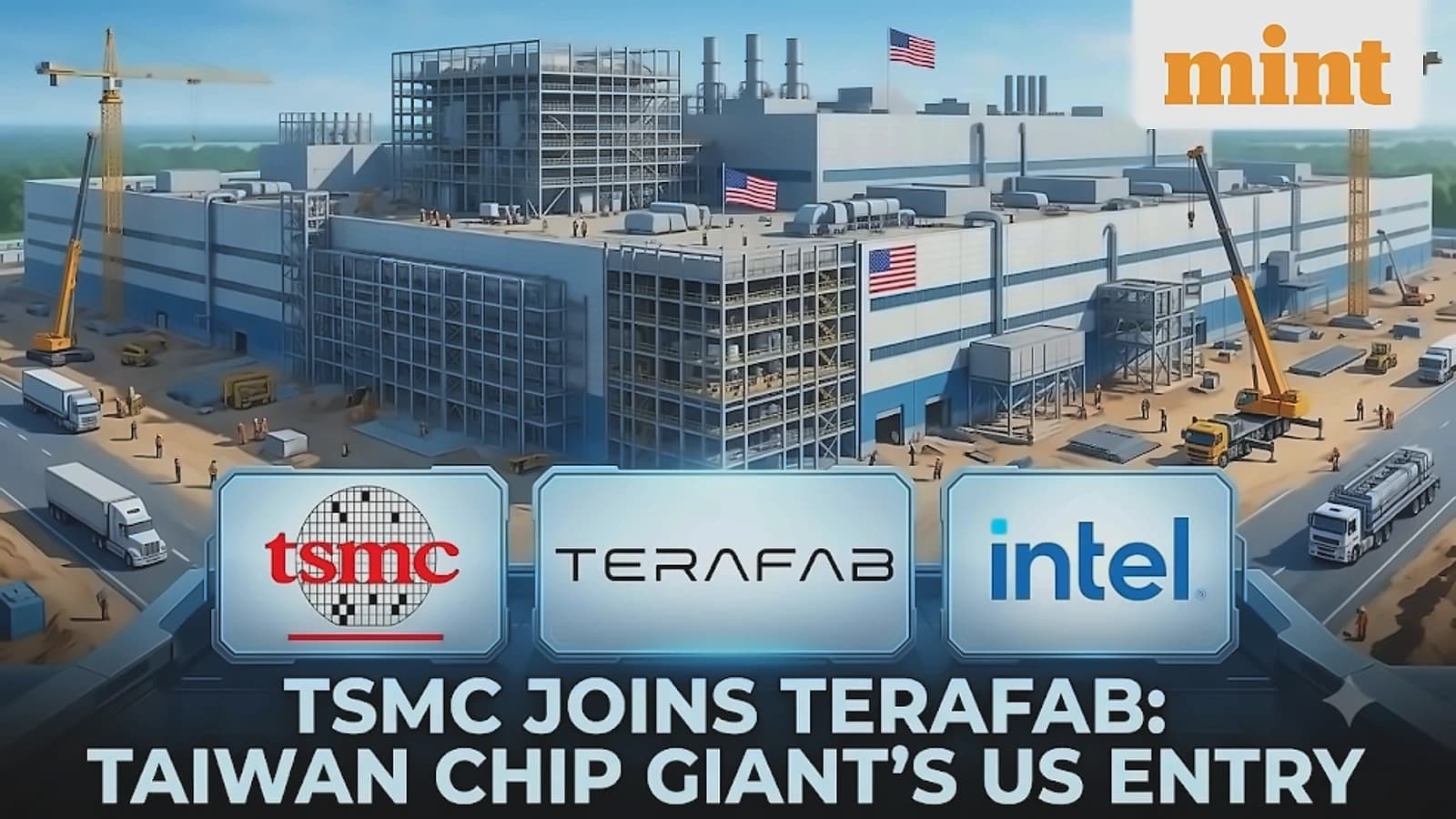
Intel has officially joined Elon Musk's Terafab project alongside SpaceX, xAI, and Tesla, with shares surging 38% year-to-date following the announcement. According to The Economic Times, Intel announced on Tuesday that it would join the AI chip complex project, stating that 'our ability to design, fabricate, and package ultra-high-performance chips at scale will help accelerate Terafab's aim to produce 1 terawatt per year of compute to power future advances in AI and robotics'. The project aims to deliver 1 TW of AI computing power for Tesla's robotaxis, the Optimus humanoid, and SpaceX-linked data centers, with shares rising 2% in early trading following the announcement.
The Terafab facility will be built adjacent to Tesla's Giga Texas campus in Austin, with estimated costs between $20-25 billion according to Electrek. The facility targets 1 terawatt of compute power per year, making it by far the largest semiconductor manufacturing ambition ever planned. Musk outlined two types of chips the facility would produce: one optimized for edge inference designed to power Tesla's Full Self-Driving software and Optimus humanoids, while the other is hardened for space environments for SpaceX's orbital data centers. The facility will initially produce 100-200 gigawatts per year of terrestrial chips, with the remainder going to space-based AI compute aboard solar-powered satellites. Initial output is set at 100,000 wafer starts per month, scaling to 1 million wafer starts per month at full capacity.
Last month, Musk outlined plans for a sprawling facility in Austin, Texas, featuring two advanced chip factories designed for different applications. As reported by The Economic Times, one factory will power cars and humanoid robots, while the other will be designed specifically for AI data centers in space. Musk has billed Terafab as 'the most epic chip-building effort ever', designed to bring logic, memory and advanced packaging under one roof in a Texas build-out that could cost upward of $25 billion. The project represents a significant shift toward vertical integration, with Musk previously stating that existing semiconductor suppliers 'simply could not make enough chips' to support his roadmap for autonomous vehicles and robots.
SpaceX, which recently merged with xAI, has confidentially filed for a U.S. initial public offering and plans a market launch later this year, according to The Economic Times. Musk has confirmed that reports of a 2026 SpaceX IPO are 'accurate', after multiple outlets detailed a plan to take the rocket and Starlink business public at a valuation initially rumored near $800 billion. More recent coverage suggests SpaceX has filed for what could be a $1.7 trillion-plus listing that folds in xAI and X, potentially creating a multi-trillion dollar 'three X's in one' vehicle spanning launches, satellite broadband and AI-driven social media.
The Terafab project positions the consortium to compete directly with established chip manufacturers like Nvidia and TSMC at scale. As reported by The Economic Times, the initiative will intensify competition for high-end GPUs and fabrication capacity, likely benefiting incumbent chip leaders while also squeezing smaller AI startups. For crypto, the strategic angle focuses on infrastructure and narratives rather than today's price action, with a consolidated SpaceX-X-xAI entity well positioned to push censorship-resistant payments, identity and data rails globally. Large-cap assets like bitcoin and ether could increasingly trade as macro proxies on Musk's execution, similar to how chip stocks now mirror AI demand.