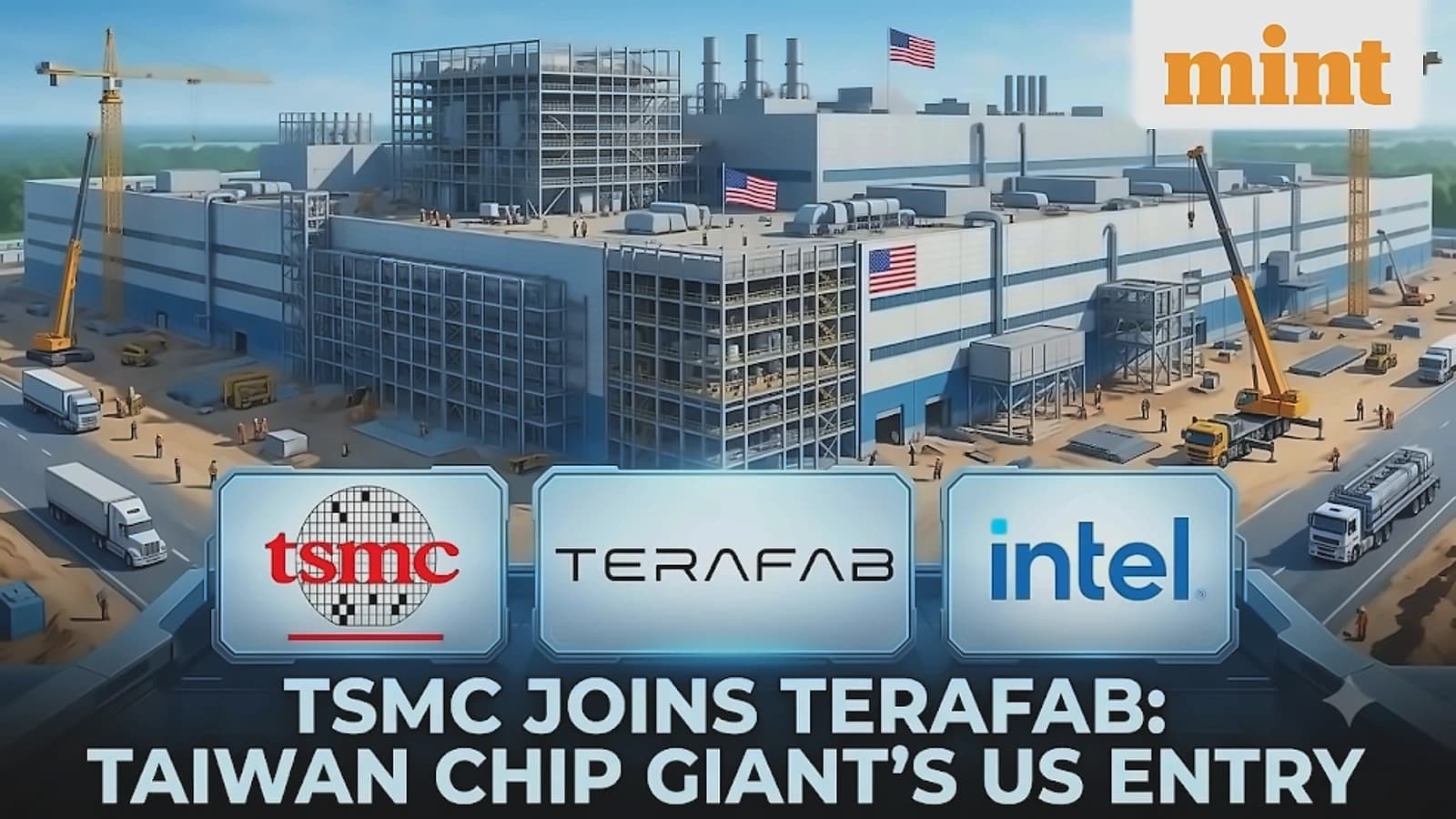
Elon Musk confirmed on Saturday, October 3, that Taiwan Semiconductor Manufacturing Co. (TSMC) is exploring ways to help Terafab run its planned Texas plants, according to reports from Culpium tech newsletter. Musk posted on X that "Just discussions, but something may come of it," marking a significant development in the Texas chipmaking venture. This confirmation comes after six months of Intel being the only named chip partner in Terafab, the project that was announced on April 7, 2025 with SpaceX, xAI, and Tesla as participants. TSMC stock rose about 3% in Taiwan and was up 1% in premarket U.S. trading following the announcement, as reported by MarketWatch. According to DigiTimes, TSMC was evaluating plans to build up to six advanced chip fabs in Texas in late September 2026, following the expansion of the chip maker's manufacturing hub in Arizona.
Intel shares fell about 2% on Monday to roughly $117 as the market digests the potential TSMC involvement in Terafab. This represents a small move for a stock that has more than doubled since Intel joined Terafab in early April. The market reaction reflects concerns that TSMC's involvement could dilute Intel's expected role in a project that could become strategically important for Elon Musk's expanding technology businesses. Intel's foundry business took in $293 million from outside customers in Q2 2026, a huge leap over the $22 million it got from them in the same period of 2025. However, $181 million of the total came from Altera, a chip business Intel sold a 51% stake in last year, leaving outside revenue at about $112 million, more than triple the first quarter's figure of roughly $35 million.
TSMC brings decades of experience in advanced semiconductor manufacturing that Elon Musk cannot easily build from scratch. The company has already committed $265 billion towards its Arizona expansion and is considering a separate Texas campus, with each fabrication plant expected to require an investment of at least $20 billion. Culpium's report suggests TSMC would probably bring its own manufacturing process, potentially replacing Intel's 14A process that Musk previously indicated would be used for Terafab. TSMC already manufactures some chips for Tesla, and Tesla has also signed a separate $16.5 billion agreement with Samsung for its next-generation AI6 chip. Customers based in North America account for more than 75% of TSMC's wafer revenue this year, making the Texas expansion strategically important for the company's growth trajectory.
Terafab's first stage in Grimes County, Texas, has a planned investment of over $16.8 billion, with a planned workforce of at least 3,000 people. According to Culpium's report, there are two possible setups for TSMC's involvement: in the more likely scenario, TSMC would own and run a new factory, with SpaceX and Terafab investing, committing to buy chips, or both. Alternatively, SpaceX would hold a majority stake while TSMC provided the technology and operating know-how. The facility was conceived as a vertically integrated operation covering logic, memory, advanced packaging and testing, with total spending across different phases eventually reaching as much as $119 billion. SpaceX said the chips produced there will be used in Tesla's Optimus robots and Cybercabs, as well as in space-based data centers the company is developing, as reported by MarketWatch. Texas has also approved a US$30 million (C$42.7 million) Enterprise Fund grant for the project, with the facility planned to span roughly 100 million square feet.
Elon Musk's companies are becoming major consumers of computing power with different requirements - Tesla needs processors for autonomous driving and vehicles, Optimus will require specialized AI and robotics chips, and SpaceX has growing computing requirements including plans for space-based data centres. The emerging model looks less like a conventional chip-supply agreement and more like an attempt to build greater control over the semiconductor chain. Musk has been building out the supplier base for Terafab on multiple fronts, including speaking at ASML's annual technology conference earlier this year to make the case for the project to employees of the Dutch company - the sole supplier of extreme ultraviolet lithography machines central to Terafab's planned operations. SpaceX's public filing in May described Terafab as a general framework agreed with Tesla, with specific projects still subject to separate agreements, adding that neither Tesla nor Intel has to remain part of the project. Musk also announced over the weekend that SpaceXAI's AI and cloud division will be renamed to SpaceXSI, following President Trump's rebranding of Artificial Intelligence to Super Intelligence. Musk described the fab as "the largest and most valuable building on Earth by far," adding that "TeraFab will be 50 times the size of the Pentagon when complete."