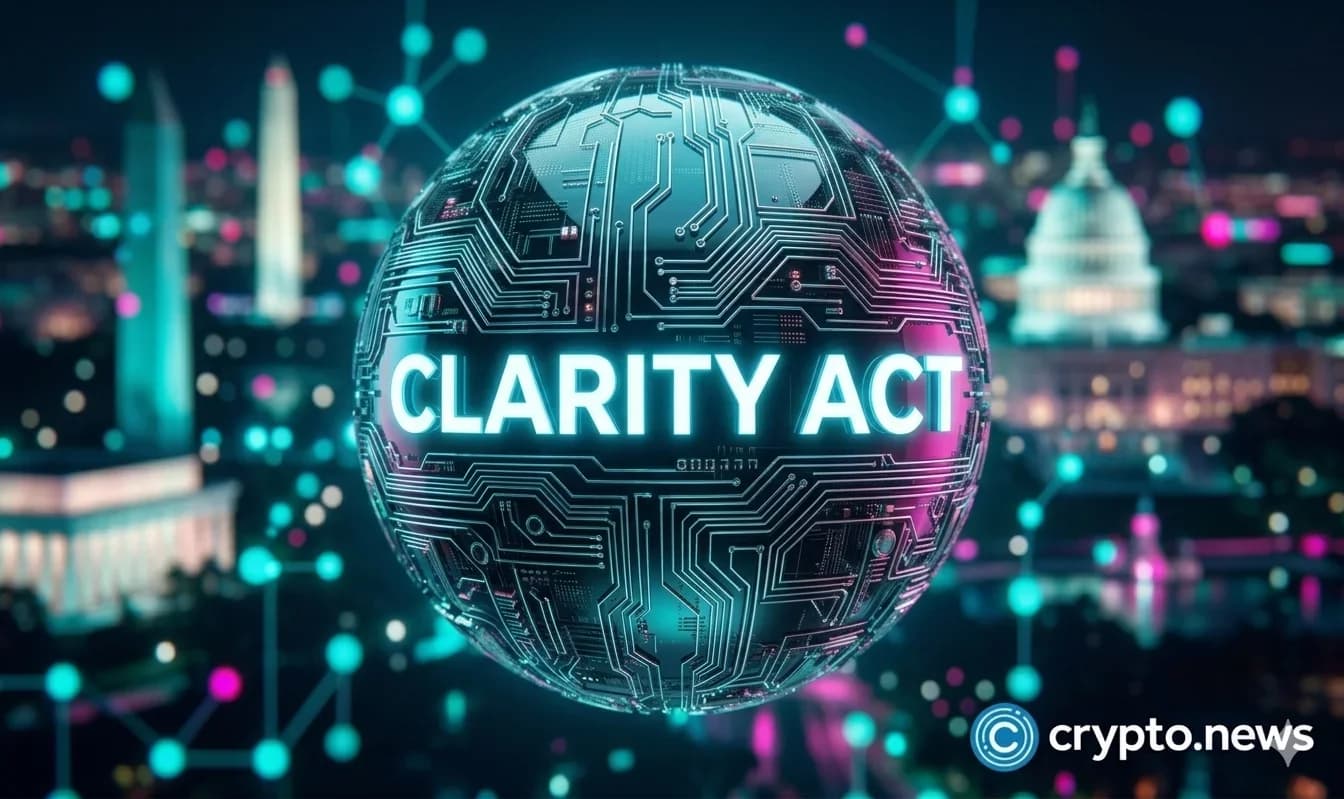
The White House has endorsed the CLARITY Act as 'pro-law enforcement' with White House chief crypto advisor Patrick Witt declaring it 'the most pro-law enforcement crypto bill ever considered by Congress'. This development comes after Senator Elizabeth Warren's opposition last month, where she cited concerns about cracking down on crypto laundering, especially regarding sanctioned entities like crypto mixer Tornado Cash. According to recent reports, the bill cleared the Senate Committee markup last month and is expected to hit the final Senate floor vote soon, though a Senate floor vote date has not been scheduled as of writing. The legislation has moved to the Senate calendar but still requires resolution of contentious unfinished provisions and significant bipartisan negotiations.
The Blockchain Association has escalated its lobbying efforts by sending a letter to Senate Majority Leader John Thune and Senate Democratic Leader Charles Schumer on Tuesday, urging the Senate to pass the Digital Asset Market Clarity Act. The letter, signed by 160 former national security and law enforcement officials, emphasizes that the legislation 'expands law enforcement and financial crime prevention capabilities across the digital asset ecosystem'. According to the Blockchain Association, the bill 'makes the case that digital asset market structure is a law enforcement and national security priority' and 'clear rules bring activity under U.S. oversight, strengthen consumer protection, and help investigators catch bad actors'. The association plans to host a fly-in to Washington, D.C. for meetings across 18 Senate offices and organize a virtual town hall on Thursday to discuss how the bill supports law enforcement and national security. Scheduled participants include Senator Cynthia Lummis, Representative Tom Emmer, and Patrick Witt, executive director of the White House President's Council of Advisors for Digital Assets.
Market odds for CLARITY Act passage have surged significantly from 43% to 63% in the past 24 hours, reflecting growing confidence in the bill's prospects. However, the banking industry has vowed to 'fight' the bill due to the stablecoin yield provision, suggesting the Senate floor vote won't be a smooth sail. The legislation faces intense competition for Senate floor time from must-pass bills including the Foreign Intelligence Surveillance Act (FISA) extension and immigration enforcement funding. As reported by multiple sources, the immigration bill was derailed by Republican opposition to President Trump's $1.8 billion Department of Justice '.
The latest developments highlight enhanced law enforcement provisions that could improve investigative capabilities, including the expansion of the Bank Secrecy Act and sanctions compliance to crypto exchanges and platforms. According to the Blockchain Association, these provisions 'are not deregulatory measures. They are enhanced enforcement tools designed to improve visibility, coordination, compliance, and accountability across digital asset markets'. The legislation also addresses stablecoin rewards, with Senators Thom Tillis and Angela Alsobrooks reaching a compromise in May that blocks rewards economically similar to bank deposit interest while allowing activity-based incentives. Senator Lummis has said the bill would address the long-running jurisdictional dispute between the SEC and CFTC over digital asset oversight, potentially resolving regulatory uncertainty that has plagued the industry. Senator Cynthia Lummis emphasized that 'the current status quo is that digital asset exchanges are subject to lower Bank Secrecy Act and anti-money laundering and sanctions requirements today than they would be if Clarity passes'.
A critical obstacle remains the ethics provision aimed at President Trump, which would ban government officials from personal stakes in the crypto industry. According to recent reports, crypto insiders are suggesting that a runway period has been raised that may not force Trump to divest from his own interests, though this remains a dealbreaker for Senate Democrats. The legislation faces ongoing disputes with lobbyists from the banking industry who oppose the stablecoin yield provisions that bankers see as a threat to their deposit base. Senator Cynthia Lummis argues that 'if we don't get it done this year, we're probably looking at about 2030 before this bill could ever have a shot again of being considered', noting that the Senate has fewer than eight weeks of floor time available on its calendar before a summer break that will begin the midterm elections season in earnest. The Revolving Door Project has accused the Blockchain Association of trying to 'hoodwink senators' with its list of former officials, pointing out many work for crypto companies, while Jeff Hauser, the Revolving Door Project's executive director, contends the crypto organization disregarded 'honest concerns expressed by the National Sheriffs' Association and a host of other law enforcement associations in early May'.