World Liberty Financial has launched its $4.05 billion USD1 stablecoin natively on the Canton Network, giving institutions a dollar-based settlement asset for tokenized securities and other real-world assets. As reported by crypto.news, USD1 is now issued directly on Canton rather than arriving through a bridge from another blockchain, enabling native issuance that lets institutions exchange USD1 and tokenized assets as parts of the same transaction. Canton's synchronized settlement design allows the cash and asset to move at the same time, reducing the risk that one side completes while the other remains outstanding. The network applies privacy and permission controls to transactions conducted on its public blockchain, allowing participating firms to control which parties can view transaction information while supporting compliance requirements used in regulated financial markets. Canton processes more than $9 trillion in tokenized assets monthly and moves over $350 billion in onchain U.S. Treasurys daily, with government debt on the network used as collateral, repurchase agreements, and treasury-management transactions.
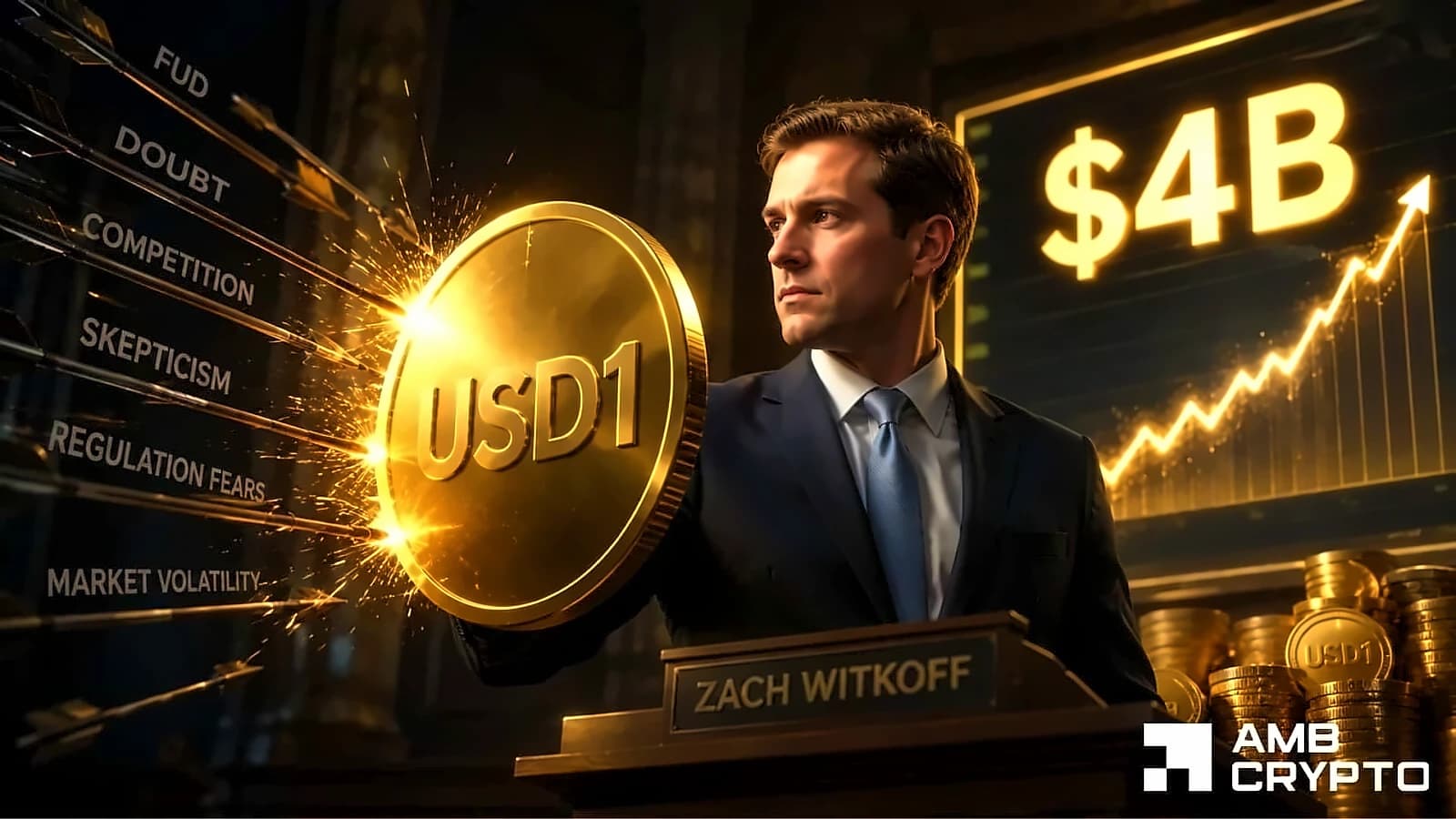
World Liberty Financial's USD1 stablecoin has surpassed $4 billion in circulation since its March 2025 launch, with CEO Zach Witkoff attributing the growth to institutional demand rather than political connections. As reported by CNBC, Witkoff stated that "USD1 grew because institutions trust how it operates, and confidence at enterprise scale deserves the backing of federal supervision." The token's backing includes U.S. dollars held at financial institutions, U.S. government money market funds, and other cash equivalents. One significant transaction occurred in May 2025 when Abu Dhabi-backed investment company MGX used $2 billion in USD1 to settle its investment in Binance, with Witkoff describing USD1 as the "official stablecoin" for the deal at the TOKEN2049 conference in Dubai. DeFiLlama ranks USD1 as the sixth-largest stablecoin by market capitalization, with the token's market value reaching approximately $4.05 billion. However, Binance-controlled wallets and customer accounts hold around $4.7 billion in USD1, representing nearly 87% of its $5.4 billion supply as of February 2025, according to Forbes data, raising concerns about concentration risks.
Justin Sun has escalated his legal battle against World Liberty Financial by alleging that the company secretly embedded a backdoor into the WLFI smart contract, giving itself unilateral power to freeze, restrict, and burn token holders' assets without notice or due process. According to AMBCrypto reports, Sun claims WLF used this capability against his own WLFI tokens, which he describes as an unlawful seizure of his property. The Tron founder further alleges that when he attempted to exercise his legal rights, WLF threatened him with criminal referrals. Sun obtained a court order preventing WLF from burning, destroying, reallocating, or permanently disposing of his WLFI tokens, which he says was necessary because WLF had allegedly threatened to destroy the tokens and had the technical ability to do so. Sun warns investors that USD1 also has administrative controls that could allow WLF to freeze or potentially destroy tokens, creating serious concerns for holders of both WLFI and USD1 stablecoin.
World Liberty Financial received preliminary conditional approval from the Office of the Comptroller of the Currency (OCC) on August 14 to operate as a national trust bank, though final authorization remains pending. The approval provides World Liberty with significant regulatory oversight to issue and hold its own stablecoin USD1, with the proposed entity operating as a national trust bank rather than a conventional commercial bank. The OCC approval conditions require World Liberty Trust to maintain at least $20 million in eligible capital, submit an updated operating plan, and appoint a qualified internal audit manager before final authorization. If the OCC issues final authorization, World Liberty Trust plans to take over USD1 issuance, redemption, and reserve management from BitGo, with the proposed institution providing digital-asset custody and stablecoin conversion services to institutional clients under federal supervision. Unlike a conventional commercial bank, World Liberty Trust would not accept ordinary deposits or make standard loans, concentrating on custody, fiduciary, settlement, and asset-servicing activities. The OCC can change, suspend, or withdraw its preliminary approval before the institution opens, with examiners supervising the institution after it receives permission to open.

An entity affiliated with Trump and members of his family owns about 38% of World Liberty's holding company, with Zach Witkoff being the son of Steve Witkoff, Trump's special envoy and a co-founder of the crypto company. Aryam Investment 1, an Abu Dhabi-based vehicle backed by UAE National Security Adviser Sheikh Tahnoon bin Zayed Al Nahyan, acquired a 49% stake in World Liberty for $500 million, just days before Trump took office. In June, Democratic senators requested hearings into the reported transaction and questioned whether it influenced U.S. decisions involving arms sales and access to advanced artificial intelligence chips. The OCC addressed foreign ownership concerns by stating that non-U.S. investors were not considered principal shareholders of the proposed trust bank, with several investors signing passivity agreements promising not to control operations. World Liberty Trust plans to operate with segregated customer assets, independent reserve management, anti-money laundering controls, and sanctions screening under OCC supervision.
The parties must now complete court-ordered discussions over which company claims belong in federal court versus arbitration. Any agreement would likely be submitted to Judge Donato for approval or reflected in a later court filing. If the parties disagree, they may submit competing positions for the judge to resolve. Keeping claims in federal court generally makes filings and hearings publicly accessible, though either party may still request that specific documents or commercially sensitive information be sealed. The court could issue a new schedule after resolving the arbitration question, with no trial date or damages award announced. Earlier docket entries show that briefing on World Liberty's separate dismissal request was paused pending further direction, with the next verified development expected through a written court order or joint filing explaining the parties' agreement.