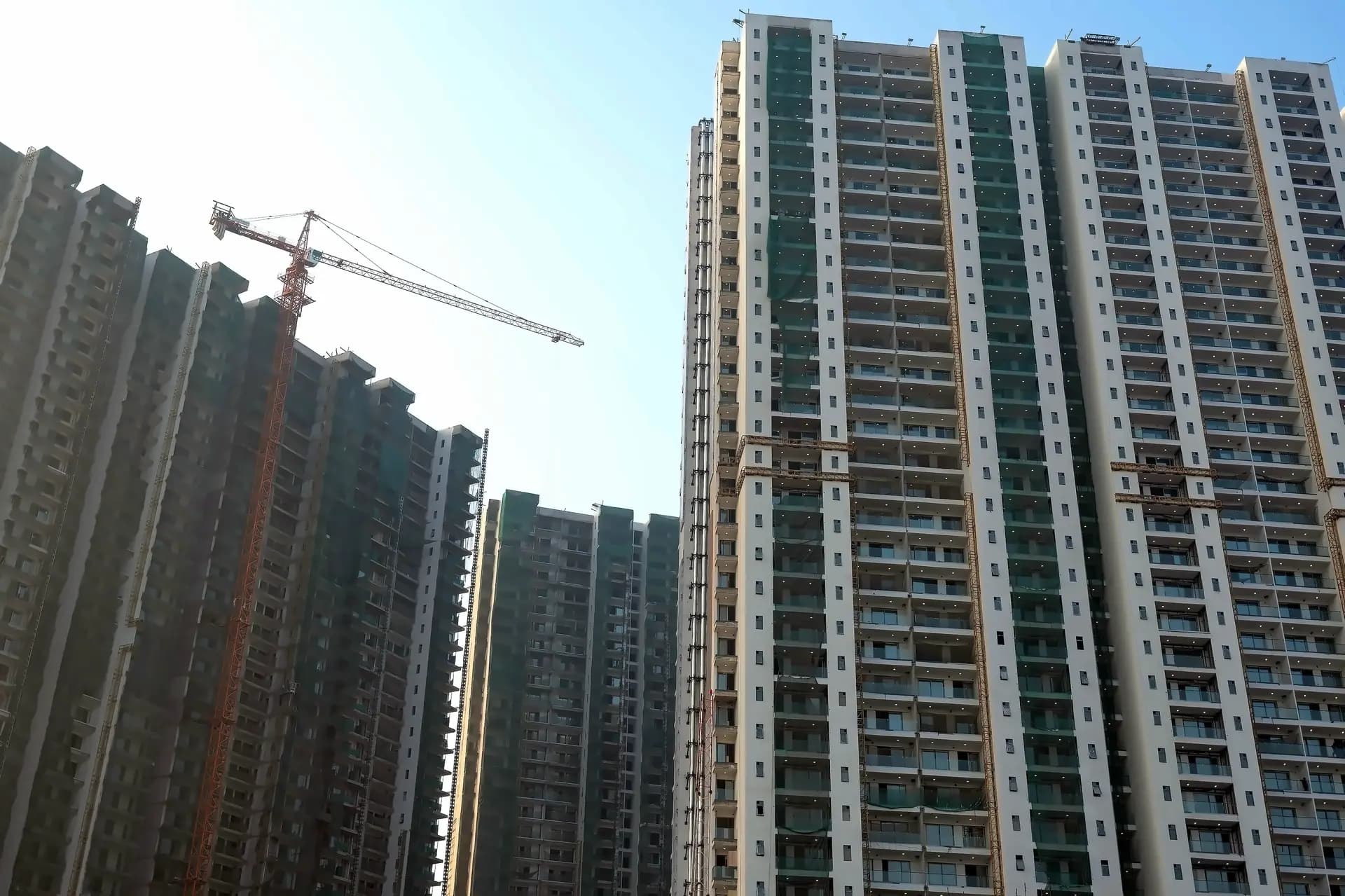
The numbers paint a stark picture. Residential prices across India's top eight cities rose approximately 6% in H1 2026, with some markets like Faridabad and Delhi seeing appreciation as high as 18%.
This divergence suggests the price increase contributed to but did not primarily cause the booking decline. The 3.5x ratio of booking decline to price increase indicates other factors dominated—primarily reduced project launches and a high base effect from the exceptionally strong Q1 FY26.
The Godrej Anomaly
Godrej Properties emerged as the standout performer, achieving record sales bookings of ₹8,651 crore in Q1 FY27—a 22% year-on-year increase. Their success stems from a four-pillar performance management system that incentivizes cash collection, imputed profits, reported profits, and customer satisfaction through Net Promoter Scores. This disciplined approach, combined with a strategic focus on sustenance sales (which contributed 41% of total bookings in their typically slowest quarter), allowed them to buck the industry trend. Their premium positioning in high-growth micro-markets like Bengaluru (44% of their bookings) and rapid execution capability—launching projects within a year of land acquisition—provided competitive advantages that peers struggled to match. Transcripts +2
The Premiumization Pivot
The real story isn't about buyers disappearing—it's about which buyers are transacting.
This 30% year-on-year increase in premium demand, coupled with a 67% jump in the ₹1.5-3 crore segment, reveals a fundamental shift. Listed developers have deliberately pivoted toward premium offerings, with the ₹10 million+ segment seeing launches surge 45% year-on-year. Meanwhile, sales of apartments priced under ₹10 million have dropped approximately 24%. This strategic shift toward higher-value homes explains why prices can rise even as overall unit volumes decline—developers are chasing quality over quantity.
Geographic Divergence
The correlation between price increases and sales decline varies dramatically by city. Delhi-NCR and Kolkata recorded the sharpest price increases (18% and 15% respectively in some areas) alongside significant sales declines—NCR sales fell 7% year-on-year. These markets show classic price-demand elasticity, where affordability ratios have reached critical levels (NCR at 65% of household income required for EMIs). In contrast, Bengaluru and Hyderabad demonstrated price resilience with sales growth of 5% and 1% respectively despite price appreciation of 9% and 7%. Southern markets benefit from stronger employment fundamentals, particularly in technology sectors, making them less sensitive to price increases. This geographic fragmentation means national averages mask fundamentally different local market dynamics.
The Affordability Squeeze
Housing affordability has played a crucial role in the booking decline. Six of eight major cities remain within the 50% affordability threshold, but NCR at 65% and Mumbai Metropolitan Region above 50% create significant pressure. The cumulative 125 basis points of monetary easing has helped, but rising property prices have offset much of this benefit. First-time buyers face approximately 25% fewer sub-₹50 lakh options than in 2021, effectively pricing them out of the market. This affordability squeeze has forced developers to either target premium segments or offer discounts and subvention schemes in the mid-market—a trade-off that impacts margins differently across player types.
The Inventory Overhang
Unsold inventory across the eight tracked markets rose 4% year-on-year to 5,25,695 units at the end of H1 2026, with overall quarters-to-sell standing at 6 quarters versus 5.8 quarters at the end of 2025. However, this overhang is unevenly distributed. Bengaluru launched 26,297 units in Q1 2026 (an all-time high) but sold only 16,745, pushing unsold inventory to a 20-quarter peak of 87,796 units. Hyderabad sold just 11,342 units, its weakest quarter in 21 quarters. In contrast, Pune's unsold inventory fell to its lowest in 12 quarters as sales outpaced launches. This inventory pressure varies by developer—inventory-efficient players like DLF (33% inventory ratio) maintain stronger pricing power than inventory-heavy developers like Godrej Properties (70.6% inventory), though premium positioning can mitigate this disadvantage. Transcripts
Regulatory and Funding Constraints
Listed developers operate under significantly stricter regulatory frameworks than unlisted players. SEBI LODR regulations impose extensive compliance requirements—quarterly financial results, corporate governance reports, shareholding pattern disclosures—that reduce pricing flexibility and create pressure to maintain margins. RERA compliance costs, including registration fees calculated as a percentage of project cost and penalties up to 10% of estimated project cost for non-compliance, further constrain agility. Project approval delays significantly impact launch strategies—DLF deferred its Aureva senior living launch due to pending approvals, while Brigade Enterprises faced environmental clearance revocation for Brigade Morgan Heights. These regulatory burdens, combined with the need to maintain quarterly performance for public markets, make listed developers less able to implement demand-responsive pricing adjustments compared to unlisted peers. Transcripts +1
The Funding Advantage
Despite these constraints, listed developers enjoy significant funding advantages. Recent RBI liberalizations permitting External Commercial Borrowings for construction-development projects have opened access to new capital pools, primarily benefiting listed developers with established credit ratings. Macrotech Developers maintains net debt to equity of approximately 0.2x against a self-imposed ceiling of 0.5x, with an average cost of debt of 7.8%—among the lowest in the industry. DLF holds AAA ratings from CRISIL and ICRA with borrowing costs of 7.14%. This 4-7% funding cost advantage over unlisted developers (who typically face 12-15% borrowing costs) supports price maintenance strategies and provides the financial discipline to weather demand softness without resorting to aggressive discounting. Transcripts +1
The Strategic Trade-off
The current environment forces listed realty firms to make explicit trade-offs between margin preservation and volume recovery. Most are choosing margin preservation through disciplined pricing increases rather than aggressive discounting. Brigade Enterprises achieved a 21% year-over-year improvement in realization to ₹14,256 per square foot through "disciplined pricing increases in existing projects and a positive shift in product mix towards higher-value homes". Macrotech Developers expects to enhance pricing by 5-7% annually across micro-markets, still below white-collar salary growth of 9-10% to maintain affordability while boosting volumes. This balanced approach—focusing on quality over quantity, premium over mass, and sustainable growth over market share—represents the new normal for India's listed real estate sector. Transcripts +1