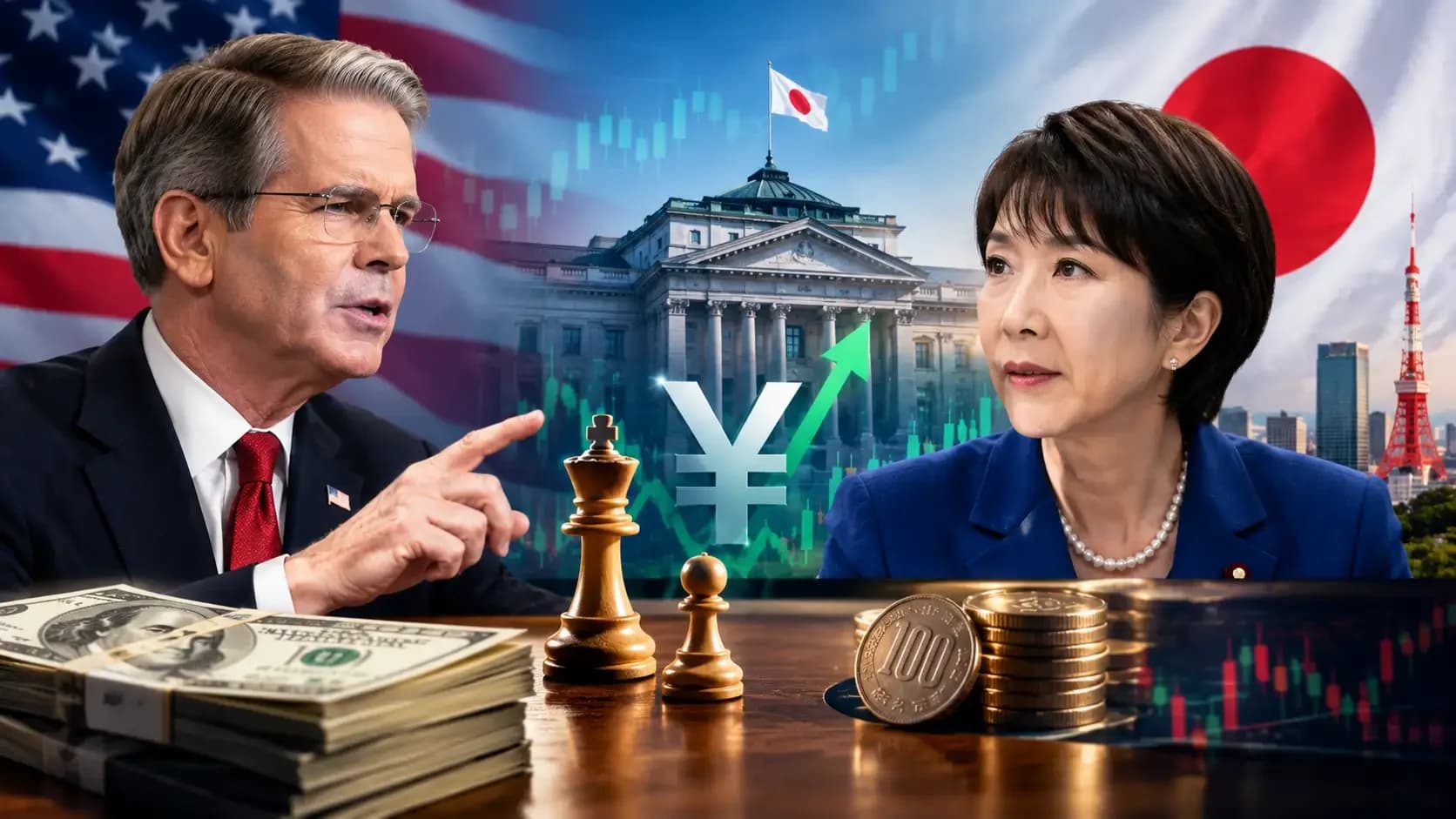
Japan is implementing a rare policy experiment that pits fiscal stimulus against monetary tightening, a combination that has historically rocked markets in the UK, Turkey, and the US. Finance Minister Satsuki Katayama announced this week that Japan wants the Government Pension Investment Fund and other public funds to lift their home holdings, with the goal of steadying bonds and the yen while the BOJ pulls back. The Government Pension Investment Fund manages about $1.8 trillion, making it the world's largest, and close to half sits in foreign stocks and bonds, so even a small shift home moves global markets significantly. This policy split follows earlier calls from lawmakers to invest more domestically, creating an unprecedented situation where Japan is tightening policy, shrinking its balance sheet, and expanding fiscal spending all at the same time—a combination that analysts note has never happened before.
A former Bank of Japan official warns the central bank may raise its benchmark interest rate rapidly this year, potentially to above 2%, as the yen continues to weaken against the dollar. According to Bloomberg, Tsutomu Watanabe, an economics professor at the University of Tokyo who left the central bank in 1999, issued this latest warning about accelerated monetary tightening. The official rate currently stands at 1%, the result of recent hikes, while the 10-year benchmark government bond yield hovers above 2.8%, the highest in at least three decades. This represents a significant escalation from earlier projections, as the Bank of Japan had previously indicated it would pause bond purchases only from the 2027 fiscal year. The BOJ has lifted its policy rate to 1%, the highest since 1995, and keeps buying fewer bonds as part of this deliberate policy shift.

Producer prices climbed 7.1% in June, up from 6.6% in May, with oil, electricity, and plastics driving the gain, creating additional pressure on monetary policy. Despite rising inflation, the 10-year yield fell 10 basis points to 2.775% after the pension news, showing how the policy split is creating unusual market dynamics. Prime Minister Sanae Takaichi is planning consumption tax cuts and cash handouts funded by fresh debt, adding to fiscal expansion pressures. This follows Japan's experience in January when its 40-year yield first topped 4% in a record bond selloff, demonstrating the sensitivity of markets to policy divergence. The tension is old, with the United States Treasury-Fed Accord in 1951 serving as a textbook case of fiscal dominance, where the Fed had pinned long-term yields near 2.5% to fund World War II.
Japan's government debt already exceeds 230-250% of GDP, making a sharp rise in borrowing costs increasingly painful for the country. The Ministry of Finance reported spending a record ¥11.73 trillion ($73.6 billion) on yen buying from April 28 to May 27, but the effect quickly faded with the yen returning to nearly four-decade lows. Debt servicing costs in the fiscal 2026 budget have hit record levels, meaning more of every tax yen collected goes straight to interest payments rather than services or investment. Japan holds the developed world's heaviest debt load, more than double its output, leaving little room for error. The Bank of Japan's rate hike to 1% on June 16—the highest level in 31 years—changed almost nothing, with Goldman Sachs downgrading its forecast for the Japanese currency, believing it could reach 165 yen per dollar within a year.
The strong positive correlation between the yen and BTC presents a complex dynamic for cryptocurrency markets, with Japan's policy experiment creating additional uncertainty. Yen short positions recently hit their highest level since 2024, while analysts warn Japan's bond market could threaten the cheap-money rally in stocks and crypto. Market participants are already anticipating further BOJ rate hikes later in 2026 based on surveys, with each incremental move higher amplifying the gravitational pull on global capital away from speculative assets. The key variable isn't just the JGB yield level itself but the pace of change, as sudden lurches like the 40-basis-point daily spikes in super-long bonds have historically triggered forced selling and liquidity crunches. Rising Japanese government bond yields signal a potential end to the country's long-standing accommodative monetary stance, which could reduce the cheap carry-trade capital that has indirectly supported risk-on crypto assets.